
The work that turns understanding into direction
Opportunity work is the bridge between knowing the category and acting on it. The decoding work tells you what is happening. The ideation work builds what comes next. This is the work in the middle: identifying where the commercial opportunity actually sits, sizing it, prioritising it and turning it into a working strategy that the business can build into.
Most opportunity briefs land when one of three pressures is on the business. Growth has flattened and the next platform needs finding. The innovation pipeline is thin and needs structuring. A category is shifting and a brand needs to know whether to stretch into the new space, hold the existing one, or build a new platform entirely. In every case, the question is the same: where is the commercially meaningful opportunity, and what would it take to own it?
What lands at the end of the work is a prioritised, sized and commercially framed set of opportunities, with a clear point of view on which one to lead with, why, and what the route in looks like. Not a long-list of ideas. A working strategy that the next phase of work can build into.
Two toolkits. One question. Where to play next.
Insight tools sit inside our Strategic Insight capability and are the diagnostic side of the work: they read the current state and surface where the opportunity sits. Innovation tools sit inside our Innovation and Optimisation capability and are the generative side: they turn the diagnosis into a working strategy, a defined platform, or a sequenced pipeline. Most opportunity programmes use both, in that order.
Insight tools
The diagnostic side. Used when the brief needs to read the current state, surface what is under-served, or hunt for opportunity without a fixed hypothesis.
-
i360 Audit & Growth Transformation
A comprehensive growth audit and transformation programme for food and drink businesses.
-
Needs Landscaping
Structured consumer-needs mapping that surfaces the unmet, under-served and emerging needs worth commercial attention.
-
Exploratory Insight
Senior-led discovery work for early-stage briefs where the scope is not yet defined, the question is not yet clear, or the team needs structured hypothesis generation before commissioning more structured work.
Innovation tools
The generative side. Used when the brief needs to turn the diagnosis into a defined opportunity, a working platform, or a sequenced innovation pipeline.
-
Opportunity Mapping
Strategic mapping of where to play in food and drink.
-
Platform & Territory Building
Deep platform development that picks up where opportunity mapping ends and where execution begins.
-
Future Food Pipeline Builder
A structured methodology for building credible, sequenced, executable food and drink innovation pipelines.
How we run opportunity work
-
We scope around the commercial question
Twenty minutes on a scoping call. You tell us the commercial question on the table. We tell you which combination of diagnostic and generative tools will get you to a usable opportunity set, and whether the work is best run as a single integrated programme or as sequenced phases.
-
Diagnose before you generate
Most opportunity programmes start with the diagnostic insight tools to read the current state, surface what is under-served and identify the white space. We do not skip this step. Generative work without diagnosis tends to produce ideas that fit the brand rather than ideas that fit the market, which is how a long-list ends up looking confident on paper and thin in front of a buyer.
-
Generate, size, prioritise
Once the diagnosis is clear, the generative innovation tools build the opportunity set. Each opportunity is named, sized and prioritised against fit, feasibility and commercial impact. The output is a defensible point of view, not a brainstormed long-list. We tell you which one to lead with and why.
-
A working strategy, not a presentation
We close with a working strategy document the business can act on. Each opportunity carries the evidence, the size, the route in and the implications for the next phase of work. The document is built for the team that has to deliver against it, not for the meeting that signs it off.
If your brief sounds like one of these, you are in the right place
- Our growth has flattened and we need to find the next platform.
- We know the category is growing but we cannot see where to invest.
- Our innovation pipeline is thin and we need to build it out for the next two to three years.
- A category is shifting and we need to decide whether to stretch into the new space, hold the existing one, or build a new platform entirely.
- We have a sense that there is opportunity here, but we do not yet know what it is or how to size it.
- We need a defensible point of view on growth strategy for the next board meeting.
If your brief is closer to “we need to understand the category before we decide where to play,” you are probably looking at Challenge 01 (Decode) first. If it is closer to “we know where to play, now we need to generate the ideas,” Challenge 03 (Create and Refine Ideas) is the better fit.
Strategy that survives the meeting it was built for.
Opportunity work earns its keep when the output still makes sense six months later. A lot of strategy decks do not. They survive the leadership meeting that signs them off and then quietly die in a shared drive because no one can remember the logic by the time the next decision lands.
Two things keep our opportunity work alive longer than that. The first is specialism. Food and drink is the only sector we serve, which means the strategy is built on a category read that already lives in the heads of the people running it. The second is the operating bias. Our senior team has worked client-side inside retailers, manufacturers and operators. The strategy is written for people who actually have to deliver it, not for people who only have to approve it.
We are not a generalist strategy consultancy that takes food and drink briefs occasionally. We are not a creative agency that wraps a strategy in a brand idea. We are the team that does the strategic and commercial work specifically for this sector, with senior people who recognise the operational reality of what they are recommending.
Found the opportunity. What comes next?
Opportunity work sits in the middle of the lifecycle. Once the strategy is clear, the brief usually moves in one of three directions, depending on what the work has surfaced and where the business is in its planning cycle.
-
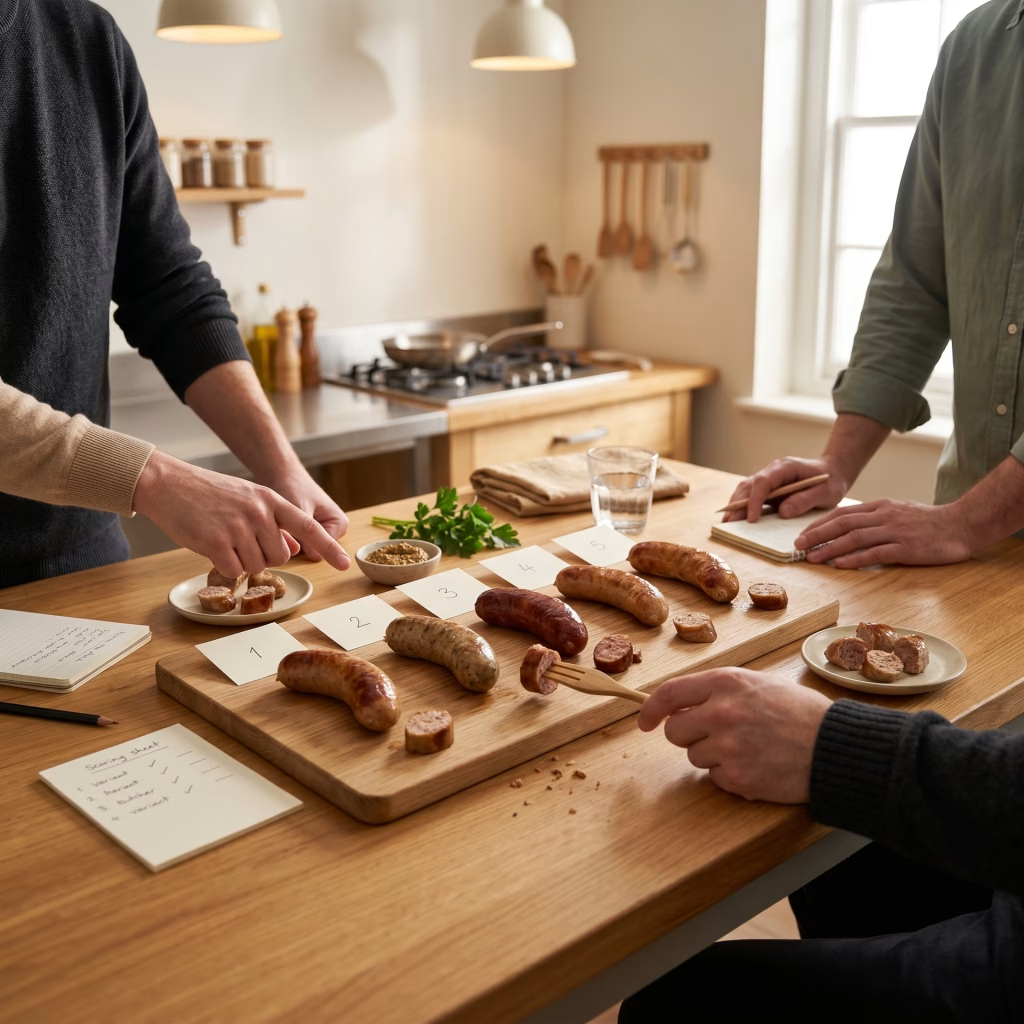
Create and Refine Ideas
You have a defined opportunity, a sized platform or a sequenced pipeline. The next move is generating and pressure-testing the concepts that build into it. Creative workshops, Hothouse sessions, co-creation with consumers, buyers and category experts, concept labs and concept screening. This is where the strategy becomes a concept set with conviction behind it.
-

Decode People, Categories and Emerging Trends
Opportunity work is sharpest when it sits on a clear read of the category, the consumer and the trends shaping both. If the diagnostic stage is showing gaps in foundational understanding, the strongest move is to step back into decoding work first. We will tell you on the scoping call if the brief needs that step before the opportunity work earns its place.
-
Launch and Scale Innovation Successfully
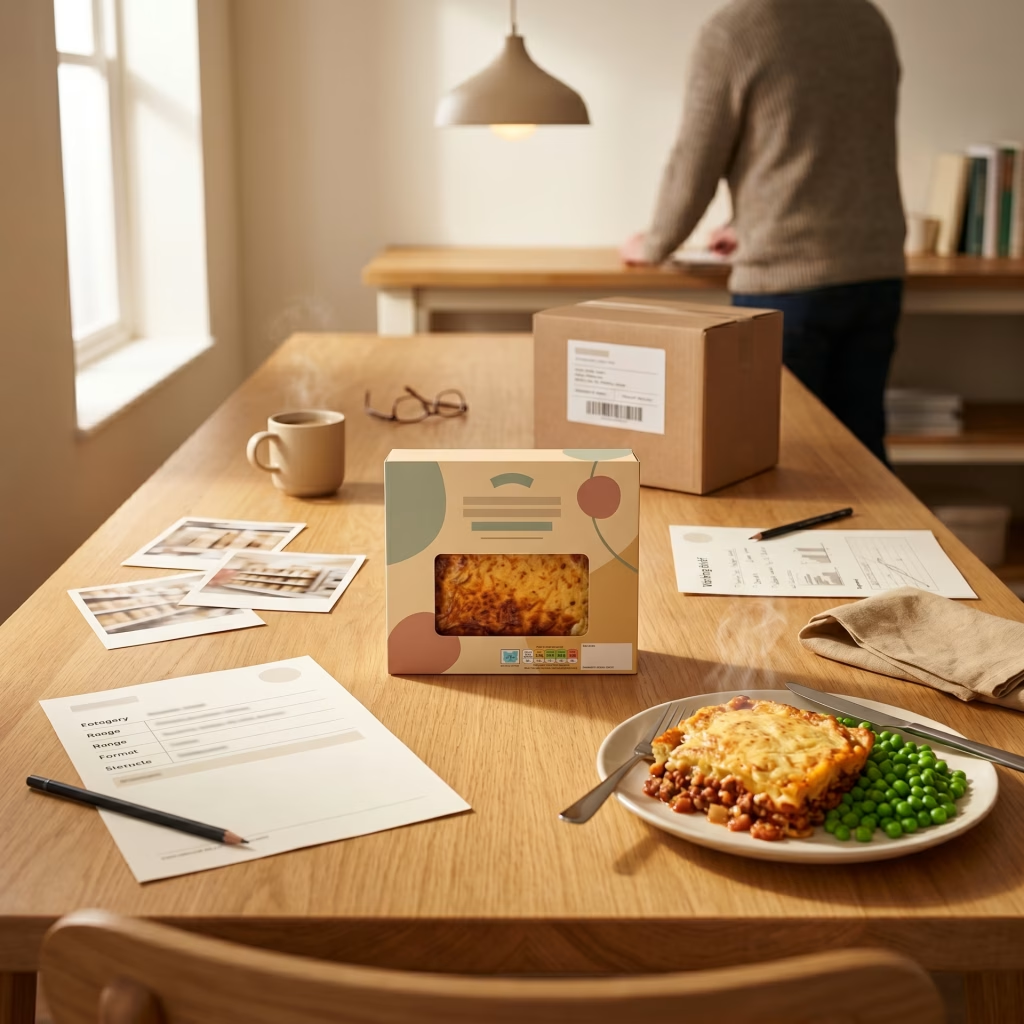
Some opportunities do not need a creative phase because the proposition is already defined, what is missing is the commercial route to market. Retailer pitch support, briefing pack creation, manufacturing solutions, volumetric forecasting and revenue modelling can turn an identified opportunity directly into a launch plan, particularly for partnership, licensing or own-label work.

Built for every channel in food and drink
-

FMCG and branded manufacturers -

Grocery, retail and own label -
Food service -
QSR and high street -
Hospitality
Growth strategy that delivered
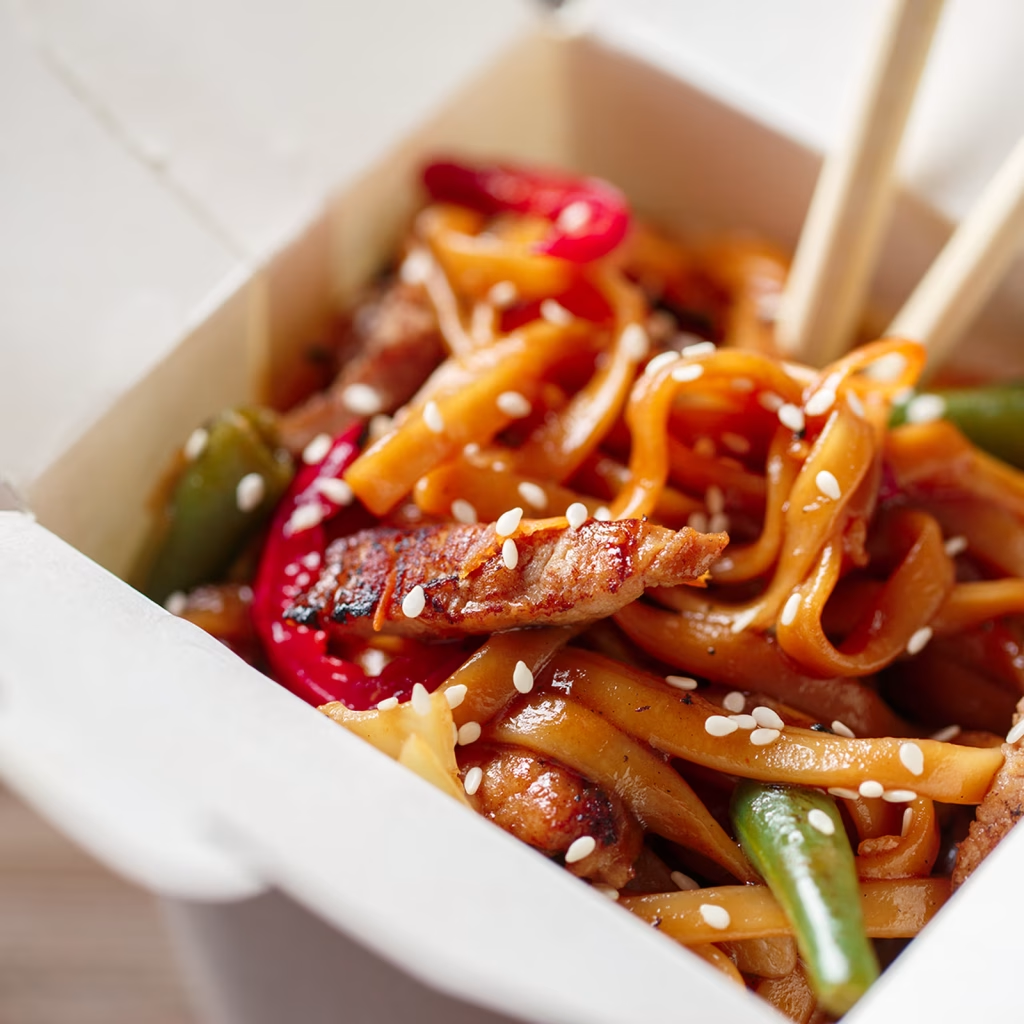
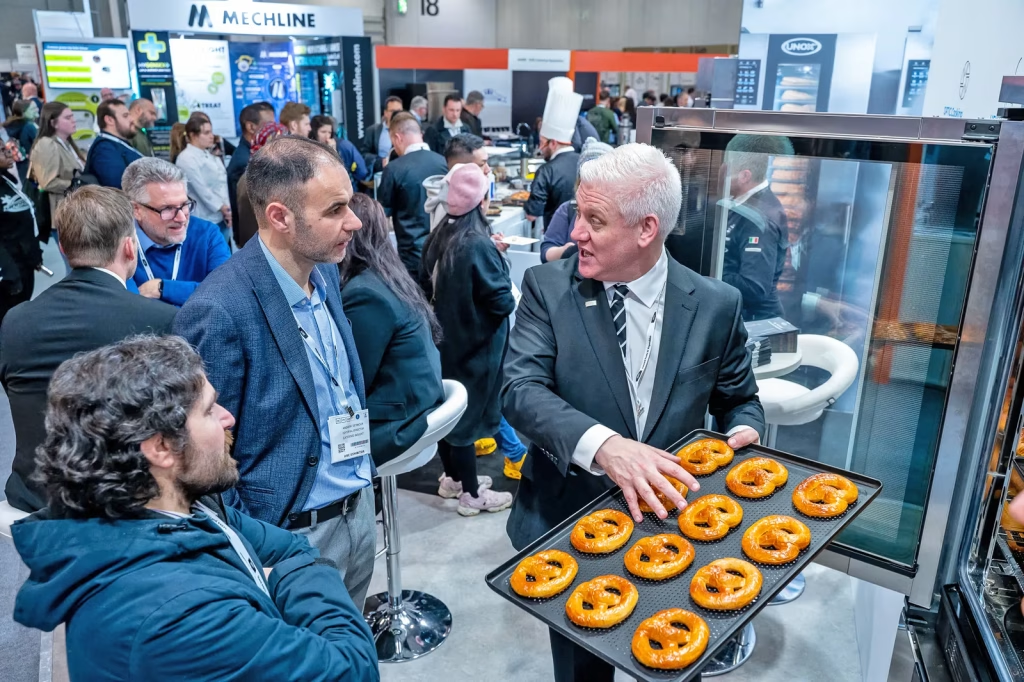
Three projects across different channels and different tools.


FAQs
Do I need to have done decoding work first?
Not necessarily, but it helps. Strong opportunity work sits on a clear read of the category, the consumer and the trends shaping both. If you have done that work recently (whether with us or in-house), we will use it as the foundation. If you have not, our insight tools on this page (i360 audit, needs landscaping, exploratory insight) do the diagnostic work as part of the programme. We will tell you on the scoping call which route is right.
What is the difference between this and a strategy consultancy?
Two things. Specialism: food and drink is the only sector we work in, which means the team already knows the categories, the buyers, the operators and the rhythm of the trading year. Operating bias: our senior team has worked client-side inside retailers, manufacturers and operators, so the strategy is built to be deliverable rather than only defensible. A generalist consultancy can write a strategy that survives the board meeting. We write strategy that survives the meeting after.
What is the output at the end?
A working strategy document. Each opportunity carries the evidence, the size, the prioritisation, the route in and the implications for the next phase of work. The document is built for the people who have to deliver against the strategy, not for the people who have to approve it. We can supplement with board-ready outputs separately if the brief requires both.
How long does this work typically take?
Single-tool projects (a needs landscape, an opportunity map) run from four to eight weeks. A full opportunity programme that runs diagnostic and generative tools end to end typically takes ten to sixteen weeks. The biggest variables are the number of markets, the depth of diagnostic required, and whether the work has to land in time for a specific commercial moment.
Can you work alongside our internal innovation or strategy team?
Yes. A lot of our opportunity work runs alongside an internal team rather than in place of it. We can act as the senior strategic lead, as the diagnostic engine, as the external challenger or as the workshop facilitator, depending on where the gap is in the internal capability. The scoping call is where we agree the working model.
Can you size the commercial opportunity, not just identify it?
Yes. Each opportunity in our output is sized as well as named. Sizing draws on category data, internal sales data where available, comparable benchmarks from analogous launches and volumetric modelling where the brief calls for it. Sizing is at the centre of how we prioritise, not a footnote to it.
What happens after the opportunity is identified?
Most clients move into ideation (Challenge 03) to generate the concepts that build into the opportunity, or directly into launch and scale (Challenge 05) if the opportunity is already a defined proposition that needs commercialising. We scope the next phase as the strategy lands, so the momentum carries through.
Do you work internationally?
Yes. Our head office is at Mission Kitchen in London and we deliver projects across mainland Europe, the United States and the United Arab Emirates. International opportunity work is run with senior FIS Group oversight throughout, using trusted local partners on the ground where the brief requires them.
Need to find your next growth platform before the competition does?
Tell us the commercial question on the table. We will tell you which combination of insight and innovation tools will get you to a usable opportunity set, what the timeline looks like, what it will cost, and who will run it. Twenty minutes on a scoping call with a senior strategy specialist.