The shift from one-off work to ongoing capability
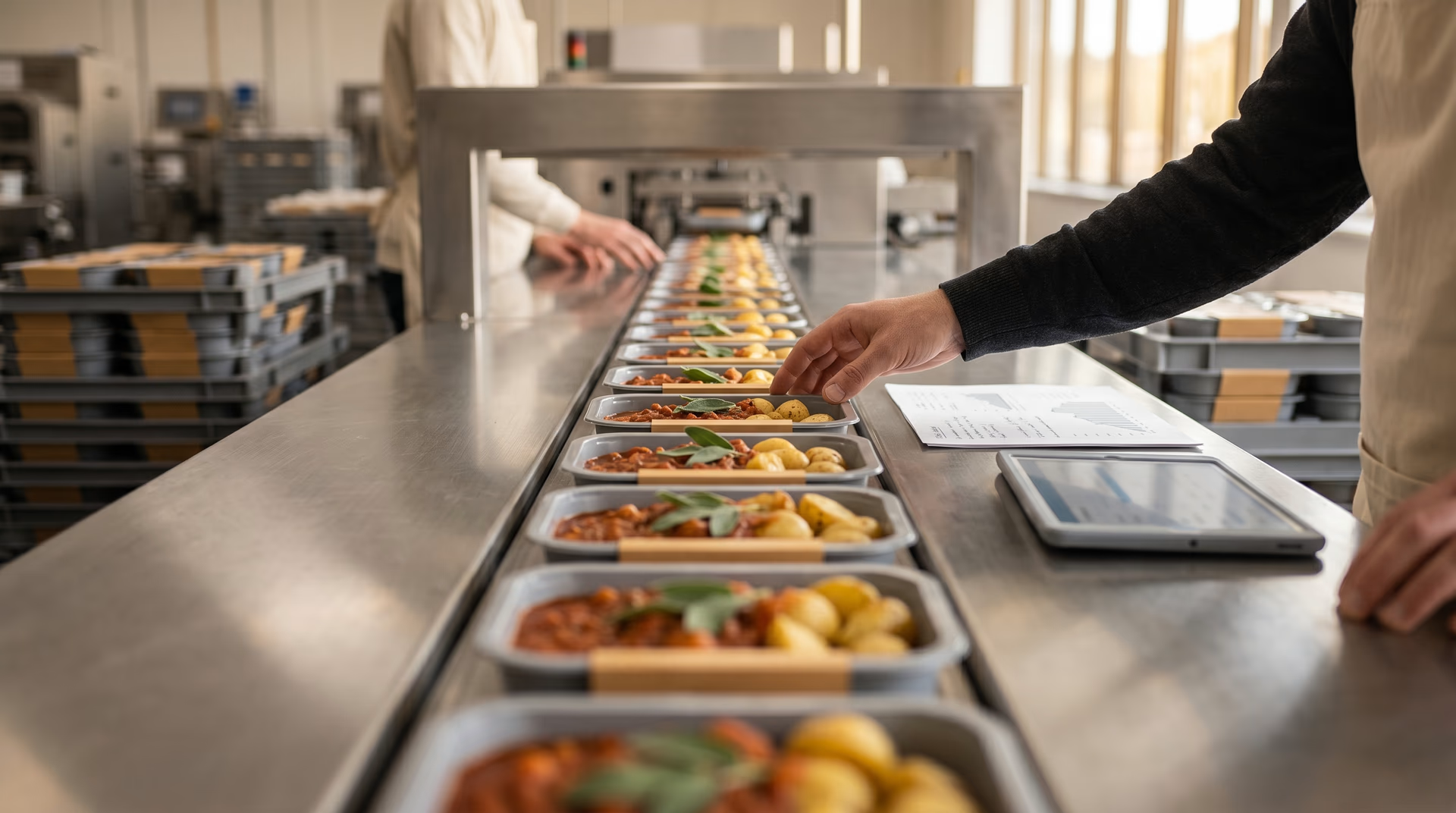
Continuous insight work is the shift from commissioning research to building always-on capability. The other challenges in the spine close with a defended decision, a validated product, a launched proposition. This one does not close. It compounds. The work runs through quarters, financial years and category cycles, feeding back into every other decision the business has to make.
Most always-on briefs land when one of three pressures is on the team. A category is moving faster than the annual research cycle can keep up with, and the team needs a live signal rather than a delayed report. An innovation pipeline is being run continuously, and the next round of ideas needs consumer input ready when development starts rather than scheduled six weeks out. Or a brand has launched and the early in-market signal needs to evolve into sustained tracking that informs the next cycle. In every case, the question is the same: how do we keep the consumer, the category and the competition in the room, every day, not just at the readout?
What lands at the end of the first year of work is not a report. It is a working capability. A community we have built with you. A tracking programme tuned to your decisions. A subscription that pays for itself every quarter because someone on your team is using it. The output is the ongoing flow of evidence and recommendation, not a quarterly deck that lands in a shared drive and stays there.
One toolkit. Four ways to keep learning.
Continuous insight is built almost entirely from our Strategic Insight capability, which is why this challenge has a single toolkit rather than the parallel insight and innovation toolkits used elsewhere in the spine. Innovation tools tend to be event-driven (workshops, sprints, launches). Continuous insight tools are programme-driven. The work runs over months and years rather than weeks. Four tools, each one a different shape of always-on capability, scoped around what you need to keep learning about and how fast you need the loop to run.
Insight tools
Programme-driven tools for keeping consumer, category and competitive understanding current across the year.
-
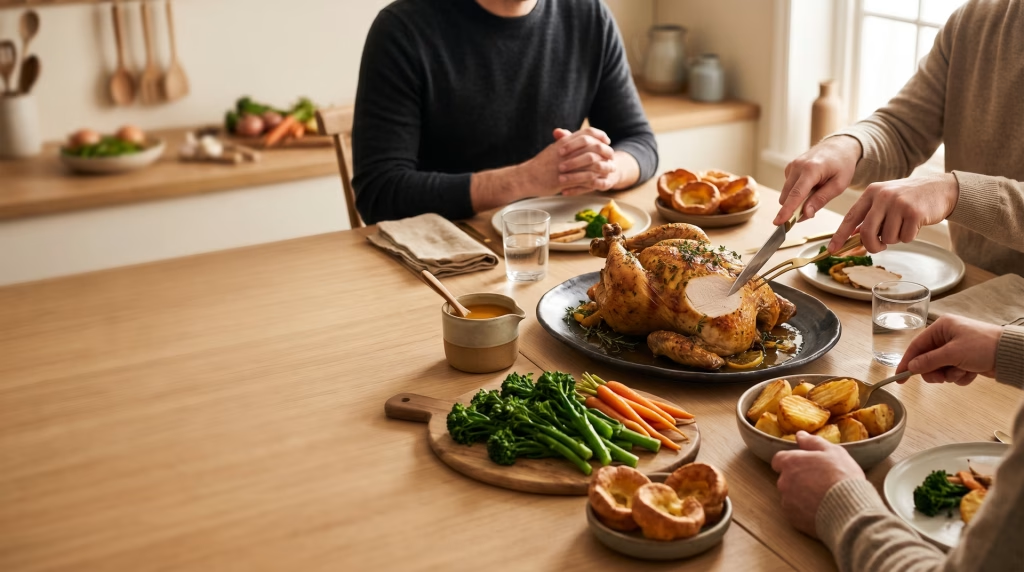
Consumer Closeness Programme
Specialist ongoing consumer closeness for food and drink brands needing sustained connection to consumer reality rather than episodic project immersion.
-
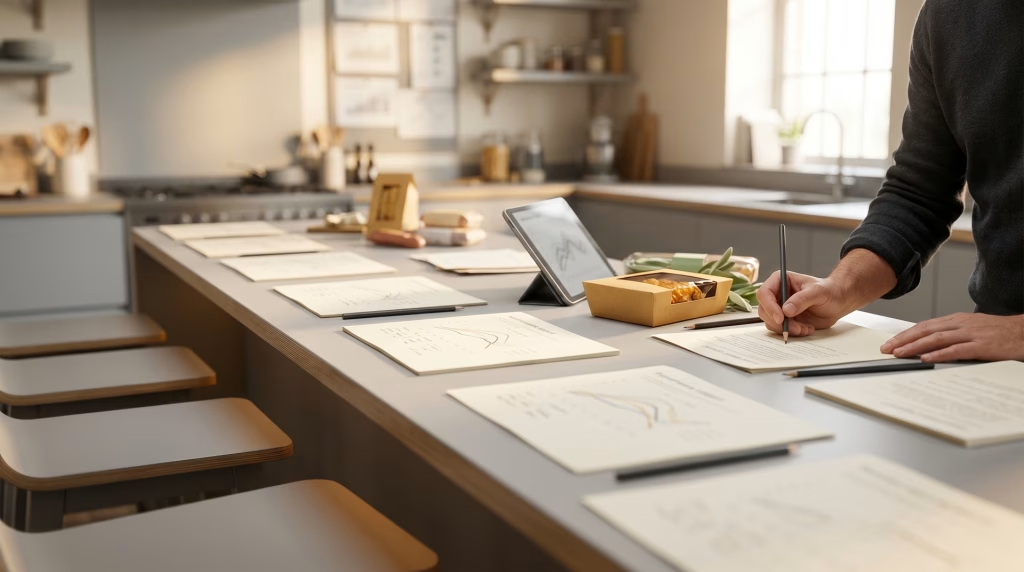
Syndicate Studies
Specialist syndicate research for food and drink brands needing ongoing category and consumer context.
-
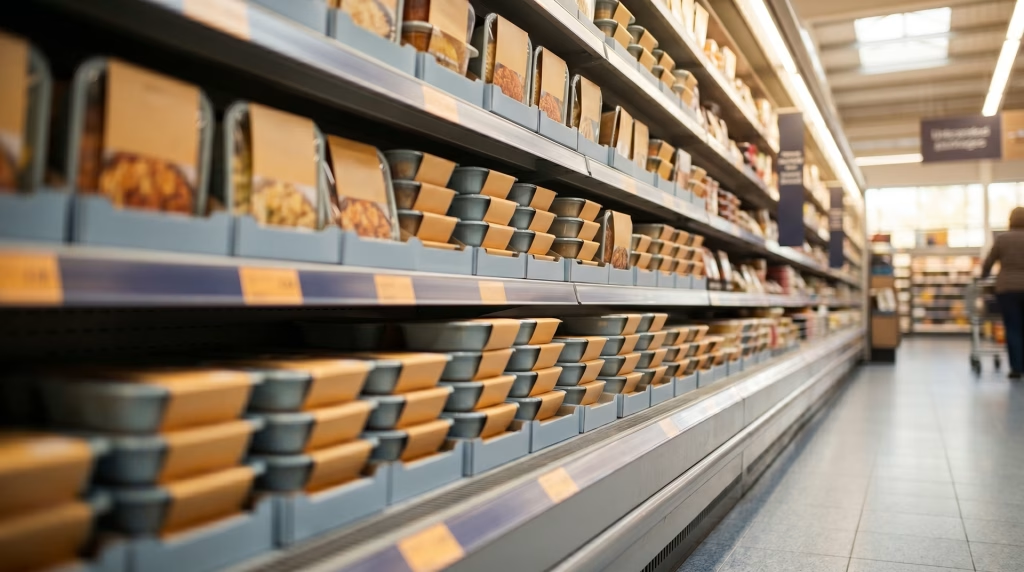
Benchmarking Programmes
Specialist benchmarking programmes for food and drink brands needing ongoing competitive context across brand performance, innovation pipeline, consumer perception, channel dynamics and operational reality.
-
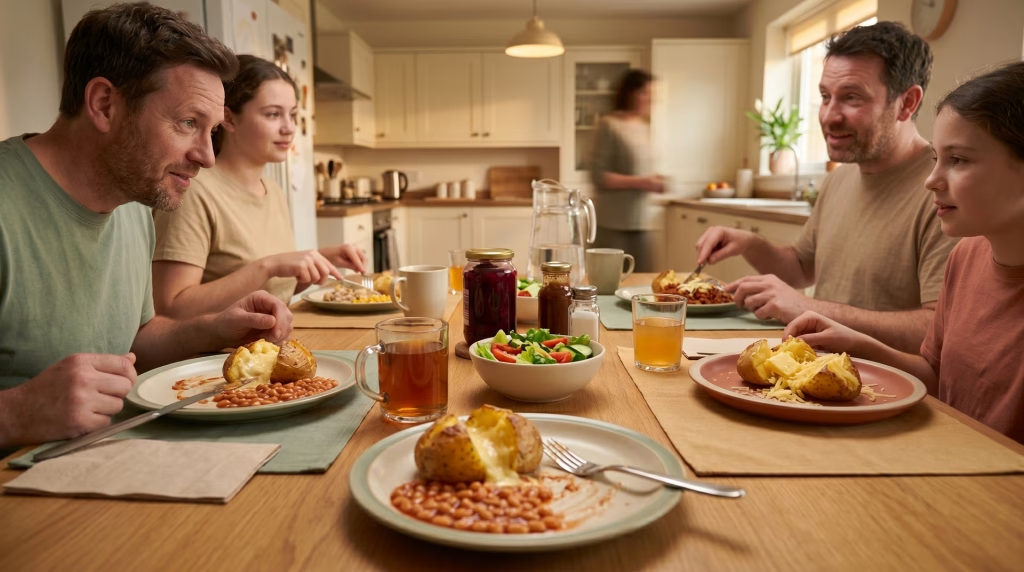
Meal Tracking
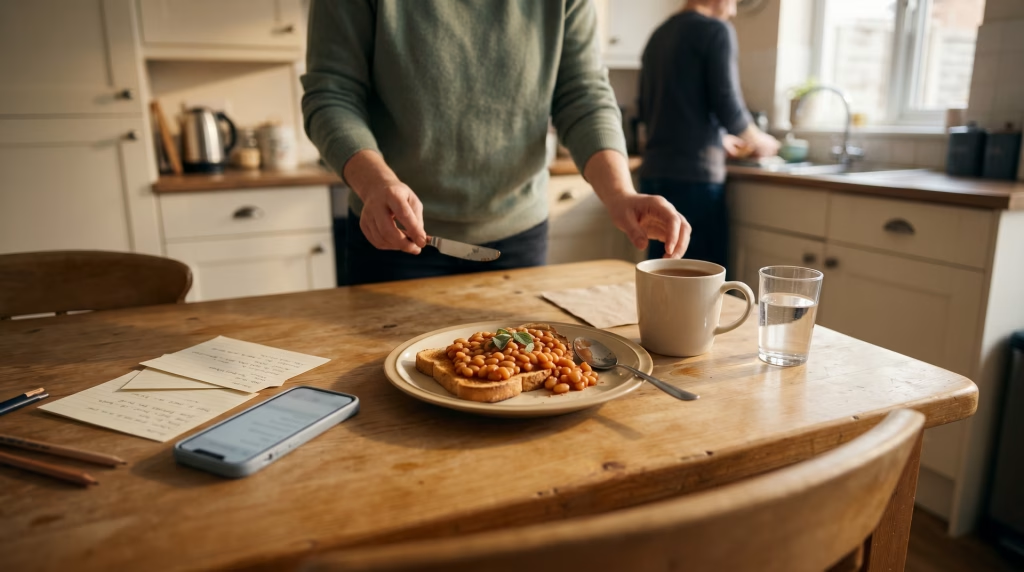
Specialist meal tracking for food and drink brands needing ongoing evidence of consumer eating behaviour across meals, occasions, dayparts and contexts
How we run continuous insight programmes
-
We scope around the decisions, not the data
Twenty minutes on a scoping call. You tell us which decisions you make repeatedly and which questions you find yourself asking more than once a year. We tell you which combination of always-on tools will keep the answer current, and we build the programme around your decision rhythm rather than around a standard tracking template.
-
Build the loop with the team that will use it
A continuous insight programme is only valuable if someone on your side is actually using it. We involve the user teams (marketing, innovation, category, strategy) in the design of the programme from day one, so the cadence, the outputs and the interpretation rhythm match the rhythm of the meetings the data needs to land in.
-
Run with senior interpretation throughout
Always-on programmes lose their value the moment they become unread dashboards. Our senior team is in the loop continuously, not just at quarterly readouts. The interpretation comes with the data, not after it. The community moderator knows the community. The tracking lead knows the decisions the tracking is informing. The syndicate lead curates which questions are worth asking next, based on what the data is already saying.
-
Feed the loop into the next cycle
Continuous insight is only honest as an investment when it is actively shaping the next decision. We run quarterly review sessions that tie what the always-on programme is surfacing to the next round of innovation, opportunity or launch work. This is what turns a tracking dashboard into a strategic capability: the line from the data, to the recommendation, to the next decision.
If your brief sounds like one of these, you are in the right place
- Our category is moving faster than our annual research cycle can keep up with.
- We need ongoing consumer input ready when the next development cycle starts, not scheduled six weeks out.
- We have just launched and we need sustained tracking to inform the next phase of investment.
- We want to embed consumer-centricity as a built capability, not as a recurring service request.
- We need to benchmark against the category every quarter, not every two years.
- Our team has the same questions surfacing more than once a year and we want a programme that answers them on tap.
If your brief is closer to “we need a one-off deep read of the category” you are probably looking at Challenge 01 (Decode) first. If it is closer to “we need to validate a specific product before launch” Challenge 04 (Build, Test and Refine What Wins) is the better fit.
Always-on insight is only valuable if someone is reading it.
Most continuous insight programmes start strong and end as unread dashboards. The data keeps arriving. The reports keep landing in inboxes. The community keeps generating activity. But the line from the data to the decision quietly breaks, and the programme that was meant to build capability ends up being renewed out of habit rather than value.
Three things keep our continuous insight programmes alive longer than that. First, specialism. Food and drink is the only sector we serve, which means we know what is worth tracking, what is noise and what the category is actually doing underneath the headline numbers. Second, senior interpretation. Every always-on programme is led by a senior specialist who reads what the data is saying as it arrives, not at the quarterly readout. The interpretation is built into the rhythm, not appended at the end. Third, the loop into the next cycle. Our programmes are designed to feed the next innovation, opportunity or launch work explicitly, with quarterly reviews tied to your decision rhythm. The data has somewhere to go.
We are not a research agency that drops a quarterly tracker into a shared drive. We are not a community platform that sells software access without senior interpretation. We are the team that runs always-on programmes with the same senior food and drink specialists who run our project work, so the loop between continuous insight and active decision-making stays connected.
The loop completes here. Then it starts again.
Continuous insight is the end of the lifecycle in linear terms, but the point of running it is that the lifecycle is not really linear. The data the programme surfaces feeds back into every other challenge in the spine, depending on what it is showing and where the next decision sits. Most of our continuous insight clients are in active conversation with two or three other parts of the offer at any given time.
-
Decode People, Categories and Emerging Trends
A tracking programme picks up a behavioural shift the team cannot explain. A closeness community surfaces a tension that needs deeper investigation. A syndicated study reveals a category move that needs context. In every case, the right next step is a focused piece of decoding work to interpret what is being seen before the next strategic move is made.
-
Unlock Growth Opportunities
Continuous insight is one of the strongest sources of new opportunity, because the trends, gaps and white space appear in the always-on data long before they show up in a one-off study. When the programme is surfacing a pattern that looks like an opportunity, the natural next step is opportunity work to size it, prioritise it and turn it into a working strategy.
-

Create and Refine Ideas
Sometimes the always-on programme identifies a specific need state, occasion or audience that the existing pipeline does not address. When that happens, the next move is into ideation work to generate and refine concepts that build into the gap the continuous insight has named.

Built for every channel in food and drink
-
FMCG and branded manufacturers -

Grocery, retail and own label -
Food service -
QSR and high street -
Hospitality
Always-on programmes that compounded
Three programmes across different shapes of always-on capability.


FAQs
What is the difference between always-on tracking and a one-off study?
A one-off study answers a specific question at a specific moment. Always-on tracking keeps the answer current as the question evolves. One-off studies are right when the decision is event-driven and the answer has a defined lifespan. Tracking is right when the same questions surface repeatedly and the answer needs to keep pace with the category. Many clients use both: one-off studies for new decisions, tracking for the ones that repeat.
How much do continuous insight programmes typically cost?
It depends on the shape of the programme and the depth of senior interpretation involved. A subscription programme is the most cost-effective entry point. Bespoke tracking and closeness community programmes are typically scoped as annual partnerships with quarterly billing. Syndicated studies share the cost across subscribers, which makes deeper category work affordable at a unit cost a single client could not justify alone. We give you realistic numbers at proposal stage and we are honest about which programme shape will earn its keep for your specific brief.
Can I subscribe to existing studies or only commission bespoke ones?
Both. Our syndicated studies and subscription programmes are explicitly designed for clients who want depth without funding the full bespoke investment. Bespoke tracking and closeness work is the right call when the questions are specific to your business and the answers cannot be shared with a wider subscriber base.
What is a closeness community and how does it work?
A closeness community is a long-term online community of curated consumers who are in regular dialogue with your team. The community runs on a structured cadence: weekly prompts, themed conversations, collaborative tasks. A senior moderator from our team runs the engagement, interprets what is being surfaced and feeds the output into your decision rhythm. You can return to the community whenever a brief needs a fast read or a deeper conversation, and the consumers in the community come to know your category as well as you do.
How is meal tracking different from other tracking?
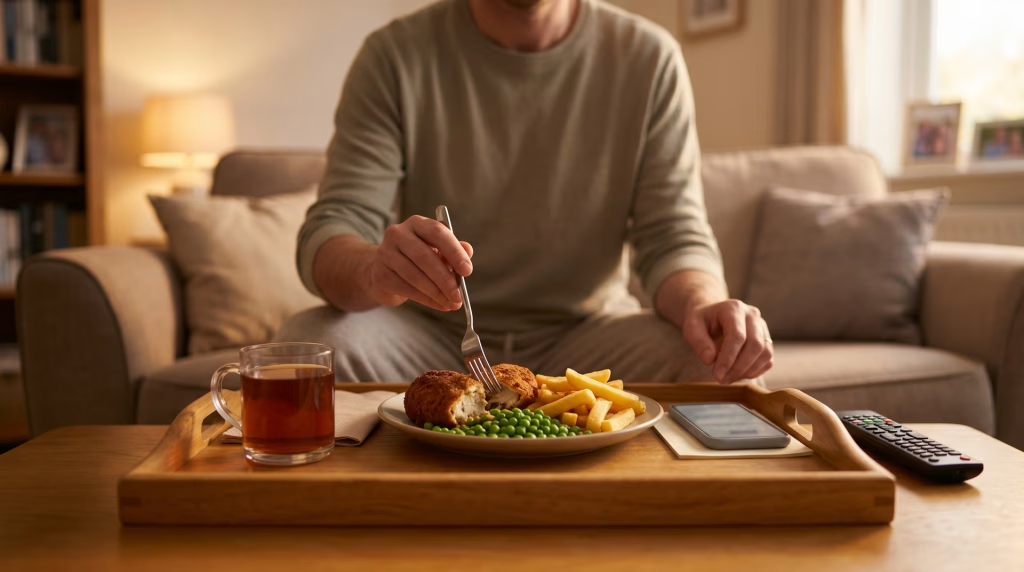
Meal tracking is a specialist format built for the food and drink category. It captures meal occasions in detail: what is being eaten, when, where, by whom, with whom, in what mood and at what price point. Standard tracking can carry these variables but rarely with the granularity that meal-shaped behaviour requires. We use meal tracking where the brief is about understanding occasion-led shifts in consumption rather than brand health or category trend.
Can a continuous insight programme adapt as our priorities change?
Yes, and it should. Our tracking programmes are modular by design, which means modules can be added, dropped or reshaped as priorities move through the year. Closeness communities can be re-themed quarter by quarter. Subscription programmes flex their topic agenda based on emerging questions. The programmes are built to evolve with the business, not to enforce a fixed template across multiple years.
How does senior interpretation work on an always-on programme?
Senior leads are in the programme continuously, not just at quarterly readouts. The interpretation is built into the rhythm: weekly community reviews, monthly tracking commentary, quarterly strategic reads tied to your decision cycle. The senior lead who runs your programme is the same senior person who would lead a one-off project in the same space, which means the always-on work carries the same depth of interpretation as the project work.
What happens at the end of an annual contract?
Annual continuous insight contracts conclude with a structured review of what the programme surfaced, how it shaped decisions, and what the next year should change. Most renewals adjust the shape of the programme based on that review rather than rolling forward unchanged. The honest commercial position: if the programme is not earning its keep, we will tell you and we will recommend ending it. The point of an always-on partnership is that it stays valuable, not that it stays renewed.
Need the consumer in the room every day, not just at the readout?
Tell us which decisions you make repeatedly and which questions surface more than once a year. We will tell you which always-on programme shape will earn its keep against them, what the timeline looks like, what it will cost, and who will run it. Twenty minutes on a scoping call with a senior continuous insight specialist.