

What Qualitative Product Testing is actually for
Quantitative Product Testing answers the binary question. Does the product meet the launch bar? What are the scores? What does the data predict? Useful and decision-grade but incomplete. Quantitative testing tells you the score; it cannot tell you why the score is what it is, what specifically needs addressing, what the consumer experience actually feels like, or what fixes would unlock better performance. Quantitative answers the “should we launch” question; it does not answer the “what should we change before launch” question.
The structural problem is that most launch decisions involve both questions, and most product testing programmes try to answer both with quantitative methodology alone. Quantitative metrics surface symptoms; qualitative methodology surfaces causes. Quantitative testing tells you that consumers liked the product less than expected; qualitative testing tells you exactly which sensory dimension underperformed, which use moment created friction, which executional detail consumers responded to negatively. Without the qualitative layer, the launch decision is made against partial evidence and the fixes get made against guesswork rather than against consumer depth.
Qualitative Product Testing is the structured depth consumer evaluation methodology for actual products. Smaller samples (typically twenty to forty consumers per brief), deeper per-consumer engagement (extended sessions rather than questionnaires), output designed for actionable issue identification and commercial direction rather than statistical decision support. Three formats scoped against the brief: in-home qualitative for real-life consumption depth, central location qualitative for controlled tasting and sensory exploration, in-restaurant qualitative for foodservice context depth. Senior food and drink specialists run the work and lead the interpretation throughout.
It is not the right tool for every brief. If the brief is decision-grade quantitative validation for launch commitment, Product Testing is the right tool. If the brief is concept testing rather than product testing, Concept Screening (quantitative) or Concept Labs (qualitative) are structurally different. If the brief is general focus group work rather than product-specific depth evaluation, generic qualitative research may be more proportionate. Qualitative Product Testing sits specifically when developed products need depth consumer evaluation to surface issues, understand experience or inform development iteration.

What we do differently
-
01. Depth methodology, not snapshot reaction
The structural difference from focus groups or generic qualitative work. Our qualitative product testing is built around extended consumer engagement with the actual product: real use over time, sensory exploration in depth, iterative sessions that build understanding rather than capture initial reaction. The methodology surfaces causes (why consumers respond the way they do) rather than just symptoms (what consumers say). Output is actionable for development and commercial teams rather than just informative for analysts.
-
02. Three formats scoped against the consumer reality the product faces
Mirroring the Product Testing structure but with qualitative methodology applied. In-home qualitative for products consumed at home where real-life use over time matters; central location qualitative for products requiring controlled sensory exploration or comparative tasting; in-restaurant qualitative for menu items where the foodservice context is part of the product experience. We scope the right format at the start against the consumer reality the product will face, rather than defaulting to one methodology regardless of product type.
-
03. Senior food and drink interpretation throughout
The technical difficulty of qualitative product work is translating consumer language and behaviour into commercially useful direction for development and launch decisions. Senior food and drink specialists run the interpretive layer throughout: what consumer behaviour signals about product issues, what sensory language means in food and drink commercial reality, what fixes would unlock better consumer experience. We do not delegate the interpretation to junior researchers because qualitative product work requires sector specialism to translate consumer evidence into commercial direction reliably.
-
04. Designed to integrate with quantitative Product Testing
Qualitative Product Testing sits naturally alongside quantitative Product Testing in major launch programmes. Two common sequences: qualitative first (issue diagnostic before quant validation) so issues are addressed before the launch decision evidence build; qualitative after quantitative (depth understanding behind the scores) so the launch decision can be made with full evidence rather than scores alone. The methodology is built specifically for integration with quantitative work rather than as a standalone exercise.
What we use Qualitative Product Testing for
You have developed products approaching launch but want to surface issues that quantitative testing would score against without explaining. Qualitative Product Testing runs the depth diagnostic before quantitative validation: surfacing what consumers respond to negatively, what executional details create friction, what fixes would unlock better performance. Output is actionable issue identification that informs final development before the quantitative launch decision evidence build.
Sensory exploration for product development
Your product development is at a stage where deep sensory understanding matters: how consumers actually experience taste, texture, aroma, mouthfeel, finish. Qualitative Product Testing runs the sensory exploration in depth: what consumers notice, what language they use, where the product is meeting or missing the sensory ambition. Used during development to inform iteration rather than after development to validate.
Reformulation depth check for consumer detection
You are reformulating an existing product and need consumer-level detection assessment in depth. Quantitative testing tells you whether the reformulation is preferred; qualitative testing tells you what consumers notice, where the detection happens, whether the new version reads as the same product or as a different one. Critical for cost-reduction reformulation where the commercial case depends on consumer non-detection.
Menu item experience depth in foodservice context
You have menu items in real foodservice context and need depth understanding of the consumer experience: how the item integrates with the meal, what the operational context does to the experience, where the item earns or loses commercial position. In-restaurant qualitative methodology captures the integrated dining experience at depth, including the elements quantitative scores cannot surface.
Post-quantitative depth understanding
You have quantitative Product Testing scores and need depth understanding of what the scores mean: why did the product score where it did, what specifically drove the score, what fixes would lift the performance. Qualitative Product Testing post-quantitative provides the explanatory layer that quant work alone cannot deliver, particularly important when scores are unexpected or when launch decisions require depth justification rather than statistical summary alone.
Iterative consumer input during product development
You are at active development stage and need ongoing consumer depth input to inform iterations. Qualitative Product Testing in iterative formats (multi-session work, embedded consumer engagement across the development window) provides the development-stage depth that informs ongoing R&D and NPD decisions rather than serving as a one-shot evaluation. Particularly useful for R&D Sprints where compressed development benefits from concurrent consumer depth input.
5. How a Qualitative Product Testing project runs
-
How a Qualitative Product Testing project runs
From developed product to actionable consumer depth
-
Scoping call.
Twenty minutes on a call. You tell us the products to test, where they came from (R&D Sprints, Menu Development, internal NPD, reformulation work), the consumer reality the product faces, the commercial question the qualitative work has to answer (issue diagnostic, sensory exploration, post-quant depth, development iteration support), the audience for the deliverable, the integration with quantitative testing if relevant, and the timeline. We tell you which format is right for the brief (in-home qualitative, central location qualitative, in-restaurant qualitative), what sample structure makes sense, and roughly what it will cost. Where the brief would be better served by Product Testing (quantitative decision-grade), by Concept Labs (qualitative concept work rather than product work), or by generic qualitative research, we will recommend the right alternative honestly.
-
Format choice and design.
The senior team designs the qualitative methodology specifically against the brief: format choice, sample structure and recruitment criteria, session design (extended individual sessions, multi-session work, group sessions, in-context observation depending on the brief), interpretive framework, integration points with quantitative work or development team if relevant. Design signed off by the client before fieldwork starts.
-
Recruitment and preparation.
Specialist recruit through food and drink panels and trusted local recruiters. Profiles scoped specifically against the brief and the consumer reality the product faces. Pre-fieldwork preparation includes briefing materials calibrated for qualitative product engagement (different from briefing for reactive research because qualitative work depends on consumers being able to engage with depth rather than just respond), product stimulus preparation, session logistics.
-
Fieldwork sessions.
Senior food and drink specialists facilitate the sessions, structured for depth engagement with the product rather than for reaction capture. Extended individual sessions, multi-session work across product use period, group sessions with product evaluation, or in-context observation depending on the brief. Senior interpretation happens live in the room rather than retrospectively, which captures the depth understanding that retrospective interpretation alone cannot.
-
Senior synthesis and actionable deliverable.
Senior team synthesis into the structured deliverable: actionable issue identification with specific fixes recommended, sensory and experience understanding scoped for development and commercial teams, integration with quantitative testing where relevant, recommendations for the next phase of work. The deliverable is built for development action and commercial decisions rather than as a qualitative research report, and lands within two to three weeks of the final fieldwork session.
Three formats. Scoped to the consumer reality your product faces, mirroring the Product Testing structure with qualitative methodology applied.
Different products face different consumer realities and need different qualitative methodologies. The three formats below are the qualitative equivalents of the Product Testing formats, with depth methodology applied to each. Some briefs use a single format; others combine two for multi-context depth understanding.
In-home qualitative
Consumers use products in their own homes across extended periods, with depth qualitative sessions (extended individual interviews, multi-session work, or embedded engagement) capturing the real-life consumption experience. Used when the product is consumed at home and the depth understanding of how the product fits into daily life matters. The methodology surfaces what controlled testing cannot: actual storage, preparation, consumption rhythm, integration with eating occasions, the experience that builds across multiple uses. Typically delivers depth deliverable within six to ten weeks.

Central location qualitative
Consumers attend a central location for extended qualitative sessions with the product, designed for depth sensory exploration, comparative tasting work, or controlled product engagement. Used when controlled conditions matter (sensory exploration where consistency of preparation is critical, comparative work where multiple products need direct comparison) or when the central location matches the consumption context (foodservice items in controlled conditions). The methodology surfaces sensory depth, comparative judgement and controlled experience that in-home work cannot. Typically delivers within four to eight weeks.

In-restaurant qualitative
Menu items experienced in real foodservice context (restaurants, QSR, hospitality venues), with depth qualitative methodology capturing the integrated dining experience. Used when the menu item depends on real foodservice context for credible evaluation and depth understanding matters more than statistical validation. The methodology surfaces what kitchen-only or central-location testing cannot: how the menu item performs alongside the service, what the operational reality does to the consumer experience, how the item integrates with the broader dining occasion. Typically delivers within six to ten weeks.

Food and drink is all we do
We are not a generalist qualitative agency that takes the occasional food brief. Food and drink is the only sector we work in, and our senior team runs qualitative product work continuously rather than dipping in from other sectors. The interpretation that translates consumer language and behaviour into commercial direction depends on sector specialism: knowing what sensory language signals in food and drink commercial reality, knowing which use behaviours predict commercial performance, knowing how to translate consumer evidence into actionable development and commercial direction. Generic qualitative research can capture consumer voice; sector specialists can read what the voice means commercially.
That focus is why we work with 11 of the UK’s top 40 food and drink brands.
Other ways to build, test and refine what wins
Qualitative Product Testing is one tool in the broader Build, Test & Refine What Wins toolkit. Depending on the brief, one of these might be a better fit, or a stronger partner alongside the qualitative work.
-

Product Testing (IHUT, CLTs, in-restaurant)
Specialist consumer product testing for food and drink innovation.
-

R&D Sprints
A compressed R&D methodology designed for food and drink innovation work where speed matters as much as quality.
-

Menu Development
Specialist menu development for foodservice, QSR, restaurants, hospitality and contract catering.
-
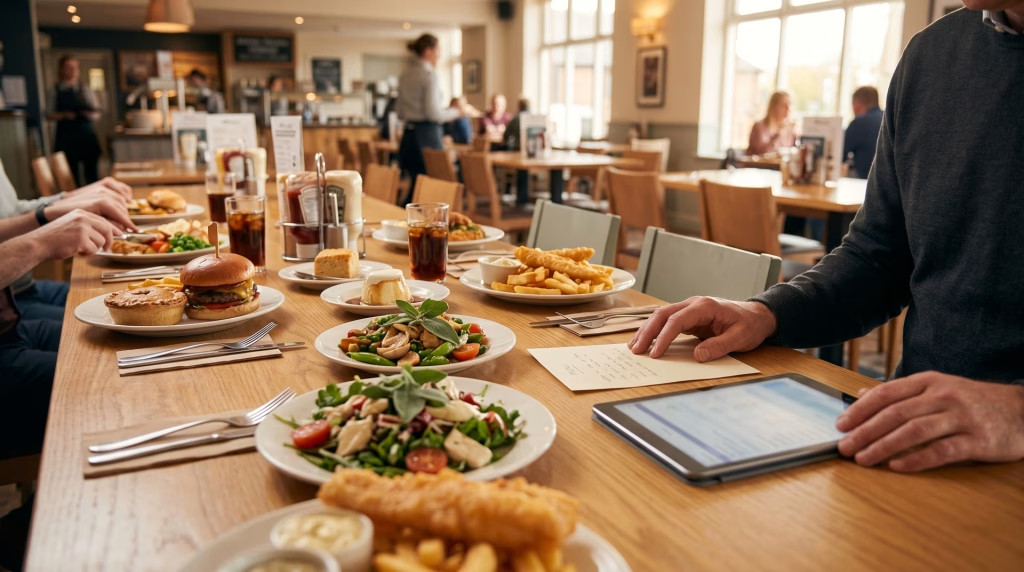
Menu Testing
Specialist menu-level testing for foodservice, QSR, restaurants, hospitality and contract catering.

Qualitative depth that informed real launch decisions
Three real Qualitative Product Testing projects across different formats and different briefs.

FAQs
How is this different from Product Testing?
Methodology depth and commercial purpose. Product Testing runs decision-grade quantitative methodology with larger samples (typically two hundred to one thousand consumers per format) designed for statistical decision support and launch evidence build. The output is statistical performance assessment scoped for board, investment committee and brand leadership scrutiny. Qualitative Product Testing runs depth methodology with smaller samples (typically twenty to forty consumers per brief) designed for surfacing issues and understanding consumer experience. The output is actionable depth understanding scoped for development teams and commercial direction. Different commercial questions: Product Testing answers “should we launch”; Qualitative Product Testing answers “what specifically needs addressing.” The two services run together in most major launch programmes for full evidence.
How is this different from focus groups?
Methodology design and depth. Generic focus groups are typically group sessions of one and a half to two hours with consumers reacting to stimulus. Qualitative Product Testing is built around extended consumer engagement with the actual product: real use over time for in-home work, sensory exploration in depth for central location work, integrated foodservice experience for in-restaurant work. The methodology is designed for depth understanding through extended product engagement rather than for snapshot reaction in a single session. Different methodologies for different briefs; generic focus groups suit some briefs but not those that depend on depth understanding through extended product engagement.
How is this different from Concept Labs?
What is being tested. Concept Labs evaluates concepts (propositions, descriptions, ideas) qualitatively at the development gate to inform which concepts go forward into product development. Qualitative Product Testing evaluates actual developed products qualitatively at the launch gate (or pre-launch development gate) to inform what needs addressing before commercial commitment. Different stages of the innovation flow, different methodologies calibrated for different objects of evaluation. Concept Labs methodology cannot evaluate the actual product experience (the product does not exist yet); Qualitative Product Testing methodology cannot evaluate the concept proposition (it requires the developed product). Complementary at different stages.
Which format do we need (in-home, central location, in-restaurant)?
Depends on the consumer reality the product faces, mirroring the Product Testing format choice logic. In-home qualitative is right for products consumed at home where the depth understanding of real-life use matters (most FMCG food and drink, household-consumed products, products where the multi-occasion experience reveals issues that single-use cannot). Central location qualitative is right for products requiring controlled sensory exploration or comparative tasting (sensory work, reformulation comparison, controlled preparation). In-restaurant qualitative is right for menu items where the foodservice context is part of the product experience (the service, the ambience, the operational reality). We will recommend the right format at scoping.
How many consumers participate?
Smaller numbers than quantitative testing because the depth per consumer matters more than the breadth of response. Typical formats: twenty to thirty consumers for focused single-format briefs; thirty to forty consumers across multi-cohort or multi-format briefs; forty plus for major launch programmes with integration across quantitative work. The recruitment is profile-deep rather than sample-broad, because the work depends on each consumer being able to engage with depth rather than just respond at scale.
Can we run qualitative and quantitative together?
Yes, and this is the most common commissioning structure for major launch programmes. Two common sequences: qualitative first (issue diagnostic before quantitative validation) so issues are addressed before the launch decision evidence build; qualitative after quantitative (depth understanding behind the scores) so the launch decision can be made with full evidence rather than scores alone. Some programmes commission both formats as one integrated engagement scoped at the start; others sequence them based on the development timeline. We will recommend the right combination at scoping.
What is the actual deliverable?
Actionable depth understanding scoped for development and commercial teams. Specifically: actionable issue identification with specific fixes recommended where issue diagnostic was the brief, sensory and experience depth understanding scoped for development team action, integration with quantitative testing where relevant (cross-method synthesis when both run together), and recommendations for the next phase. Format agreed at the start so the work feeds the right meeting (development team workshop, NPD committee briefing, post-quantitative interpretation session, R&D Sprint integration).
How long does Qualitative Product Testing take?
Four to ten weeks from scoping call to final deliverable depending on the format. Central location qualitative is typically the shortest (four to eight weeks) because the fieldwork is operationally compressed; in-home qualitative typically six to ten weeks because the extended use period requires time; in-restaurant qualitative typically six to ten weeks depending on venue availability. Compressed timelines are possible for focused briefs where the consumer engagement is straightforward; multi-format or international briefs typically run longer. Realistic timelines at proposal stage.
Can we run this internationally?
Yes. We run Qualitative Product Testing across the UK, mainland Europe, the US and the UAE, with local recruit and local fieldwork support. International qualitative work is operationally more complex than single-market because cultural calibration of facilitation matters significantly in qualitative methodology (the interpretation of consumer language and behaviour requires cultural specialism). In-restaurant qualitative internationally has the highest operational complexity because of the foodservice venue partnerships required.
How much does Qualitative Product Testing cost?
Project-based, scoped against the format, the number of consumers and cohorts, the depth of fieldwork, the integration with quantitative work and the geographic scope. Single-format UK qualitative is the lowest entry point; multi-market multi-format programmes integrated with quantitative testing are the highest. We give a clear, all-in quote at proposal stage with no hidden extras.
Got developed products that need depth consumer understanding before launch commitment?
Tell us the products, where they came from, the consumer reality they face, the commercial question the qualitative work has to answer, the integration with quantitative testing if relevant and the timeline. We will tell you which format is right (in-home, central location, in-restaurant), what sample structure makes sense, and what it will cost. Where Product Testing (quantitative), Concept Labs (qualitative concept work), or generic qualitative research would be better, we will recommend that honestly.
Senior food and drink specialists throughout. Three qualitative formats scoped to your product. Depth methodology built for actionable issue identification, not just consumer reactions. Specialists in food and drink, only.