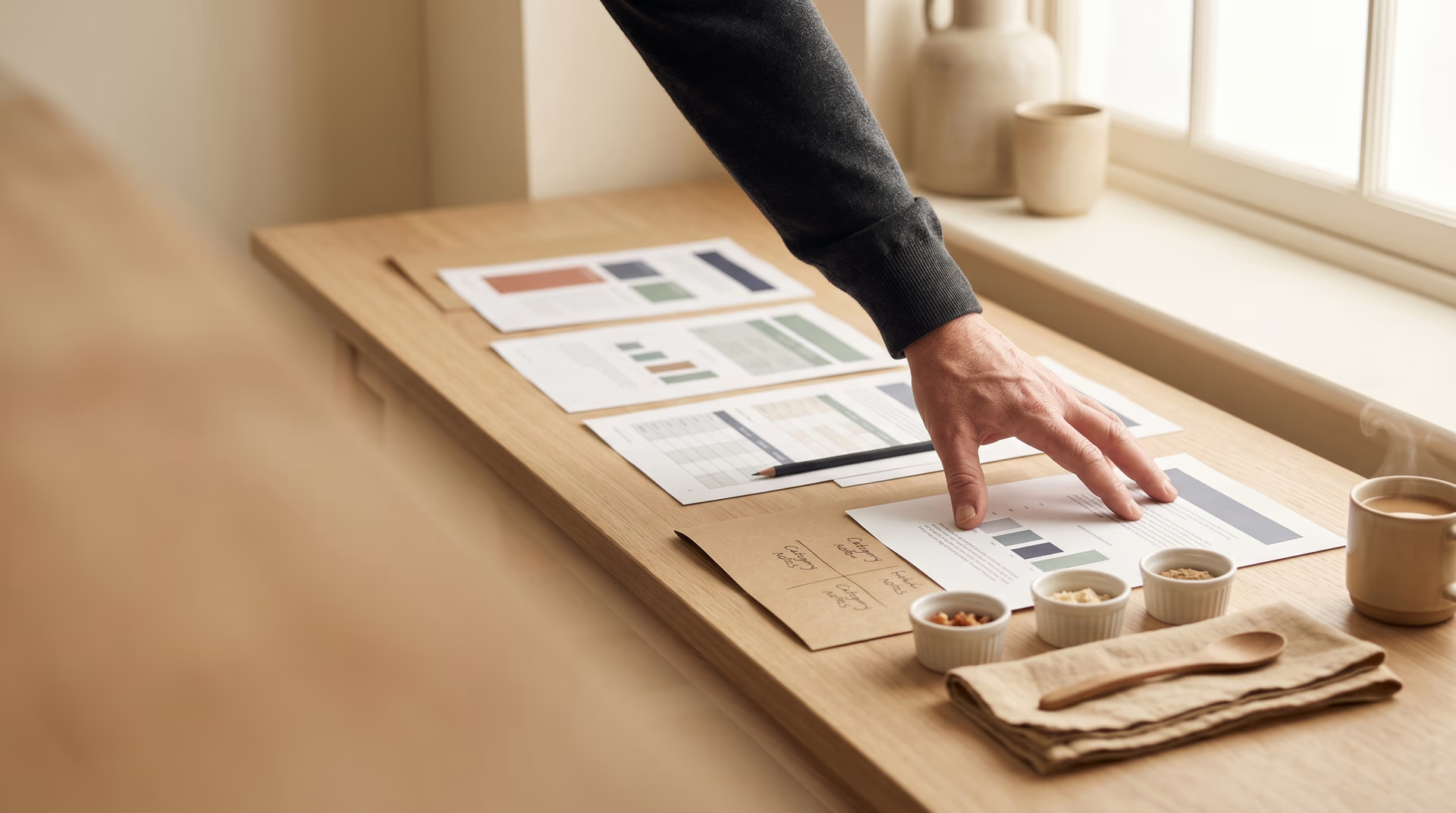
When a team needs to be at senior level, fast
Most food and drink teams have one of three category-knowledge gaps at any given time. A new financial year is starting and the senior team needs everyone working from the same baseline picture. A new commercial director, marketing lead or innovation team has stepped in and needs to be at senior speed before the next decision lands. Or a major commercial moment is on the calendar (a pipeline review, a strategy day, a category review) and the team has to walk in already aligned on what is happening in the category and what it means.
Category and consumer immersion is the right tool for all three. The job is to take what is already known about the category, the consumer and the competition (across syndicated data, public intelligence, our own category knowledge and your internal data), curate it through a senior interpretive layer, and deliver it back to your team as a working understanding rather than as a folder of reports.
It is not the right tool for every brief. If the question is about a specific decision that needs primary research, you probably want a U&A, a segmentation or a piece of qualitative work. If the question is about real-time category signal, social scraping is the better fit. We will tell you which on the scoping call.
What we do differently
-
Senior food and drink specialists, every stage
The senior person on the scoping call is the same person who builds the immersion and runs the session. No handover to a junior or a freelancer. The interpretation comes from someone who has worked client-side in the categories you operate in, which means the work lands as commercially specific, not as generic category background.
-
Curation, not data dumping
We do the work of finding, filtering and synthesising the data that matters. You receive a briefing document built around your specific decisions, not a 200-slide deck of every chart we could pull. The work is built around a clear point of view on what is happening and why, not around comprehensiveness for its own sake.
-
A live session built for senior people
The deliverable is not the document. It is the live two-hour session where your team gets aligned around the same picture and we work through what it means for the decisions on the table. Senior people stay engaged because the session is built around questions, not around presentation. Real conversation, not voiceover.
-
We tell you what to do next, not just what to know
Every immersion closes with a clear set of follow-on questions worth answering, and a recommended route into the next phase of work (whether that is with us or not). The point of an immersion is to make the next decision better, not to fill a briefing folder.
Six commercial use cases, written as scenarios a buyer will recognise from their own brief. The aim is for the reader to see their question on this list and self-select.
Annual planning cycle
Start of the financial year. The team is rebuilding the strategic plan and needs everyone working from the same baseline understanding of the category, the consumer and the competition before the planning conversations begin.
New team or leadership takeover
A new commercial director, marketing lead, NPD head or innovation team has stepped in and needs to be brought up to senior level on the category quickly, before the next round of decisions land.
New agency or partner onboarding
You have brought in a new agency, consulting partner or external team and need them at senior speed on your category before they start contributing. Faster (and sharper) than handing them a folder of old reports.
Before a major innovation or NPD cycle
The pipeline meeting is in three weeks. The team needs to walk in with the same picture of where the category is heading, where the white space is, and where the competition is going next.
Before a strategy day or leadership conversation
The board strategy day is on the calendar. Everyone in the room needs to be working from the same evidence base, not arguing about whether the category is moving the way they think it is.
Cross-functional alignment on a major move
A category exit, a major launch, a positioning shift. The decision involves marketing, NPD, commercial and operations, and the immersion is the foundation that gets them all to the same place before the decision happens.
-
How an immersion project runs
From brief to live session
-
Scoping call
Twenty minutes on a call. You tell us what your team needs to understand, by when, and what decisions the understanding has to inform. We tell you whether the immersion is the right tool, what depth makes sense, and roughly what it will cost.
-
Data curation
We pull together the relevant data from across syndicated sources (Kantar, Nielsen, Circana, retailer panel), public market intelligence, our own category knowledge and any internal data you can share. The senior team curates rather than just collects, which is the work most market reports skip.
-
Senior synthesis
The senior team synthesises the curated data into a structured point of view on the category, the consumer and the competitive landscape. This is the interpretive layer that separates immersion from a chart-pull, and the step that earns the seniority of the team running it.
-
Briefing document
You receive a clear, structured briefing document, sized to the audience that needs to read it. Written for senior decision-makers, not for analysts. Designed to be re-used across the team and referenced again as the next decisions emerge.
-
Live immersion session
The senior team runs a two-hour live session with your team, walking through the work, answering questions in real time and aligning on what it means for the decisions ahead. Followed by a recommended set of follow-on questions worth answering next, with the FIS Group tools that would take them on.
Three deliverables, designed to land in the rhythm of senior decision-making
An immersion is not a 200-slide deck. It is three connected outputs, each built to do a specific job for the team that commissioned it.
The briefing document
A curated, structured document built around your specific decision context. Sized to be readable by senior decision-makers, not just by analysts. Designed to be re-used across the team and referenced again as new decisions emerge.
The live immersion session
A two-hour working session with your senior team, run live by the FIS Group specialists who built the work. Built around questions, not presentation. Senior people stay engaged because the work is being interpreted for them, not delivered at them.
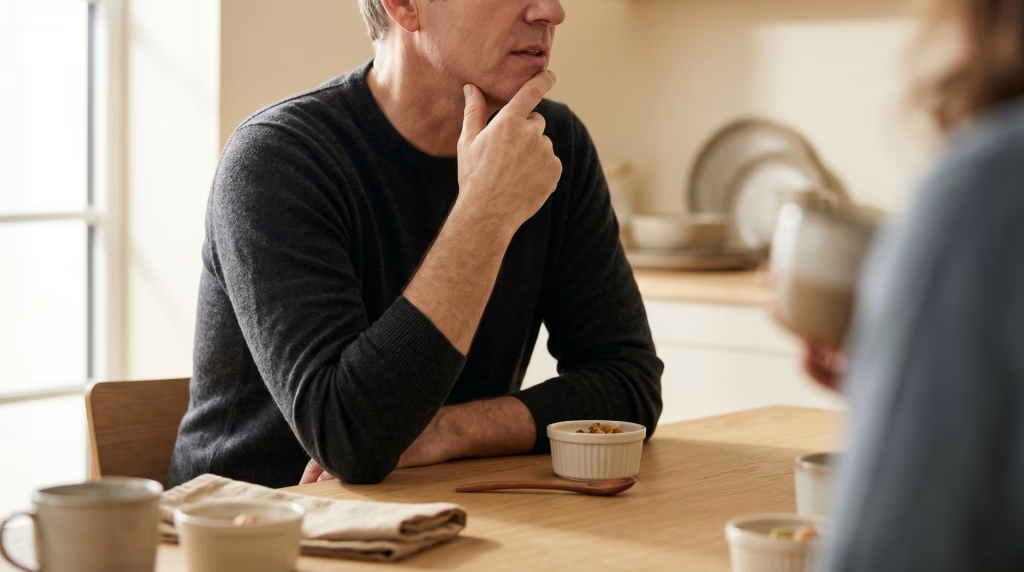
The follow-on roadmap
A clear set of follow-on questions worth answering next, with the recommended FIS Group tools (or external alternatives) to take them on. Some clients commission immersions as standalone pieces. Others use them as the foundation for a wider programme.
Food and drink is all we do
We are not a generalist consultancy that takes the occasional food brief. Food and drink is the only sector we work in. Our senior team knows the categories, the consumers, the retailers and the constraints. Briefs land with people who get it on the first read, and recommendations come back framed for the people who actually have to make the decision.
That focus is why we work with 11 of the UK’s top 40 food and drink brands.
Other ways to decode the category
Immersion is one tool in the broader Decode toolkit. Depending on the brief, one of these might be a better fit, or a stronger partner alongside the immersion work.
-
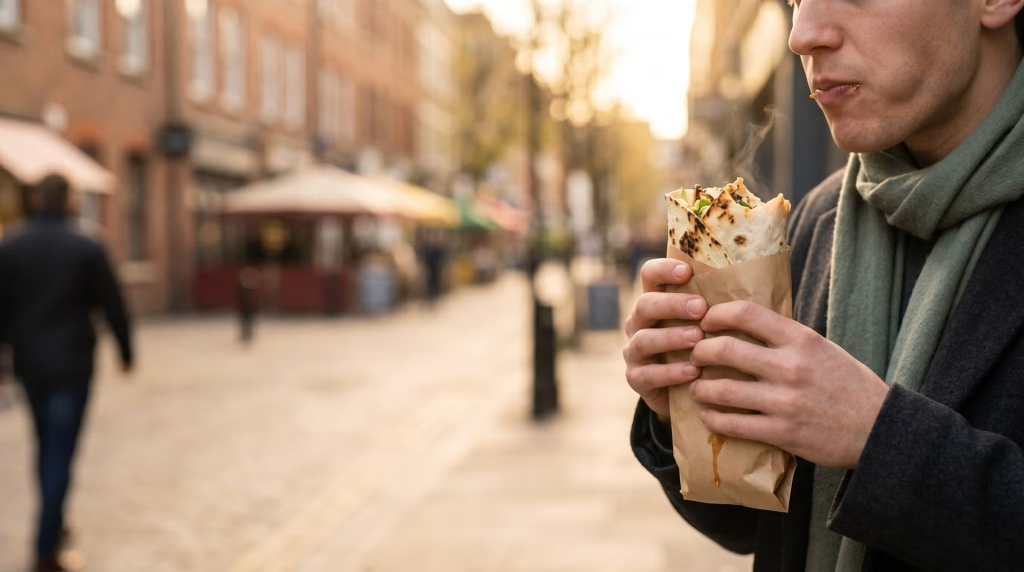
Social Scraping & Trends
Real-time scanning of what is being said, shared and signalled across social, search and culture, curated specifically for food and drink.
-
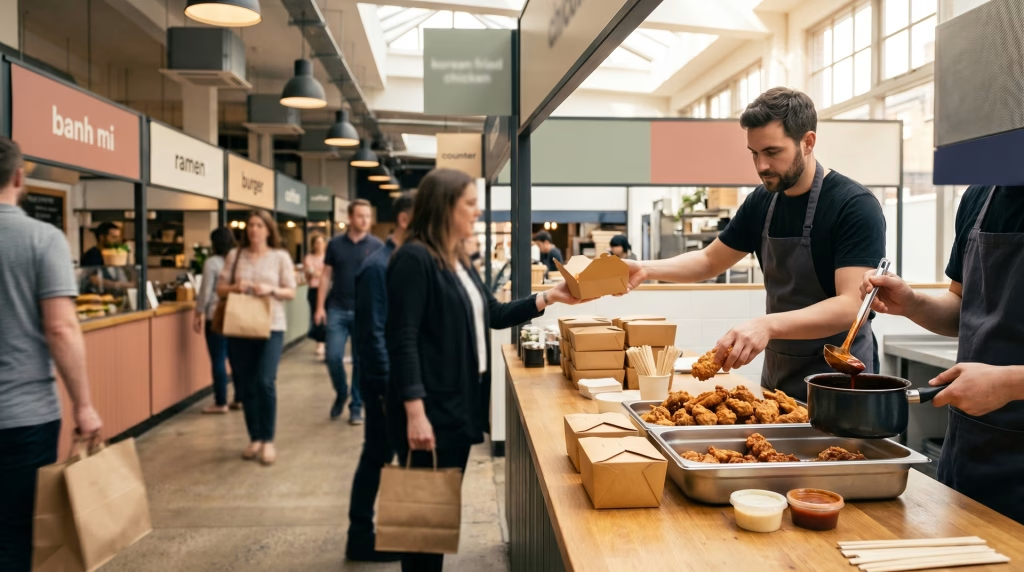
Food Safaris & Competitor Review
Live, curated immersion in the markets, restaurants, retail aisles and overseas territories that are shaping your category.
-
Data Mining
Forensic, hypothesis-led analysis of syndicated panel data, retailer data, internal data and proprietary sources, scoped specifically around the commercial question the work has to answer.
-
Opportunity Mapping
Strategic mapping of where to play in food and drink.

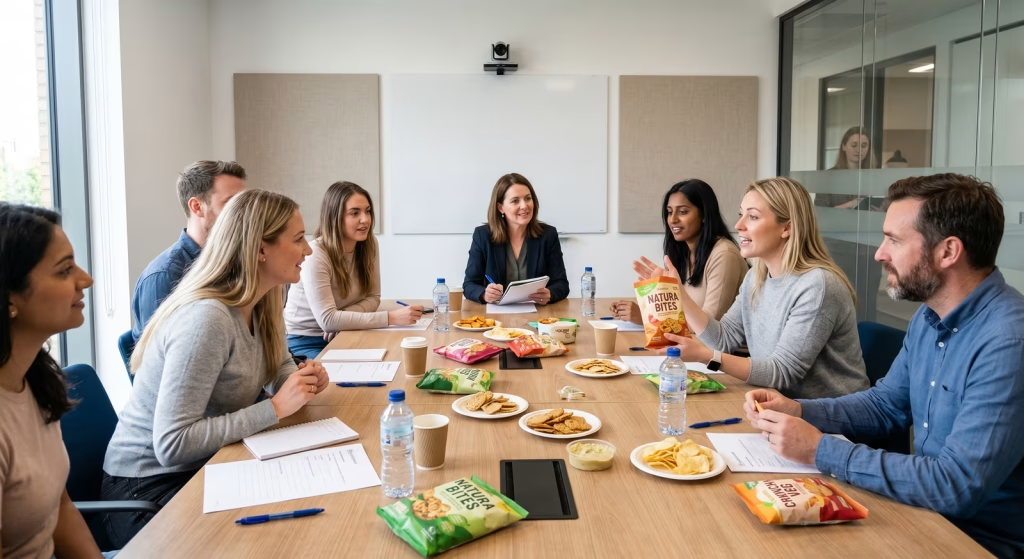
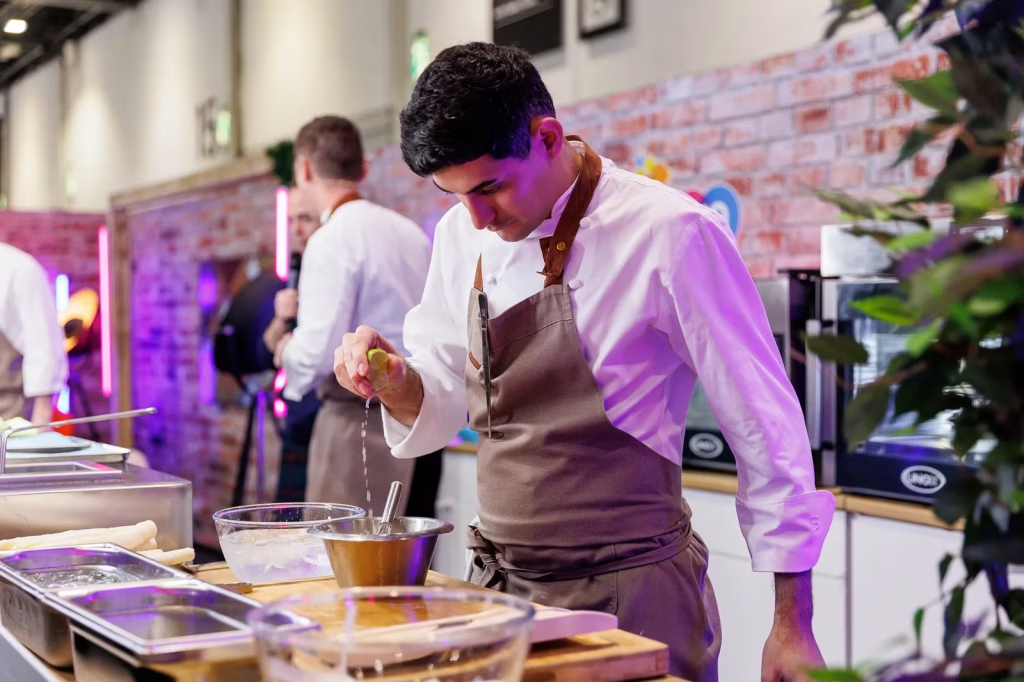
Immersions that landed in real decisions
Three real immersion projects across different categories and different briefs.
FAQs
What is the difference between this and reading a market report?
A market report tells you what is happening. A category immersion tells you what it means for your decisions, with a senior interpretive layer built around the questions you actually have. The work is curated, structured and delivered live by people who have worked in the categories you operate in. You can read a market report. You can act on an immersion.
How quickly can you deliver an immersion?
Two to three weeks from brief to live session is the typical turnaround. Faster is possible if the category scope is tight and the team is available for a session inside two weeks. We will give you a realistic timeline on the scoping call.
Who runs the immersion session?
A senior food and drink specialist with relevant category experience, working alongside the lead from your team. The senior person who runs the scoping call is the same person who builds the immersion and runs the session.
Do we get the underlying data or just the briefing document?
You get both. The briefing document is the curated, structured deliverable. The underlying data set (where shareable under licensing terms) is available alongside it for the team to reference and interrogate.
How is this different from a U&A or a segmentation?
A U&A or segmentation is structured primary research that takes weeks or months and answers a defined research question with statistical depth. An immersion is a curated synthesis of existing knowledge, designed to bring a team up to working speed fast. The two tools complement each other: an immersion at the start of a programme, structured research deeper in when specific questions need answering.
Can this cover an international category?
Yes. We run immersions across UK, mainland Europe, the US and the UAE, with category specialists for each market on the team. International immersions take slightly longer than UK-only work because of the data and source range, but the process is the same.
What if my team is already experienced in the category?
The work flexes to fit the audience. For an experienced team, the immersion focuses on what is changing and where the leading edge is, rather than on the foundations. We scope the audience level on the call so the work lands at the right depth.
Can the immersion focus on a specific competitor?
Yes. Competitor-focused immersions are a common variant, particularly for clients responding to a specific competitive move or evaluating an acquisition target. We can run a full competitor deep-dive instead of, or alongside, a broader category immersion.
What happens after the immersion session?
You receive the briefing document for ongoing reference, and we provide a recommended set of follow-on questions worth answering next, with the relevant FIS Group tools to take them on (if you choose to). Some clients use the immersion as a standalone piece. Others use it as the foundation for a broader programme.
How much does an immersion cost?
Project-based, scoped to the depth, scope and audience needs. The biggest cost drivers are the geographic scope, the category breadth, the data licensing requirements and the depth of synthesis. We will give you a clear, all-in quote at proposal stage with no hidden extras.
Got a team that needs to be at senior level, fast?
Tell us who needs to be brought up to speed, on what category, by when, and what decisions the understanding has to inform. We will tell you whether an immersion is the right answer, what depth makes sense, what the timeline looks like and what it will cost. Twenty minutes on a call. No qualifying call before the qualifying call.
Senior specialists on every session. Curated, not collected. Built for senior decision-making. Specialists in food and drink, only.