
When your team needs to know the consumer, not just hear about them
Most consumer research is structured to deliver an answer. Brief, fieldwork, analysis, deck. The team commissioning the work hears what the consumer said three weeks later, in a meeting room, mediated through a research slide. The output is useful. The understanding is borrowed.
Consumer closeness is structured differently. The work is designed to put your team genuinely close to the consumers in your category over a defined project window: in their homes, in their kitchens, in their shopping moments, in their lives. Multiple touchpoints over weeks rather than single sessions. Senior researchers embedded throughout. The client team is actually in the work, not just briefed at the end. The output is a recommendation, but the lasting value is the consumer understanding the team now carries with them into every subsequent decision.
It is not the right tool for every brief. If the question is best answered by a structured group discussion, focus groups are the better fit. If the work is about deep behavioural observation in pure context, ethnography goes deeper. If the question needs quantitative consumer evidence at scale, you want U&A or segmentation. And if you want consumer-centricity to be an always-on capability of the business rather than a project, the Consumer Closeness Programme on Challenge 06 is structured for exactly that. We will tell you straight on the scoping call.

What we do differently
-
Real time with consumers, not transactional research
Focus groups are transactional: ninety minutes, structured discussion, you leave with an answer. Consumer closeness is sustained: weeks of multiple touchpoints with the same recruited panel, designed so the team genuinely comes to know the consumers as individuals rather than as research subjects. The depth is the point.
-
Multiple touchpoints, not single sessions
Every closeness project runs across multiple consumer touchpoints: in-home visits, shopping accompaniments, group workshops, digital diaries between sessions, in-the-moment reactions captured in real eating contexts. The variety is deliberate. Different touchpoints surface different parts of the consumer reality, and the integrated picture is far stronger than any single method can deliver.
-
Senior research embedded, not handed off
The senior researcher who scopes the project is the same person embedded across the consumer touchpoints, the same person interpreting what the work surfaces, and the same person presenting the recommendation. No handover to a junior or a freelancer mid-project. The continuity matters because the consumer understanding builds across the touchpoints, and a handover loses what has been learned.
-
Designed for your team to be in the work, not just briefed
Most closeness projects are designed with the client team in the room (in person or remotely) for at least some of the consumer touchpoints. Live observation in workshops, accompanied in-home visits, joint debrief sessions between fieldwork waves. The team that has to act on the consumer understanding builds it directly, not from a deck three weeks later. This is the structural feature that delivers the lasting consumer-centricity that one-off research cannot.
Six commercial use cases, written as scenarios a buyer will recognise from their own brief. The aim is for the reader to see their question on this list and self-select.
Entering a new category or proposition territory
Your business is moving into a category or proposition space the team does not yet know consumer-side. Closeness work builds the foundational consumer understanding before strategy is set, brand work is briefed, or NPD is scoped.
Before a major brand stretch or repositioning
You are considering moving your brand into a new audience, occasion or price tier. The closeness work surfaces what the new consumer audience actually wants from a brand in this space, in their own words rather than in the segmentation language the team is used to.
NPD pipeline kickoff
The team is rebuilding the NPD pipeline and needs to start from consumer reality rather than from category convention. Closeness work surfaces the lived consumer context that briefs are then written against, making the pipeline downstream sharper.
New leadership taking over a brand or category
A new marketing director, brand lead or NPD head has stepped in and needs to get genuinely close to the consumer fast, not just brief themselves through old research reports. Closeness work is the fastest credible route from category outsider to senior consumer understanding.
Cross-functional alignment around the consumer
A major commercial decision is being made across marketing, NPD, commercial and operations, and the team needs a shared consumer understanding rather than four different versions of who the consumer is. Closeness work delivers a shared experience the team can reference in every subsequent conversation.
Pre-quantitative deep-dive
Before commissioning U&A, segmentation or other quantitative work, closeness research sharpens the hypotheses the quantitative work will test. The result is quant work that asks better questions, scoped against richer consumer understanding, instead of generic exploration.
-
How a closeness project runs
From brief to embedded consumer understanding
-
Scoping call
Twenty minutes on a call. You tell us the commercial question, the team that needs to be in the work, the consumer audience to recruit against, and the timeline. We tell you whether closeness work is the right answer, what shape the project should take, what touchpoint mix makes sense, and roughly what it will cost.
-
Recruit and design
We build the consumer recruit through specialist food and drink panels and trusted local recruiters. Properly briefed screeners, full quality checks, no professional respondents. You sign off the recruit criteria, the consumer profiles and the touchpoint design before fieldwork starts. We design the project specifically around the touchpoint mix that will deliver the closeness your brief actually needs, rather than against a default template.
-
Fieldwork across touchpoints
The work runs across the agreed touchpoint mix: in-home visits, shopping accompaniments, group workshops, digital diaries between sessions, live consumer events. Your team is in the work at agreed moments, with senior research embedded throughout. The fieldwork window is typically three to six weeks, designed so the consumer understanding builds across the touchpoints rather than appearing in a single moment.
-
Senior synthesis
The senior researcher synthesises across the consumer touchpoints, pulling out the patterns, the contradictions and the things that matter for the commercial decision. Working sessions with the client team to share the emerging view as the work develops, not just at the end.
-
Working readout and recommendation
A working readout session with the team, in person or by video, walking through what the consumer reality surfaced and what we recommend you do next. Followed by a clean, shareable deck for the wider business. The lasting deliverable is the consumer understanding the team now carries, not the deck.
Four ways we put your team close to the consumer. Run together, not separately.
A closeness project is the integrated set of consumer touchpoints, not any single one. The four touchpoint types below are how we put the team genuinely close to consumers across the project window. The specific mix is scoped at the start to fit the brief, the audience and the team’s availability.
In-home visits and shopping accompaniments
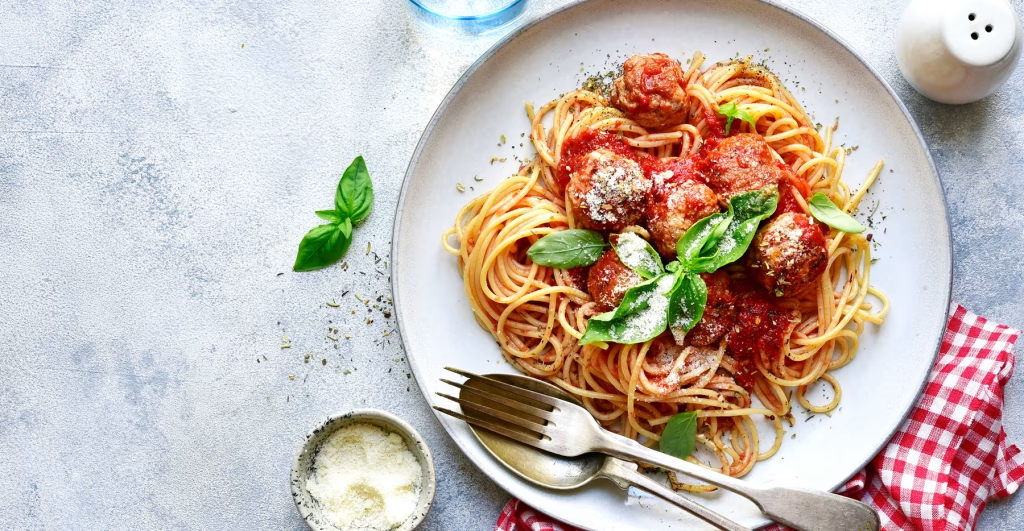
Time with consumers in their own homes, kitchens, store visits and eating contexts. The structural advantage of in-home work is the data the consumer cannot tell you in a session: what is actually in the fridge, what they actually buy versus what they say they buy, what the eating moment looks like in practice rather than in self-report.
Live workshops with consumers
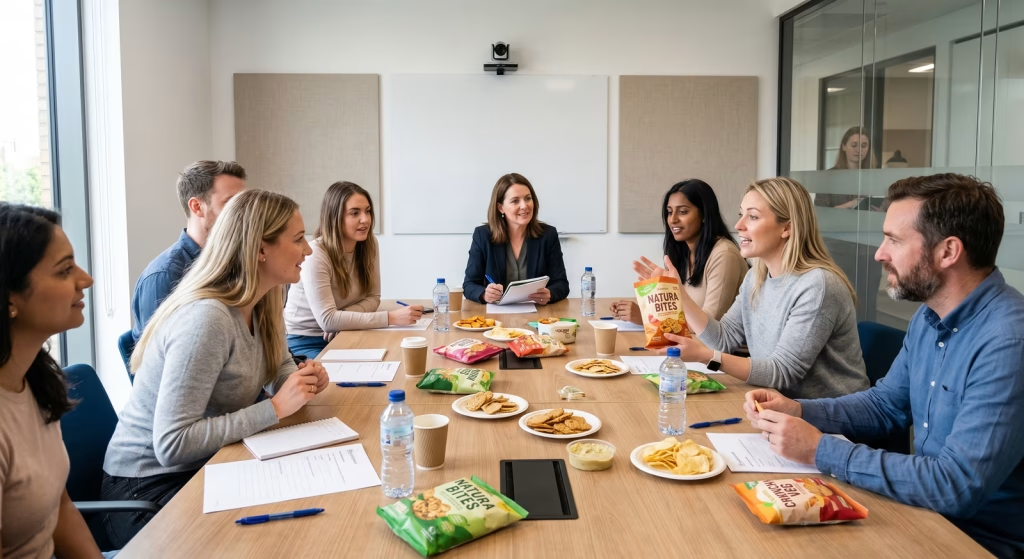
Structured working sessions with the recruited panel, designed for your team to be present and involved rather than to observe from behind glass. Built around specific commercial questions, not generic discussion. The client team often co-facilitates parts of the workshop, which deepens the consumer understanding for everyone in the room.

Digital touchpoints between sessions and Client team working sessions
Digital touchpoints between sessions
Video diaries, in-the-moment reactions, ongoing consumer feedback captured through digital tools across the project window. Designed to surface what consumers do, eat and think between the in-person touchpoints, when the lived reality is more honest than the moderated session moment.
Client team working sessions
Structured working sessions between fieldwork waves, where the senior research team brings the client team into the emerging consumer view as the work develops. The understanding builds with the team rather than being delivered to it. The lasting consumer-centricity the project creates is built here.

Food and drink is all we do
We are not a generalist qualitative agency that takes the occasional food brief. Food and drink is the only sector we work in. Our senior researchers know the categories, the consumers, the channels and the constraints. The work lands with people who get it on the first read, and the consumer understanding comes back framed for the people who actually have to make the decision.
That focus is why we work with 11 of the UK’s top 40 food and drink brands.
Other ways to get close to the consumer
Consumer closeness is one tool in the broader Decode toolkit, and one shape of a wider closeness offering. Depending on the brief, one of these might be a better fit, or a stronger partner alongside the project work.
-
Consumer Closeness Programme
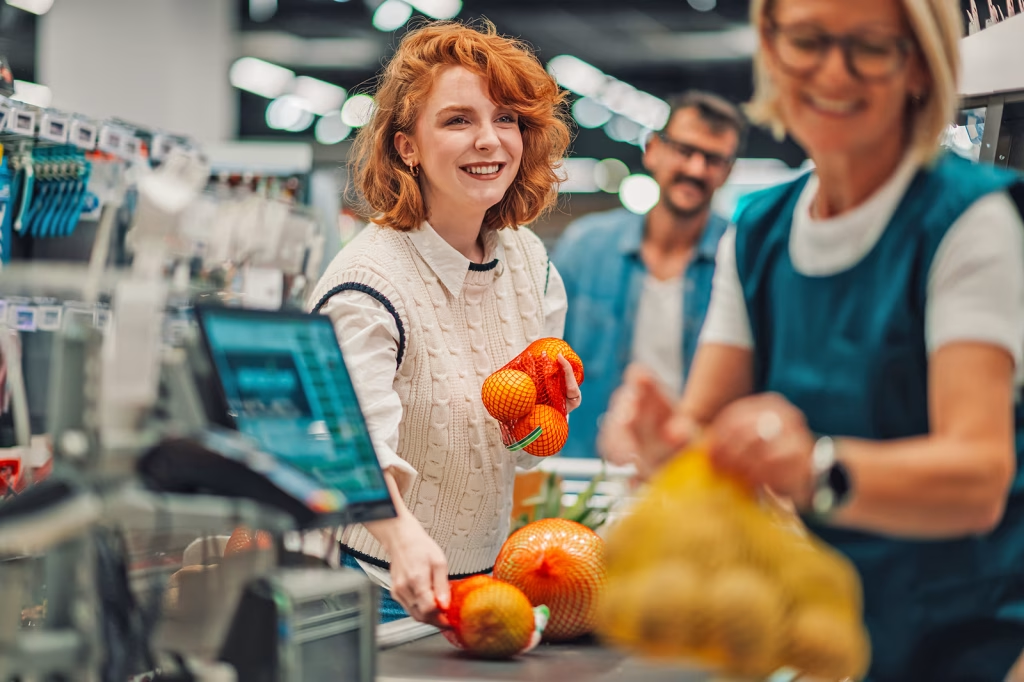
The always-on version of this work. Structured annual partnership built around regular consumer engagement, with scheduled cadence, defined quarterly topics, an embedded senior lead, and a community of consumers your team comes to know by name over time. The natural next step when consumer-centricity needs to be a built capability of the business rather than a recurring service request.
-
Ethnography
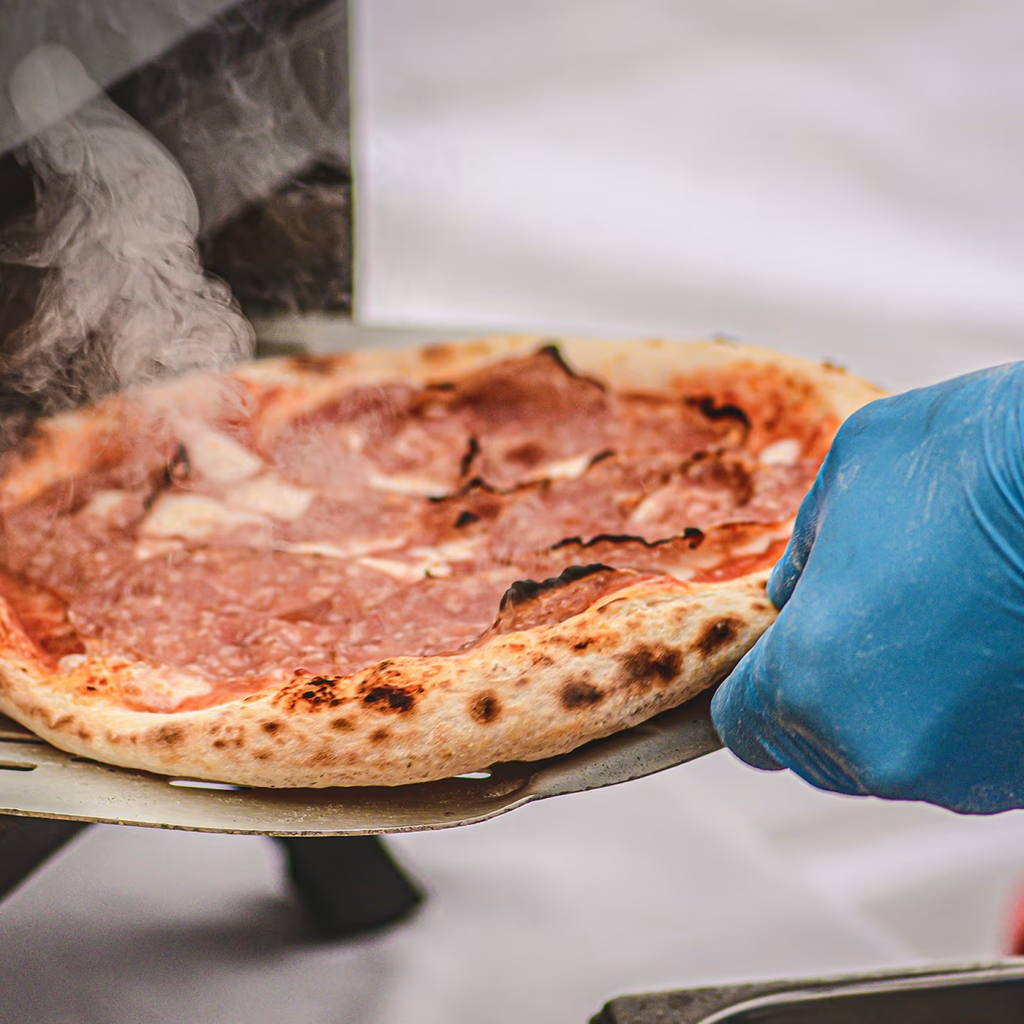
When the brief is more about deep behavioural observation in natural environments than about getting the team close to a recruited panel. Less project team involvement, deeper observational rigour, longer in-context immersion. The pure-observation cousin of closeness work.
-
Consumer and Category Data Immersion
When the consumer understanding from closeness work needs to be combined with broader category and competitive context, and the team needs the structured synthesis alongside the consumer voice. The natural cross-route to the innovation tools side.
-
Opportunity Mapping
When the closeness work has surfaced commercial opportunity worth turning into strategy. Strategic mapping of where to play, sized and prioritised. The natural forward step from consumer understanding into commercial direction.

Closeness work that changed the next decision
Three real consumer closeness projects across different categories and different briefs.
FAQs
How is this different from focus groups?
Focus groups are structured group discussions, typically ninety minutes per session, designed to surface response and reaction to specific stimulus. Consumer closeness is sustained engagement with the same recruited panel across weeks and multiple touchpoint types (in-home, workshops, digital diaries), designed to build genuine team understanding of consumers rather than to deliver an answer to a discrete research question. Different tools for different briefs. Often used together: closeness to build foundational understanding, focus groups later when specific stimulus needs testing in front of consumers.
How is this different from ethnography?
Ethnography is deeper behavioural observation in natural environments, with the research team essentially as observers and minimal client team involvement. Consumer closeness has the client team directly in the work, runs across a mix of in-home, workshop and digital touchpoints (not pure observation), and is designed to deliver commercial understanding faster than full ethnographic immersion. Ethnography goes deeper observationally. Closeness gets the team closer faster.
How is this different from the Consumer Closeness Programme?
Consumer Closeness on this page is a project-based engagement, scoped to a defined window (typically eight to twelve weeks end-to-end) and answering a specific commercial question. The Consumer Closeness Programme on Challenge 06 is the always-on version: a structured annual partnership with scheduled cadence, defined quarterly topics, an embedded senior lead, and a community of consumers your team comes to know by name over time. Same underlying methodology, different commitment shape. Most clients start with the project-based version and move into the Programme once the value of ongoing consumer access is demonstrated.
How many consumers are involved?
Typically twelve to twenty-four consumers in the recruited panel, depending on the brief, the audience segments to be covered, and the touchpoint mix. Smaller than a standard segmentation, larger than a focus group cohort. The right number is scoped against the depth the brief needs and the team’s ability to engage with the panel meaningfully across the project window.
How long does a typical closeness project take?
Eight to twelve weeks end-to-end is the typical window, from scoping call to working readout. The fieldwork window itself is usually three to six weeks across the multiple touchpoints. Compressed timelines are possible where the recruit is straightforward and the team is available for accelerated touchpoint scheduling. We give realistic timelines at proposal stage.
Can our team join the consumer sessions?
Yes, and most projects are designed for exactly that. Live observation of workshops, accompanied in-home visits, joint working sessions between fieldwork waves. The structural feature of closeness work is the client team being in the work, not briefed at the end. We will recommend the right level of team involvement on the scoping call based on the team’s availability and the audience for the work.
Who recruits the consumers?
We do. We work with specialist food and drink recruiters and trusted local panels, with full quality checks, properly briefed screeners and no professional respondents. You sign off the recruit criteria, the consumer profiles and the screener before fieldwork starts, so you know exactly who is in the panel.
Can we run this internationally?
Yes. We run consumer closeness projects across the UK, mainland Europe, the US and the UAE, with local recruit, local fieldwork support where the language and cultural context need it, and senior FIS Group oversight throughout. The standards travel because we set them ourselves.
What do we get at the end?
A working readout session walking the team through the consumer reality and the recommendation, followed by a clean shareable deck for the wider business. Plus the consumer touchpoint material the team has lived through directly, which is the lasting value of the work. The deliverable is built around your decision; the consumer understanding the team now carries is the asset.
How much does it cost?
Project-based, scoped around the touchpoint mix, the recruit, the consumer audience, the timeline and the level of team involvement. The biggest cost drivers are recruit difficulty, the number and complexity of touchpoints, and international fieldwork where it applies. We give a clear, all-in quote at proposal stage with no hidden extras.
Got a decision where the team needs to genuinely know the consumer?
Tell us the commercial question, the team that needs to be in the work, the consumer audience to recruit against, and the timeline. We will tell you whether project-based closeness is the right answer, what shape the project should take, what touchpoint mix makes sense, and what it will cost. Twenty minutes on a call.
Senior research embedded throughout. Multiple touchpoints over weeks. Your team genuinely in the work. Specialists in food and drink, only.