

What R&D Sprints are actually for
Most food and drink innovation gets stuck at the same point. The concepts are validated through screening. The investment case is approved. The commercial window is defined. But the conventional R&D timeline runs nine to eighteen months from validated concept to tested product, which misses the window or surrenders the competitive position the work was meant to defend. Brand and commercial leadership end up choosing between rushed work that compromises the concept and disciplined work that misses the moment.
The structural problem is that conventional food and drink R&D is built around sequential development cycles: each iteration runs across weeks, each handoff between functions adds time, each external dependency creates a queue. The methodology produces robust development but it does so at a cadence that does not match the commercial pace innovation work increasingly requires. Speed is treated as a compromise to quality rather than as a separate methodology that maintains quality at faster cadence.
R&D Sprints is the compressed development methodology designed for the briefs where the timeline matters as much as the product. Cross-functional sprint teams (R&D, NPD, culinary, insight) run intensive iteration cycles compressed into a two to six week window, with multiple development passes happening in the time conventional R&D would run a single iteration. The output is a working prototype (or set of prototypes) ready for consumer testing or commercial demonstration, not a development plan with a launch date eighteen months out.
It is not the right tool for every brief. If the development brief is complex enough to genuinely require months of conventional R&D (significant regulatory complexity, fundamental technical innovation, supply chain redesign), Sprints will compromise the work rather than compress it. If the development is exploratory rather than building against validated concepts, the cross-functional sprint structure becomes inefficient. R&D Sprints sits specifically when validated concepts need to become working prototypes faster than conventional R&D allows, and the development complexity is contained enough that the compression is genuinely possible.
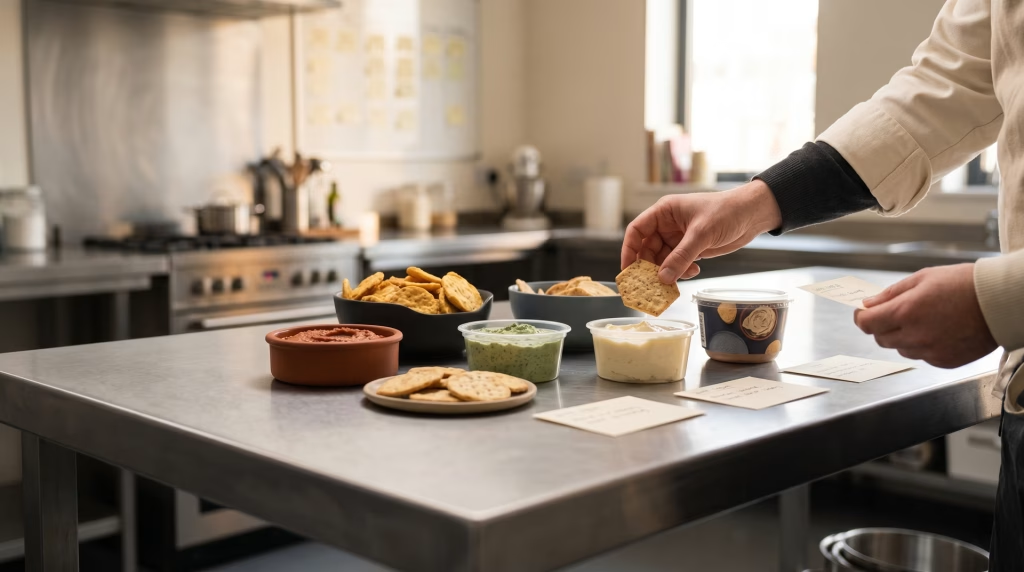
What we do differently
-
Compressed development without compromised quality
The structural difference between Sprints and ad-hoc accelerated R&D. Sprints are designed methodologically for compression: defined cycle lengths, cross-functional standing teams, parallel rather than sequential workflows, embedded decision rights so the sprint does not stall waiting for sign-off. The compression is built into the methodology rather than achieved by cutting corners on the conventional approach. Working prototypes within weeks at the quality conventional R&D would deliver in months, with the methodology defensible to internal R&D leadership rather than read as cowboy work.
-
Cross-functional sprint teams, not a single discipline
The methodological core. Most conventional R&D runs through siloed functions in sequence (R&D develops, NPD reviews, culinary validates, insight tests). Each handoff adds weeks. Sprints run with cross-functional standing teams (R&D, NPD, culinary, insight specialists) working in parallel through the sprint window, with each iteration cycle benefiting from all disciplines simultaneously rather than sequentially. The output is more robust earlier because the cross-functional perspective is integrated live in the development rather than added in sequence afterwards.
-
Senior food and drink interpretation throughout
The technical difficulty of compressed R&D is making the iteration decisions correctly under speed pressure. A development decision that requires careful consideration at conventional pace is even more decision-sensitive in a sprint window. Senior food and drink specialists run the interpretive layer throughout: the iteration choices, the cross-functional integration, the trade-off decisions when prototype options surface. We do not delegate sprint interpretation to junior staff because the compression magnifies the consequences of poor decisions.
-
Designed to feed forward into Product Testing
Sprint output is built for the next phase: working prototypes that go directly into Product Testing (consumer evaluation through IHUT, CLT or in-restaurant) or into commercial demonstration. The sprint methodology is anchored on producing test-ready prototypes rather than development specifications, which closes the gap between concept validation and consumer-testable product. The two services (Sprints and Product Testing) often run together as a sequence in the same major innovation programme.
What we use R&D Sprints for
Validated concepts to working prototypes for testing
You have validated concepts (typically from Concept Screening) that need to become working prototypes ready for consumer testing. R&D Sprints compresses the conventional development timeline to deliver test-ready prototypes within weeks, scoped against the concepts that passed screening. The most common R&D Sprints use case in the architecture, and the natural forward step from Challenge 03 validation work.
Competitive response work where the window is tight
A competitor has launched, the category is shifting, or the trade is asking for response to a market signal, and the team has weeks rather than months to develop. R&D Sprints provides the compressed development methodology that respects the competitive window without compromising the work. Senior team interpretation throughout, designed to deliver defensible commercial response at speed.
Retailer window development at retailer pace
The retailer has signalled appetite for a specific innovation direction with a development window that does not match conventional R&D timelines. R&D Sprints compresses the development to meet retailer pace, with the cross-functional team structure designed to deliver retailer-ready prototypes within the window the trade has set. Particularly relevant for own-label and category-management briefs where retailer timelines drive the work.
Compressed NPD for time-critical commercial briefs
You have a commercial brief with a fixed launch date and the conventional NPD timeline does not fit. R&D Sprints compresses the development across the available window, with the sprint structure designed to deliver the prototype quality the launch requires within the timeline the commercial brief allows. Common for seasonal launches, anniversary editions, and campaign-anchored innovation work.
Multi-prototype development for parallel testing
You have multiple validated concepts that all need to be developed in parallel for comparative testing rather than sequentially. R&D Sprints runs parallel development through a structured methodology, delivering multiple working prototypes within the same window so comparative testing can happen on the full priority set rather than on the first-developed concept while others queue.
Sprint development of menu items for foodservice clients
Your foodservice or QSR client has validated menu propositions that need to become deliverable menu items ready for operational pilot or consumer testing. R&D Sprints applies the methodology to menu development specifically, with the cross-functional team including culinary specialists who can deliver kitchen-ready menu items within the sprint window. For broader menu architecture work, Menu Development is the more proportionate service.
-
How an R&D Sprint runs
From validated concept to test-ready prototype
-
Scoping call.
Twenty minutes on a call. You tell us the validated concepts, where they came from (Concept Screening, internal validation, brand strategy work), the commercial window, the prototype output target, the integration with internal R&D function, and the timeline. We tell you whether R&D Sprints are the right tool, what sprint format makes sense, what cross-functional team composition the brief requires and roughly what it will cost. Where the development complexity makes Sprint compression unrealistic, or where conventional R&D is the right approach given the timeline, we will recommend that honestly.
-
Sprint design.
The senior team designs the sprint structure specifically against the brief: sprint length and cycle structure, cross-functional team composition (R&D, NPD, culinary, insight specialists scoped to the brief), decision rights and sign-off structure (critical for keeping the sprint compressed), prototype output target, integration points with the client team and internal R&D function. Sprint design signed off by the client before the sprint window opens, with the methodology transparent and the analytical structure agreed.
-
The sprint cycles.
The cross-functional team runs the development across the sprint window: intensive iteration cycles, parallel rather than sequential workflows, embedded decision rights so the sprint does not stall. Each cycle delivers a prototype iteration with cross-functional review live, rather than sequential function-by-function handoff. Senior food and drink specialists run the interpretive layer throughout, making the iteration decisions that conventional R&D would defer to leadership review.
-
Prototype delivery and senior interpretation.
At the end of the sprint window, the working prototype (or set of prototypes) is delivered with the development rationale, the iteration history, the cross-functional integration documented, and the senior team interpretation of where each prototype lands against the original concept brief. The deliverable is built for the next phase (consumer testing, commercial demonstration, operational pilot, retailer presentation) rather than as a development report.
-
Forward-route handover.
The Sprint output typically feeds directly into the next phase of work, most commonly Product Testing (consumer evaluation through IHUT, CLT or in-restaurant). We handover the prototypes ready for the next phase, with the briefing materials the testing service needs and the integration with the client team's commercial planning. Where the Sprint output is going into internal commercial development rather than into further testing, we handover with documentation ready for the receiving function.
Three formats. Scoped against the prototype volume, the sprint length and the cross-functional team composition.
R&D Sprints flex against the development brief and the commercial window. The three formats below are the typical sprint shapes we run, with the format selected at scoping rather than assumed. Focused sprints for single-prototype briefs with tight windows; standard sprints for the most common multi-prototype work; extended sprint programmes for parallel concept streams or larger development briefs.
Focused Sprint
Two to three weeks, single prototype or tight prototype set, focused cross-functional team scoped to the specific development brief. Suited to time-critical briefs where the development is contained enough to compress sharply: competitive response, retailer window with focused brief, seasonal or campaign-anchored work with a single output target. Typically delivers the working prototype within the two to three week window with one to two iteration cycles per week.
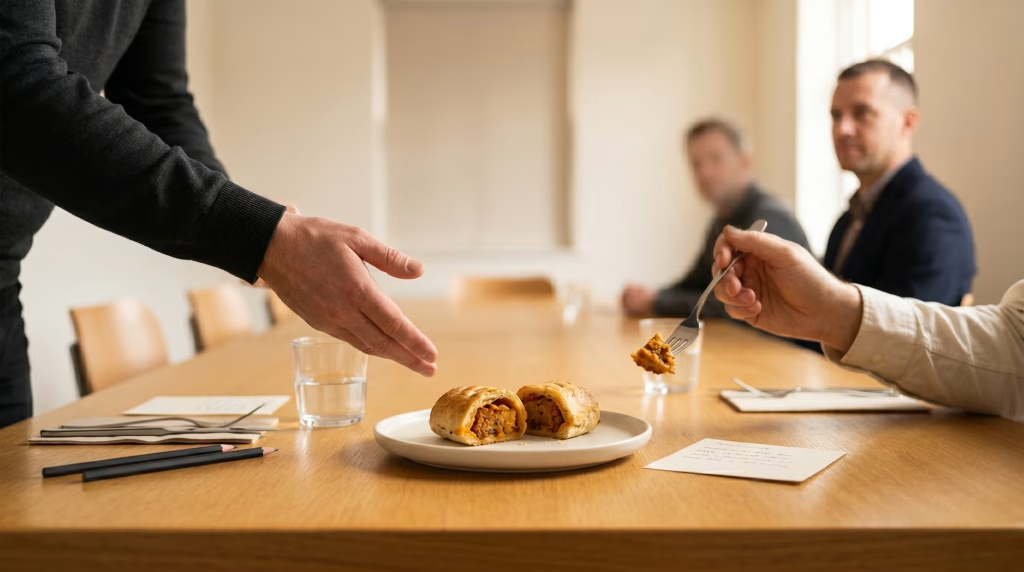
Standard Sprint
Three to four weeks, three to six prototypes developed in parallel, full cross-functional team (R&D, NPD, culinary, insight). The most common sprint format. Suited to most major Sprint briefs: validated concept sets that need to become test-ready prototypes, multi-prototype development for parallel consumer testing, time-critical NPD for fixed launch dates. Typically delivers the working prototypes within the four week window with weekly iteration cycles.

Extended Sprint programme
Four to six weeks, multiple concept streams running in parallel or a larger development brief that needs more development depth than a standard sprint allows. Suited to the most significant Sprint briefs: major innovation programmes where multiple validated platforms need parallel development, range development at sprint pace, programmes where the prototype volume justifies an extended cross-functional engagement. Typically delivers across the six week window with structured iteration rhythm scaled to the volume.
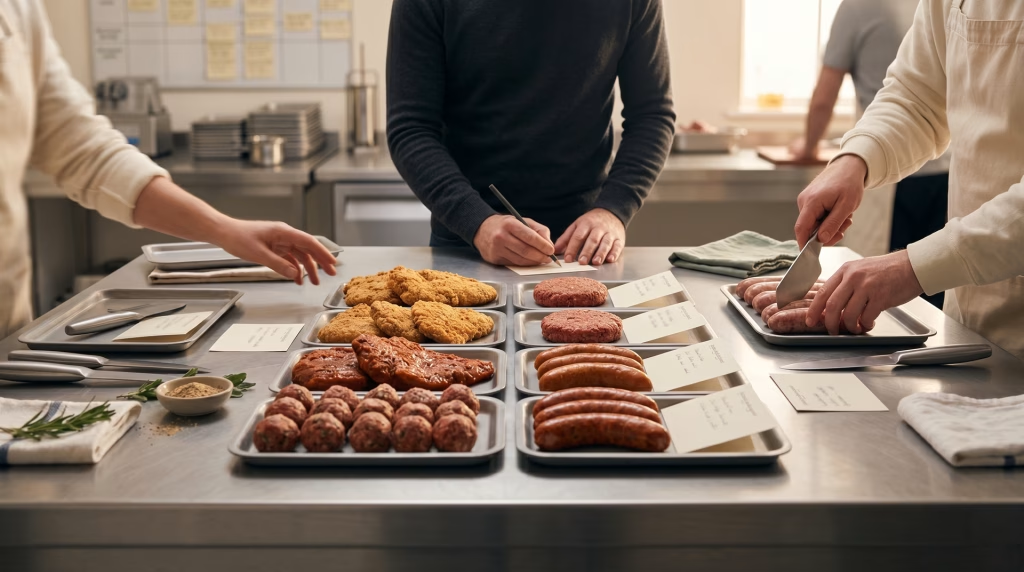
Food and drink is all we do
We are not a generalist consultancy applying borrowed sprint frameworks to food and drink. Food and drink is the only sector we work in. Our sprint methodology is designed for food and drink specifically: the cross-functional team composition (R&D, NPD, culinary, insight specialists who all work in this sector), the iteration cycles calibrated for food and drink development reality, the senior interpretation that knows where compression is genuinely possible and where it would compromise the work. Generic agile/sprint approaches struggle with food and drink because the development complexity is different from software; sector specialists run sprints that respect that difference.
That focus is why we work with 11 of the UK’s top 40 food and drink brands.
Other ways to build, test and refine what wins
R&D Sprints are one tool in the broader Build, Test & Refine What Wins toolkit. Depending on the brief, one of these might be a better fit, or a stronger partner alongside the Sprint work.
-

Product Testing (IHUT, CLTs, in-restaurant)
Specialist consumer product testing for food and drink innovation.
-

Menu Development
Specialist menu development for foodservice, QSR, restaurants, hospitality and contract catering.
-
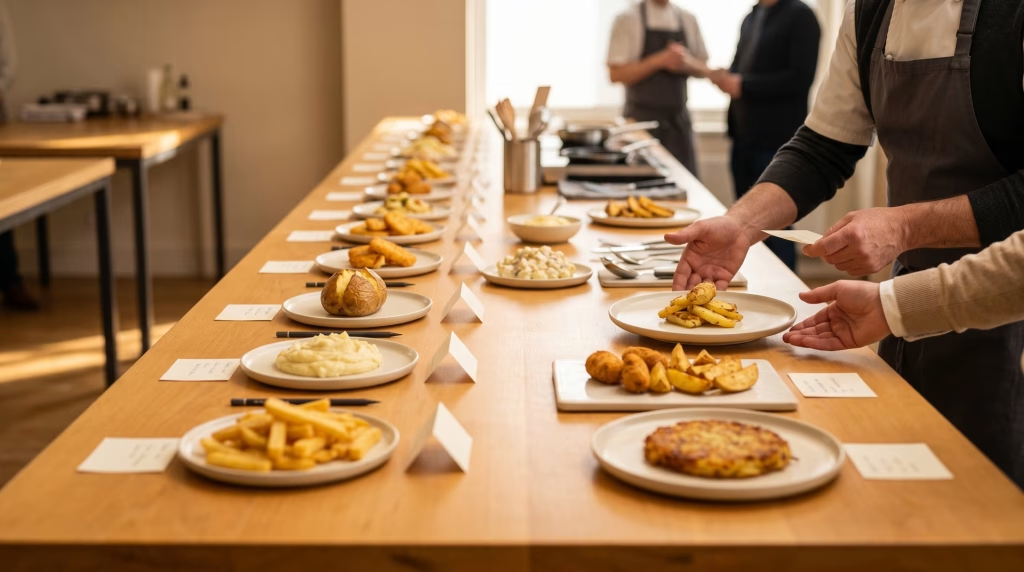
Application Showcases
Specialist food and drink showcase work that demonstrates capability, ingredient possibility or innovation direction to the audiences that need to see it.
-
Concept Screening
Structured quantitative concept testing for food and drink innovation, designed to prioritise which concepts go forward into NPD investment, brand development or commercial commitment.

R&D Sprints that delivered at the window
Three real R&D Sprint projects across different categories and different briefs.

FAQs
How is this different from conventional R&D?
Methodology rather than capability. Conventional R&D runs sequential development cycles with siloed function handoffs, which delivers robust work at a cadence that can stretch to nine to eighteen months from validated concept to test-ready prototype. R&D Sprints runs cross-functional standing teams in parallel iteration cycles compressed into a two to six week window, with embedded decision rights so the sprint does not stall waiting for sign-off. Same underlying disciplines (R&D, NPD, culinary, insight); different methodology for running them. The Sprint methodology is built specifically for compressed work; conventional R&D is built for thoroughness at conventional pace.
Will compressed development compromise quality?
Not when the methodology is built for compression rather than achieved by cutting corners. The structural compression in Sprints (cross-functional parallel work, embedded decision rights, defined cycle lengths) produces working prototypes within weeks at the quality conventional R&D would deliver in months. The compression is methodological rather than at the expense of the work. That said, Sprints are not the right tool for every brief. If the development genuinely requires the depth of conventional R&D (significant regulatory complexity, fundamental technical innovation, supply chain redesign), Sprints will compromise the work. We will tell you straight at scoping whether your brief fits Sprint compression or whether conventional R&D is the right approach given the development complexity.
How does this work with our internal R&D function?
Multiple integration models depending on the brief. Some Sprints run entirely externally with our cross-functional team, with the working prototypes handed over to the client R&D function after the sprint window for ongoing internal development. Some Sprints run as integrated work with the internal R&D team embedded in the sprint, which preserves internal capability building while gaining the sprint methodology. Some Sprints run for very time-critical work where internal R&D is fully committed elsewhere and external sprint capability is the bridge. We design the integration model at scoping based on the brief, the timeline, and the internal R&D context.
How many prototypes can a Sprint develop?
Depends on the format and the development complexity. Focused Sprints (two to three weeks) typically work credibly with one to two prototypes. Standard Sprints (three to four weeks) typically work credibly with three to six prototypes. Extended Sprint programmes (four to six weeks) can run with larger prototype volumes or with multiple parallel concept streams. The volume is determined by the development complexity per prototype (more complex prototypes mean fewer per sprint), the team capacity, and the iteration depth required. We will tell you at scoping what realistic capacity the brief implies given your prototype complexity and development brief.
What is the actual deliverable?
Working prototypes (or sets of prototypes) ready for the next phase of work, plus the development documentation. Specifically: the working prototypes themselves (physical or formulated, depending on the category), the development rationale (key decisions and trade-offs through the sprint), the iteration history, the cross-functional integration documentation, and the senior team interpretation of where each prototype lands against the original concept brief. Format agreed at the start so the work feeds the next phase (consumer testing, commercial demonstration, operational pilot, retailer presentation) rather than reading as a development report.
Can we run multiple Sprints in parallel?
Yes, where the brief justifies it and the team capacity allows. Parallel Sprints work well for major innovation programmes with multiple validated platforms (each Sprint develops one platform), for portfolio briefs where multiple categories need development simultaneously, and for cross-market work where parallel local sprints are more efficient than sequential cross-market work. We will scope parallel Sprint capability honestly based on the team availability and the operational complexity of running multiple sprint windows simultaneously.
How long does an R&D Sprint actually take?
The Sprint window itself runs two to six weeks depending on the format. Total project timeline from scoping call to delivered prototypes typically four to eight weeks including the scoping and design phase, with the sprint window opening once the design is signed off. The handover phase (prototypes ready for Product Testing or internal commercial development) adds a further one to two weeks. So total: typically five to ten weeks from initial conversation to prototypes ready for the next phase, with the sprint window itself being the compressed development core within that.
Can we run this internationally?
Yes, with careful scoping. The cross-functional team structure is harder to run internationally because the parallel-rather-than-sequential workflow benefits from co-located working, and remote sprint methodology adds operational complexity. We run Sprints across the UK and selectively in mainland Europe with co-located cross-functional teams; international briefs that need fully distributed sprint work are operationally feasible but we will scope honestly about whether the compression benefits hold at international scale.
Can we commission this alongside other services?
Yes, and this is the most common commissioning structure. The natural integration is with Challenge 03 validation work upstream (Concept Screening produces the concepts the Sprint develops) and Challenge 04 testing work downstream (Product Testing evaluates the Sprint output). Many programmes commission all three as one integrated backbone sequence (Screening, Sprint, Testing) for major innovation work with tight overall timelines. We will scope the right combination at the scoping call.
How much does an R&D Sprint cost?
Project-based, scoped against the format (focused, standard, extended), the prototype volume, the cross-functional team composition, the integration with internal R&D function and the geographic scope. Focused single-prototype UK sprints are the lowest entry point; extended multi-stream international programmes are the highest. We give a clear, all-in quote at proposal stage with no hidden extras, and we will tell you straight if your development brief is genuinely better served by conventional R&D given the development complexity.
Got validated concepts that need to become working prototypes faster than conventional R&D allows?
Tell us the validated concepts, where they came from, the commercial window, the prototype output target, the integration with internal R&D, and the timeline. We will tell you whether R&D Sprints are the right tool, what sprint format makes sense, what cross-functional team composition the brief requires and what it will cost. Where conventional R&D is the right approach given the development complexity, we will recommend that honestly.