When you need the signal before the data catches up
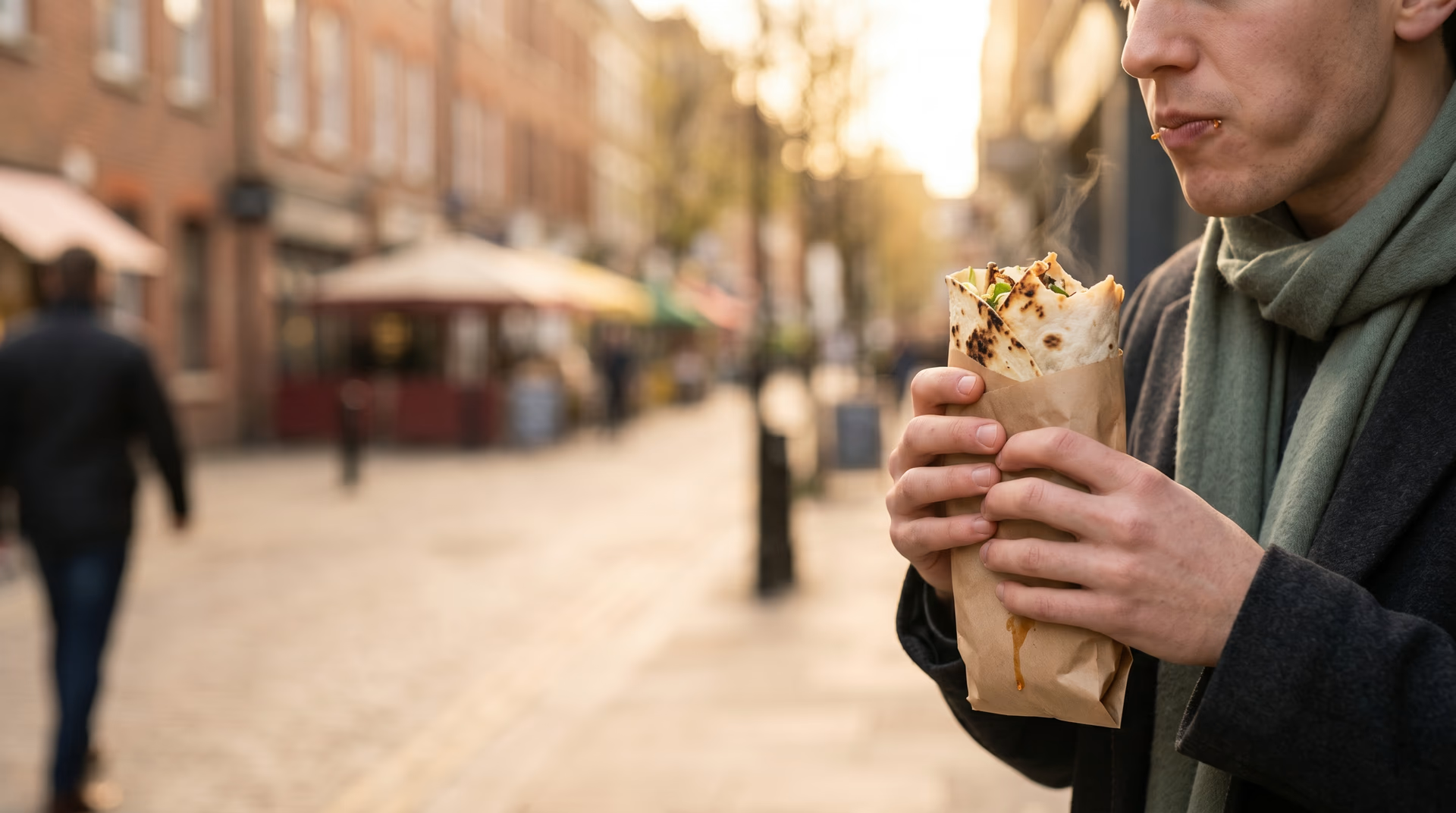
Syndicated category data lags. Real change in food and drink shows up first in conversation, search behaviour, social signal and the editorial space, often six to twelve months before it lands in the panel data the rest of the business is working from. The teams that move first are the ones reading the leading signal layer, not the lagging data layer.
Social scraping and trends is the curated, interpreted layer that gives you the leading signal in a form you can actually use. The work scans the sources where signal actually lives for food and drink (not the generic crawl that listening tools default to), reads it through a senior interpretive layer (not an algorithm), and delivers it scoped around your category, your audience and the decisions the work has to inform.
It is not the right tool for every brief. If the question is about confirming a known behaviour with statistical evidence, you want quantitative work. If the question is about deep behavioural understanding in context, you want ethnography. If the question is about the broader category synthesis, you want immersion. We will tell you which on the scoping call.
What we do differently
-
Curated source set, not generic crawl
We are not scraping Twitter for hashtags. The source set is built specifically for food and drink: specialist publications, professional communities, retailer and operator news, consumer forums where actual food and drink conversation happens, the search queries that signal demand shift. We curate where signal actually lives in this sector, which is not where generic listening tools default to looking.
-
Senior interpretation, not a dashboard
The signal is read by senior food and drink specialists, not surfaced by an algorithm. The job is not to count mentions. The job is to read what is being said, separate signal from noise, and turn it into a structured view on what it means for your category, your brand and your next decision. The interpretive layer is the value, and we do not delegate it.
-
Built for your decisions, not for the report shelf
Every engagement is scoped to your specific commercial context: your category, your audience, the decisions the work has to inform. We do not write the same trend report and sell it to multiple clients. Each piece of work is curated, written and delivered around the questions you are actually trying to answer.
-
White label, where you need it
Some clients (typically other agencies, consultancies, or corporate procurement teams) commission the work for internal use without our brand attached. We deliver the curated report, the senior interpretation and the recommendations under your brand or no brand at all. Transparent commercial arrangement. The value is in the work, not the name on the cover.
Six commercial use cases, written as scenarios a buyer will recognise from their own brief. The aim is for the reader to see their question on this list and self-select.
Trend hunting at the start of an innovation cycle
The team is rebuilding the pipeline and needs a curated view of what is signalling in the category before the briefs are written. Real-time signal gives the leading edge view that syndicated data lags six to twelve months behind.
Validating an emerging behaviour before commitment
You have spotted something in the category. The team is split on whether it is a real trend, a scaling behaviour, or a passing fashion. Signal work is the fastest way to validate whether the behaviour is real, scaling, or already peaking, before commercial commitment is made.
Real-time competitive monitoring
A specific competitor is shifting their proposition, range or marketing, and you need ongoing visibility on what they are doing and how the market is responding. Rolling monitoring programme designed around the competitor set and the moves that matter.
Pre-launch landscape check
You are launching into a new category, channel or market. The work scans the live consumer and competitive landscape so the launch lands into a properly understood context, not a stale one built on data from before the launch decision was made.
Leadership briefing on category direction
The board strategy day or annual leadership conversation is on the calendar. Leadership needs a curated read on where the category is heading and why, designed for senior decision-making rather than for analyst consumption.
Post-launch sentiment and signal tracking
You have launched. The retailer sell-through data is thin and lagging. Social scraping and trends provide the early read on what consumers, operators and culture are actually saying about the launch, ahead of the panel data settling.
-
How a signal project runs
From brief to signal read
-
Scoping call
Twenty minutes on a call. You tell us what you are trying to understand or monitor, the decisions the work has to inform, and the timeline you are working to. We tell you whether social scraping is the right tool, what scope makes sense, and roughly what it will cost.
-
Source curation
We build the curated source set specifically for your category, audience and question. Not a generic listening setup. The senior team identifies where signal actually lives for your specific commercial context, including the sources a generic tool would miss and the sources that look noisy but actually carry real signal in this sector.
-
Live scanning
The work runs against the curated source set, with the senior team reading the signal as it surfaces. This is not a passive dashboard producing automated reports. The interpretive layer is built into the scanning from the start.
-
Senior interpretation
Senior specialists read the signal, separate it from noise, and turn it into a structured point of view on what is happening, what is changing, and what it means for your decisions. This is the work most generic trend reports skip, and the step that earns the seniority of the team running it.
-
Delivery
You receive the work in the format that fits your need: a one-off trend and signal report, a rolling monitoring programme with regular cadence, or a white-label briefing pack you deliver internally. The format is scoped at the start so the work lands in the meeting that needs it.
One-off, rolling, or white label. We will scope around the brief.
The work flexes around the shape of the engagement. The three formats below are how clients most commonly commission it. The decision shapes what the work looks like, how it is delivered, and what it costs.
One-off signal report
A point-in-time trend and signal read scoped to a specific category, audience or question. Used most often at the start of an innovation cycle, before a strategy day, or to validate a specific hypothesis before commercial commitment. Typical turnaround: two to four weeks from brief to readout.
Rolling monitoring programme
Ongoing scanning at agreed cadence (typically monthly or quarterly), with regular reads delivered to the team in the rhythm they actually use. Used for continuous competitive monitoring, ongoing category watch, or post-launch tracking. Typical commitment: three to twelve months, with the option to extend or end at agreed review points.
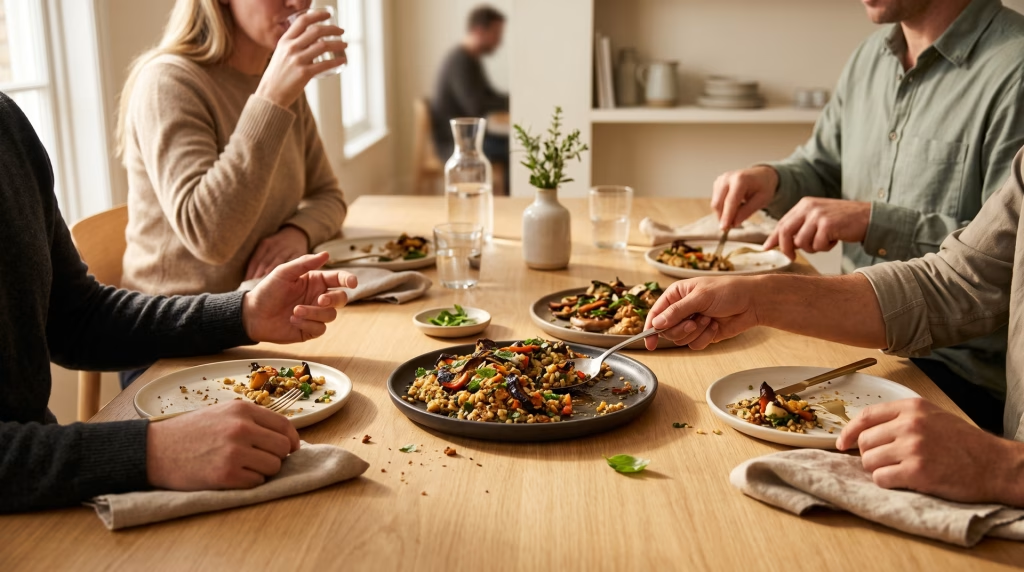
White label delivery
Full curated signal work delivered under your brand (or no brand at all) for agencies, consultancies and corporate procurement teams who need the recommendation to land without our name attached. Transparent commercial arrangement. Full senior interpretive layer. Used widely by partner agencies and internal corporate teams.
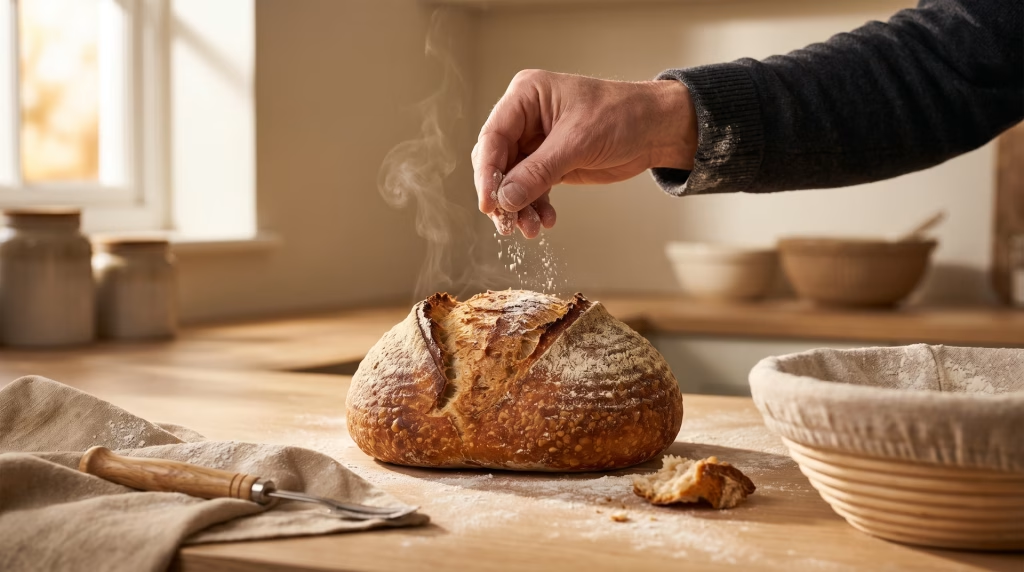
Food and drink is all we do
We are not a generalist trend agency that takes the occasional food brief. Food and drink is the only sector we work in. Our senior team knows the categories, the consumers, the retailers and the constraints. Signal lands with people who get it on the first read, and recommendations come back framed for the people who actually have to make the decision.
That focus is why we work with 11 of the UK’s top 40 food and drink brands.
Other ways to decode the category
Social scraping is one tool in the broader Decode toolkit. Depending on the brief, one of these might be a better fit, or a stronger partner alongside the signal work.
-
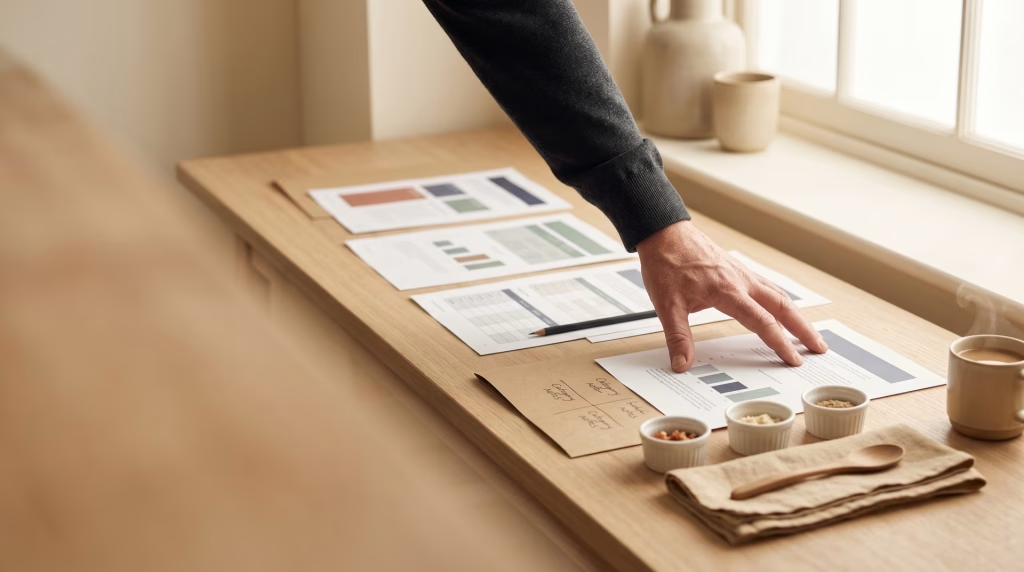
Consumer and Category Data Immersion
Structured deep-dives that bring marketing, NPD, innovation or category teams up to a senior working understanding of the category, the consumer and the competitive landscape.
-
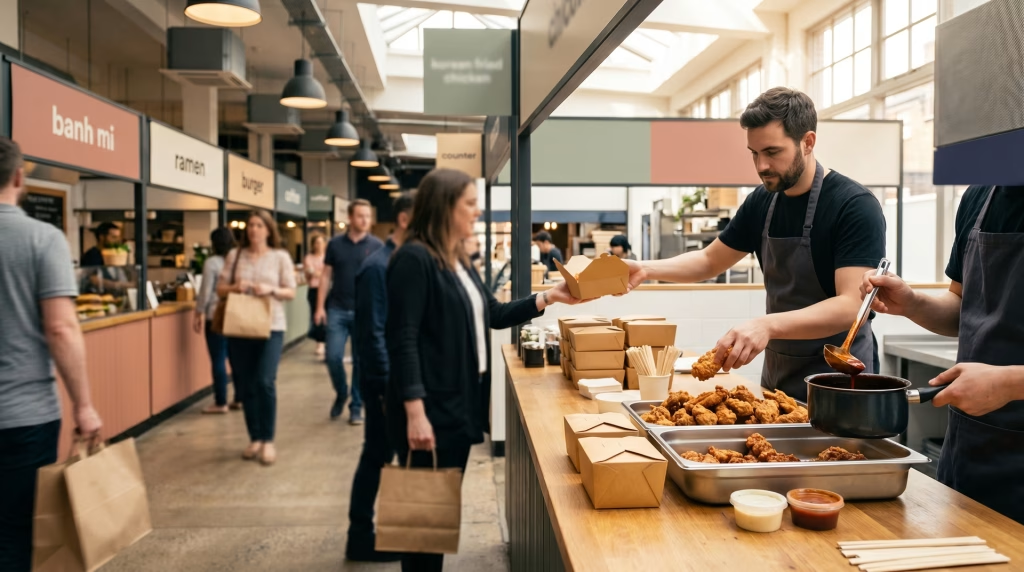
Food Safaris & Competitor Review
Live, curated immersion in the markets, restaurants, retail aisles and overseas territories that are shaping your category.
-
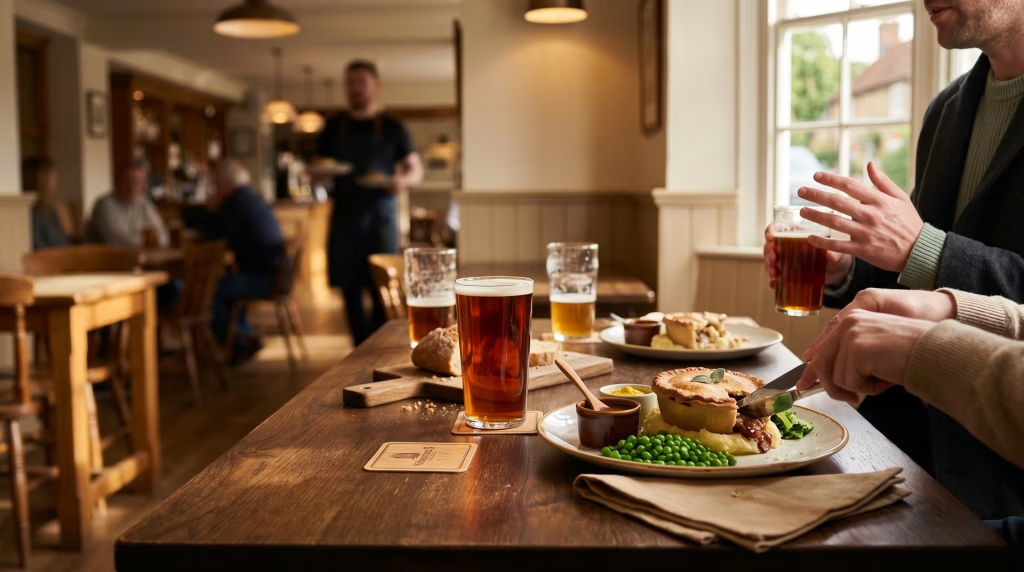
Ethnography
Deep behavioural observation of how food and drink lives in real homes, real kitchens, real eating moments and real social contexts.
-

Opportunity Mapping
Strategic mapping of where to play in food and drink.

Signal work that landed in real decisions
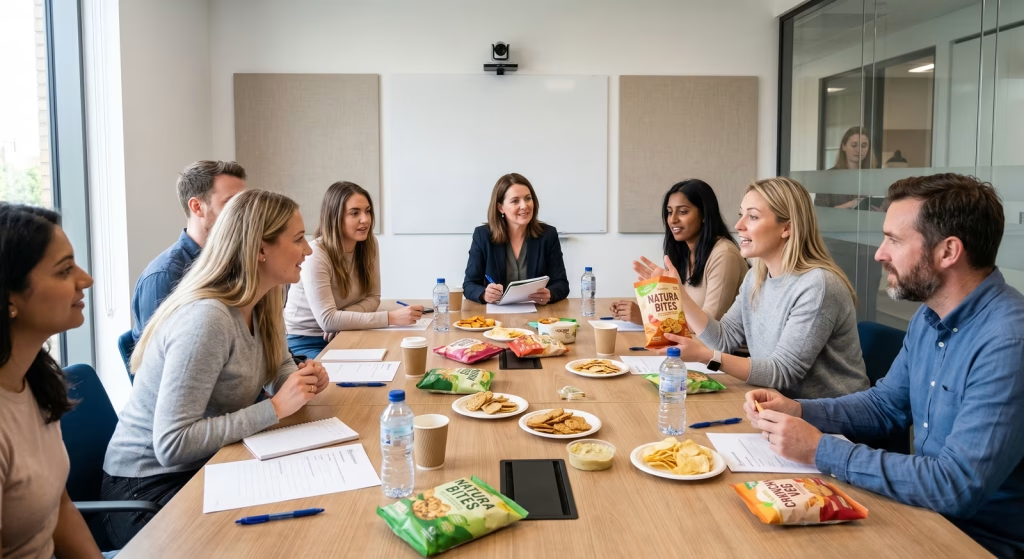
Three real social scraping and trends projects across different categories and different briefs.
FAQs
What is the difference between this and a social listening tool we could buy ourselves?
A listening tool gives you the data; it does not tell you what it means. Our work combines a curated source set built specifically for food and drink (rather than a generic crawl) with senior interpretation that separates signal from noise. You can buy a listening tool off the shelf. You cannot buy senior specialist interpretation off the shelf.
How is this different from a generic trend report?
Generic trend reports are written once and sold to many. Our work is curated, scoped and delivered for your specific category, audience and decision context. The trends that surface are the ones that matter for your brief, not the universal trends that appear in everyone else’s pipeline review.
Do you cover specific food and drink sub-categories?
Yes. The source set is curated specifically around your category, whether that is broad (premium ready meals, plant-based protein, premium coffee) or specific (kombucha, low-and-no, regional cuisine territories). Source curation is the first design decision and is built around the commercial scope of your brief.
What sources do you scan?
Specialist food and drink publications (trade and consumer), professional communities and forums, retailer and operator news, consumer conversation in food-relevant spaces, search query data, cultural commentary, and where appropriate proprietary sources we have access to. We build the source set around the category, not against a fixed template.
How quickly can you deliver?
A one-off signal report typically delivers in two to four weeks from brief to readout. A rolling monitoring programme starts inside two weeks and runs at the agreed cadence. White label work is scoped per engagement. We will give you a realistic timeline at proposal stage.
Can we commission this as a rolling programme?
Yes. Rolling monitoring programmes run at agreed cadence (typically monthly or quarterly), with regular reads delivered to the team in the rhythm they actually use. Used most often for ongoing competitive monitoring, continuous category watch, and post-launch tracking. Typical commitment three to twelve months with review points.
Do you offer white label delivery?
Yes. White label is a transparent commercial arrangement available to agencies, consultancies and corporate procurement teams who need the work delivered without our brand attached. Full senior interpretive layer, your name (or no name) on the output. We agree the terms on the scoping call.
How do you separate signal from noise?
Senior food and drink specialists do the separating, not an algorithm. The senior team has spent enough time in the category to recognise what actually signals commercial change versus what is fleeting cultural noise, and the curated source set is already filtered to remove most of the noise that generic listening tools surface.
Can we focus the work on a specific competitor or topic?
Yes. Competitor-focused and topic-focused programmes are common variants, particularly for clients monitoring a specific competitive move or tracking a specific emerging behaviour. Scope is agreed at the start and can be adjusted as the work runs if priorities shift.
How much does it cost?
Project-based for one-off work, retainer-based for rolling programmes, scoped per engagement for white label. The biggest cost drivers are the breadth of the source set, the cadence of monitoring and the depth of senior interpretation required. We will give you a clear, all-in quote at proposal stage with no hidden extras.
Need to see what is happening in your category before the data catches up?
Tell us what you are trying to understand or monitor, the decisions the work has to inform, and the timeline you are working to. We will tell you whether social scraping is the right tool, what commissioning shape makes sense, what the timeline looks like and what it will cost. Twenty minutes on a call. No qualifying call before the qualifying call.
Senior specialists on every project. Curated, not crawled. White label available. Specialists in food and drink, only.