What consumer co-creation is actually for
Most consumer research positions consumers as respondents. The internal team frames the question; consumers answer it. The methodology produces the data the team asked for. The output reflects what the team thought to ask about, which means the work is bounded by the team’s existing frame of reference rather than expanded by consumer perspective.
This works for many briefs. It fails for briefs where the question itself needs consumer perspective: where the team’s framing might be missing the point, where the lived consumer reality differs from the internal narrative in ways the team cannot anticipate, where the implications consumers would draw differ from the implications the team would draw from the same evidence. For those briefs, you need consumers shaping the work itself, not just answering it.
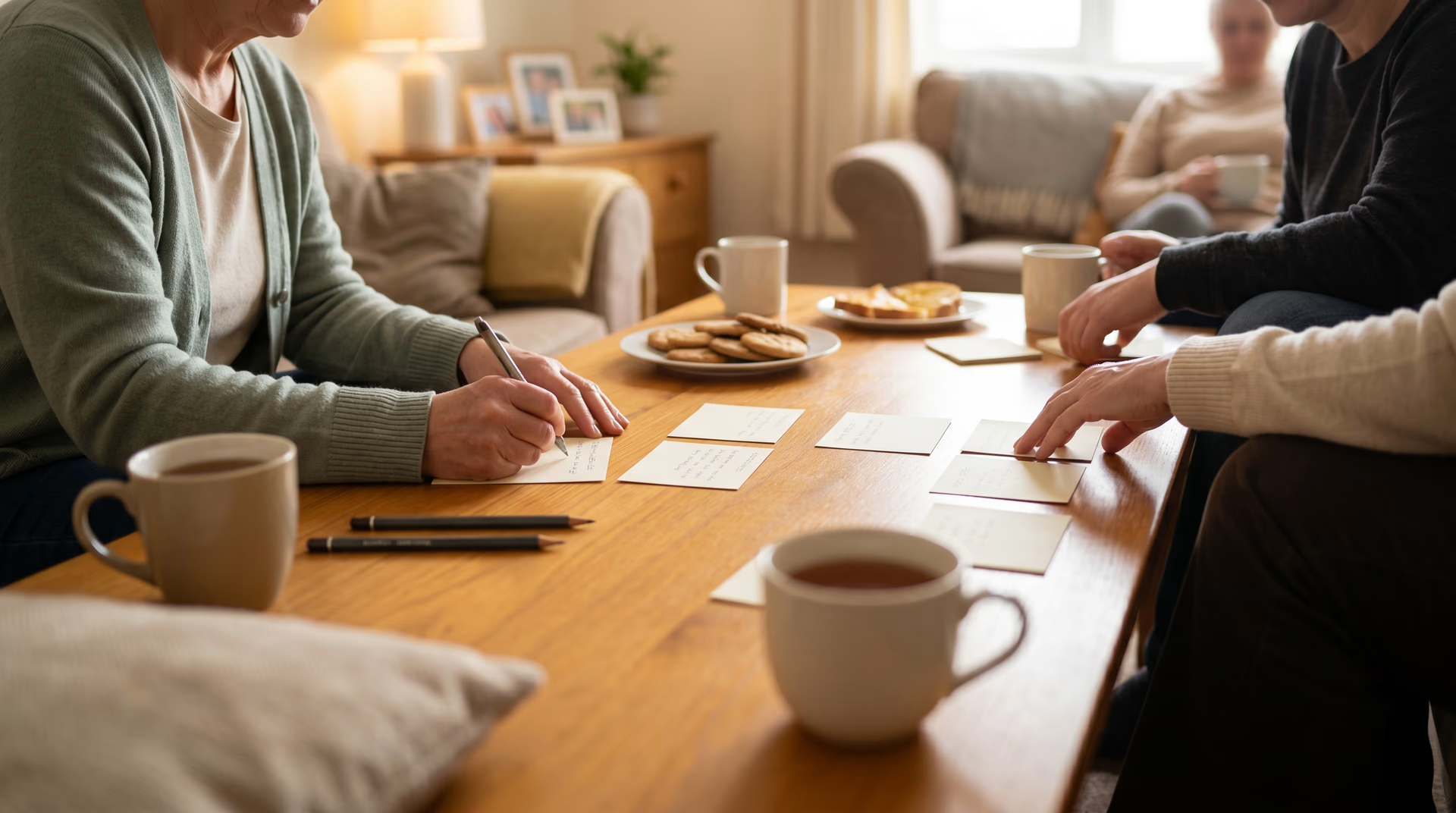
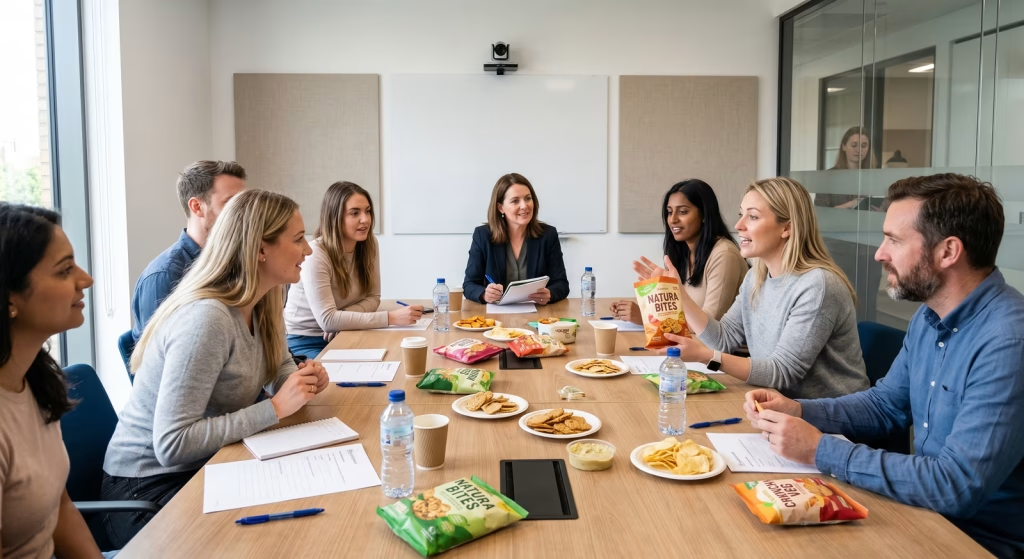
Co-creation (consumers) is the participatory insight methodology for those briefs. The work brings consumers into structured sessions where they help frame the question, generate hypotheses worth exploring, interpret what findings mean for their lived reality, and shape what the implications are. Alongside the internal team and senior food and drink facilitators. The output is consumer-grounded insight the internal team would not have arrived at through reactive research, because the consumer framing of the question changes what gets asked and how the findings get read.
It is not the right tool for every brief. If the brief is collaborative concept ideation with consumers as creative participants, our innovation-side Co-creation service is the right tool (different commercial purpose, ideation output rather than insight output). If the brief is iterative concept development, Concept Labs is more efficient. If the brief is reactive consumer research at scale, focus groups or Concept Screening are simpler and faster. Co-creation (consumers) sits specifically when the brief needs consumer perspective in the framing of the work itself, not just in the responses.
What we do differently
-
Consumers shape the work, not just respond to it
The structural difference between participatory insight and reactive research. Generic consumer research positions consumers as respondents (the team asks; consumers answer). Our co-creation positions consumers as active participants in shaping the insight: they help frame the brief, generate hypotheses worth exploring, interpret what findings mean for their lived reality, and shape what the implications are. The work is built around their perspective rather than just about it, which is what produces insight the internal team would not have reached through reactive research alone.
-
Senior food and drink facilitation that handles participatory dynamics
The technical difficulty of consumer co-creation is making consumer participation productive rather than performative. Consumers default to social desirability bias; participatory methodology can drift into pleasant conversation; the senior interpretive layer can get lost in democratic discussion. Senior food and drink facilitators handle these dynamics deliberately: keeping the work commercially productive, surfacing perspectives that would otherwise stay quiet, integrating consumer input with sector specialism consumers do not have. Generic facilitators struggle with the balance; sector specialists keep both sides credible.
-
Designed for insight output, not ideation output
The clearest distinction from our innovation-side Co-creation service. This service is built around consumer-led insight: what does the lived consumer reality look like, how do consumers frame the category, what is missing from the internal understanding, where does the existing strategic narrative diverge from consumer lived experience. Output is consumer-grounded insight feeding strategy and innovation thinking, not the ideation output of innovation-side Co-creation (which is briefable concepts, validated propositions, trade-informed work). Different briefs, different methodologies, different deliverables.
-
Integrated with the broader insight toolkit
Co-creation (consumers) sits between exploratory insight (where the question itself needs defining) and structured testing (where defined concepts get validated). The methodology integrates with the broader Challenge 03 insight toolkit (Concept Labs, Concept Screening, Idea Arena) and the Challenge 02 insight foundations (Needs Landscaping, Exploratory Insight). Often commissioned as the deepening layer that follows initial insight work and feeds the structured testing that comes after, rather than as a standalone discovery exercise.
What we use consumer co-creation for
Deep consumer insight for innovation strategy
You are setting innovation strategy and need consumer-grounded insight that goes beyond reactive research: consumers shaping how the question is framed, what hypotheses are worth testing, how the category looks through their eyes. The work delivers strategic insight foundation built with consumer participation rather than just from consumer response, in a form that can ground major innovation decisions.
Brand or category exploration with consumer participation
You are exploring a new brand territory, category space or audience and need consumer perspective in the work itself rather than as evaluation afterwards. Consumer co-creation brings consumers into the exploration as active participants, helping frame what the team should be looking for and interpreting what they find, which produces exploratory understanding rather than confirmation of existing hypotheses.
Cultural translation work
You are working with consumers across cultural, demographic or generational contexts the internal team does not fully understand, and need participatory methodology to bridge the gap. Consumer co-creation positions consumers as guides to their lived reality rather than as research subjects, with the work designed to make the cultural translation explicit rather than leaving the team to interpret reactive research through an outsider lens.
Consumer-led concept interpretation
You have concepts or propositions developed and need consumer perspective on how they land in lived context, not just whether consumers like them. Co-creation brings consumers into interpretation work where they help articulate what the concepts mean in their reality, where they fit, what they replace, what they enable. The work produces consumer-grounded interpretation that informs how the concepts are positioned, not just whether they pass.
Foundation insight for major strategic decisions
You are commissioning major strategic work (Opportunity Mapping, Future Food Pipeline Builder, Platform and Territory Building) and need deep consumer-grounded insight foundation. Consumer co-creation builds the insight layer with active consumer participation, which produces foundation evidence the strategic work then sits on top of credibly rather than against assumed consumer framings.
Consumer participation in trend interpretation
Your trend forecasting or category foresight work needs consumer interpretation of what the trends actually mean in lived reality, not just expert speculation about them. Consumer co-creation brings consumers into the trend work as interpreters of lived shift rather than as confirmers of expert hypotheses, which surfaces the implications expert work alone misses.
-
How a consumer co-creation project runs
From open question to consumer-grounded insight
-
Scoping call.
Twenty minutes on a call. You tell us the brief, where the question is open (which aspects need consumer framing versus which the team already has clear), the strategic context, the next phase of work the insight has to feed, the audience for the deliverable and the timeline. We tell you whether consumer co-creation is the right tool, what format makes sense, how participation will be structured and roughly what it will cost. Where the brief would be better served by reactive research or by the innovation-side Co-creation service, we will recommend the right alternative honestly.
-
Participatory design and consumer recruitment.
Senior team designs the participatory structure against the brief: which dimensions of the work consumers will help frame, which sessions are participatory versus directed, how consumer participation integrates with internal team input. Recruitment runs through our specialist food and drink consumer panels, profiled specifically against the brief (the audiences whose lived perspective is most central to the work). Profiles signed off by the client before sessions are confirmed.
-
Pre-engagement preparation.
Briefing materials for consumer participants calibrated for participatory work (different from briefing for reactive research because consumers need to understand what they are contributing to, not just what they are responding to), stimulus and prompt materials designed to enable shaping rather than to constrain to answers, internal team briefing on participatory dynamics. The preparation phase often makes the difference between productive participation and performative engagement.
-
The co-creation sessions.
Senior food and drink facilitators run the sessions, structured for shaping work rather than for response capture. Consumers help frame the questions, generate hypotheses, interpret findings, shape implications. The senior team integrates consumer input with sector specialism live in the room, which is the technical work that turns participation into insight rather than into discussion. Multiple sessions where the brief requires depth across audiences or across stages of the work.
-
Senior synthesis and insight deliverable.
Senior team synthesis across the sessions into the structured insight deliverable: the consumer-grounded framing of the question, the hypotheses that surfaced through participation, the interpretation of what consumers contributed, the implications shaped through the work. The deliverable is built for the next phase of work (strategic decisions, innovation planning, concept development, brand positioning) rather than as a standalone consumer-engagement report. Lands within two to three weeks of the final session.
Three formats. Scoped against the depth of participation and the integration with broader work.
Consumer co-creation flexes against the brief and the depth of consumer participation required. The three formats below are the typical engagement shapes we run, with the format selected at scoping rather than assumed. Single sessions work for focused briefs; multi-session programmes for richer insight foundation; embedded programmes for ongoing consumer relationships across a broader programme.
Single-session co-creation
One focused participatory session with a single consumer cohort, typically four to six hours, scoped against a defined insight brief where consumer framing on one specific question is the work. Suited to briefs with a clear insight need that benefits from participatory methodology but does not require sustained engagement. Typically delivers the consumer-grounded insight deliverable within four to six weeks of scoping. The lowest entry point for participatory consumer insight work.
Multi-session participatory programme
Three to six sessions across four to eight weeks, multiple consumer cohorts, with the participation building across the sessions toward integrated insight. Suited to most major consumer co-creation briefs: deep strategic insight foundation, brand or category exploration, cultural translation work, multi-aspect insight that needs to develop across the programme rather than being captured in a single session. The most common consumer co-creation format.

Embedded consumer programme
Sustained consumer participation across a broader innovation or insight programme, typically running three to six months with ongoing consumer cohorts engaged at multiple points in the work. Suited to major innovation programmes where consumer participation needs to be embedded across the work rather than as a discrete phase: strategic foundation work that flows into pipeline development, brand transformation programmes, multi-year innovation streams with ongoing consumer grounding requirements.
Food and drink is all we do
We are not a generalist research agency that takes the occasional food brief. Food and drink is the only sector we work in. Our senior facilitators handle participatory consumer dynamics in food and drink categories specifically, with the sector specialism that turns consumer participation into commercially useful insight rather than into pleasant conversation. The senior interpretive layer that integrates consumer input with food and drink commercial reality is what separates this work from generic consumer engagement methodology.
That focus is why we work with 11 of the UK’s top 40 food and drink brands.
Other ways to create and refine ideas
Co-creation (consumers) is one tool in the broader Create and Refine Ideas toolkit. Depending on the brief, one of these might be a better fit, or a stronger partner alongside the co-creation work.
-
Co-creation (consumers)
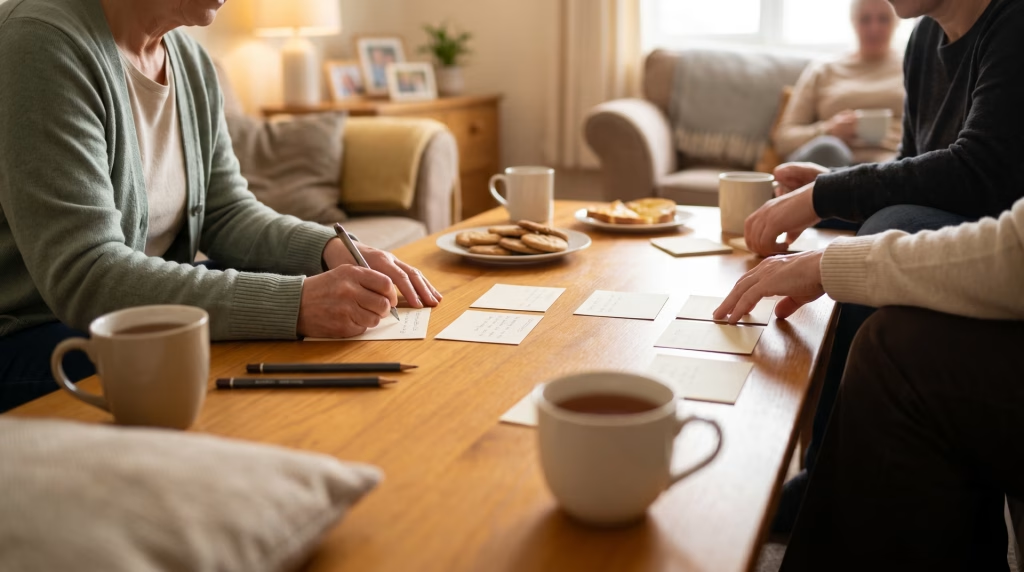
A participatory consumer insight methodology where consumers actively shape the work rather than answering questions about it.
-
Concept Labs
Iterative concept development with consumers, structured to refine, sharpen and evolve concepts before they reach formal testing.
-
Concept Screening
Structured quantitative concept testing for food and drink innovation, designed to prioritise which concepts go forward into NPD investment, brand development or commercial commitment.
-
Exploratory Insight
Senior-led discovery work for early-stage briefs where the scope is not yet defined, the question is not yet clear, or the team needs structured hypothesis generation before commissioning more structured work.

Consumer co-creation that grounded real strategic work
Three real consumer co-creation projects across different categories and different briefs.
FAQs
How is this different from the innovation-side Co-creation service?
Purpose and deliverable. The innovation-side Co-creation service is built around collaborative ideation: external stakeholders (buyers, consumers, industry experts) participate in creating new work alongside the internal team, with the output being briefable concepts, validated propositions or trade-informed work. This insight-side Co-creation service is built around participatory consumer insight: consumers participate in shaping the insight work itself, with the output being consumer-grounded understanding that feeds strategic and innovation thinking. Different commercial purposes, different methodologies, different deliverables. Many major programmes commission both for different streams of the same work, but they are not interchangeable.
How is this different from focus groups?
The role of the consumer. Focus groups position consumers as respondents: the internal team frames the question, consumers answer it, the methodology captures the responses. Consumer co-creation positions consumers as active participants in shaping the work itself: framing the question, generating hypotheses, interpreting findings, shaping implications. The output is structurally different. Focus groups produce response data the team interprets afterwards; consumer co-creation produces consumer-grounded insight that the consumers have helped to shape during the work. Different methodologies for different briefs.
How is this different from Concept Labs?
What consumers are participating in. Concept Labs positions consumers as iterative developers of defined concepts: concepts arrive, get refined through consumer participation, leave in sharper form. The work is concept-focused with consumer participation as the development methodology. Consumer co-creation positions consumers as participants in shaping insight work: the work is insight-focused with consumer participation as the framing methodology. Different briefs, different deliverables, different stages of innovation work.
What is the actual deliverable?
Consumer-grounded insight scoped for the next phase of work. Specifically: the consumer-grounded framing of the brief question (how consumers articulate what the team is exploring), the hypotheses surfaced through participation (what consumers think is worth investigating that the team had not framed), the interpretation of findings (what consumers think the findings mean for their lived reality), the implications shaped through the work (what consumers think should change as a result), and the synthesis that integrates consumer input with sector specialism. Format agreed at the start.
How many consumers participate?
Smaller numbers than reactive research because the depth of participation matters more than the breadth of response. Typical formats: six to twelve consumers per session for single-session work, twelve to twenty-five consumers across a multi-session programme, fifteen to forty consumers for embedded programmes engaged at multiple points across the work. The recruitment is profile-deep rather than sample-broad, because the participation depends on each consumer being able to contribute substantively rather than on statistical scale.
Will the output be specific enough to act on?
Yes, when the participatory methodology is scoped properly. The structural feature of our consumer co-creation is that the insight output is anchored in the strategic decision the work has to support, not produced as open-ended consumer engagement. The brief is scoped at the start against where consumer participation will add value over reactive research, and the deliverable is structured for the next phase of work. Where the brief is genuinely open-ended (the question itself is unclear), Exploratory Insight is the right precursor; consumer co-creation then deepens the work once the scope is defined.
How long does consumer co-creation take?
Four to six weeks for single-session work, six to ten weeks for multi-session programmes, twelve weeks plus for embedded programmes running alongside broader innovation work. Compressed timelines are possible for focused briefs where the participatory design is straightforward; more complex briefs (multi-market, multi-audience, integrated with broader strategic work) typically run longer. Realistic timelines at proposal stage.
Can we run this internationally?
Yes. We run consumer co-creation across the UK, mainland Europe, the US and the UAE, with local recruit and local fieldwork support where the cultural and language context requires it. International participatory work is operationally more complex than single-market because the cultural calibration of facilitation matters significantly more in participatory methodology than in reactive research. We will scope international briefs honestly at the scoping call.
Can we commission this alongside other services?
Yes, and this is the most common commissioning structure. The natural integration is with broader insight and innovation programmes: Exploratory Insight first (where the scope is open), consumer co-creation for the participatory insight foundation, Concept Labs or Concept Screening for the testing follow-on, then innovation-side Co-creation, Creative Workshops or Hothouse for the ideation work the insight grounds. Some programmes commission consumer co-creation alongside Needs Landscaping or Opportunity Mapping as the deeper consumer-grounded layer behind structured strategic work.
How much does consumer co-creation cost?
Project-based, scoped against the format (single-session, multi-session, embedded), the number of consumer cohorts, the depth of participatory design, the geographic scope and the integration with broader work. Single-session UK work is the lowest entry point; multi-market embedded programmes are the highest. We give a clear, all-in quote at proposal stage with no hidden extras.
Got a brief where consumer framing of the question matters as much as the answer?
Tell us the brief, where the question is open (which aspects need consumer framing versus which the team already has clear), the strategic context, the next phase the insight has to feed, and the timeline. We will tell you whether consumer co-creation is the right tool, what format makes sense, how participation will be structured and what it will cost. Where reactive research, innovation-side Co-creation or another service would be better, we will recommend that honestly.
Senior food and drink facilitation throughout. Participatory methodology designed for shaping not just responding. Consumer-grounded insight as the deliverable. Specialists in food and drink, only.