

What Hothouse is actually for
Some innovation briefs need more than a workshop can deliver. The platform is high-priority. The pipeline gap is significant. The leadership team is committed to building a credible concept pipeline rather than testing a few isolated ideas. The commercial scale of the brief justifies the depth, and the depth requires more time, more methodology and more attention than a workshop can sustain.
Most agencies handle these briefs by stringing together multiple workshops or by running an extended single workshop. Both approaches under-deliver. Multiple workshops lose the cumulative depth that intensive immersion produces. Extended single workshops compress depth into too little time. Neither produces what the brief actually needs: a credible concept pipeline built with the structural depth that the most significant innovation briefs require.
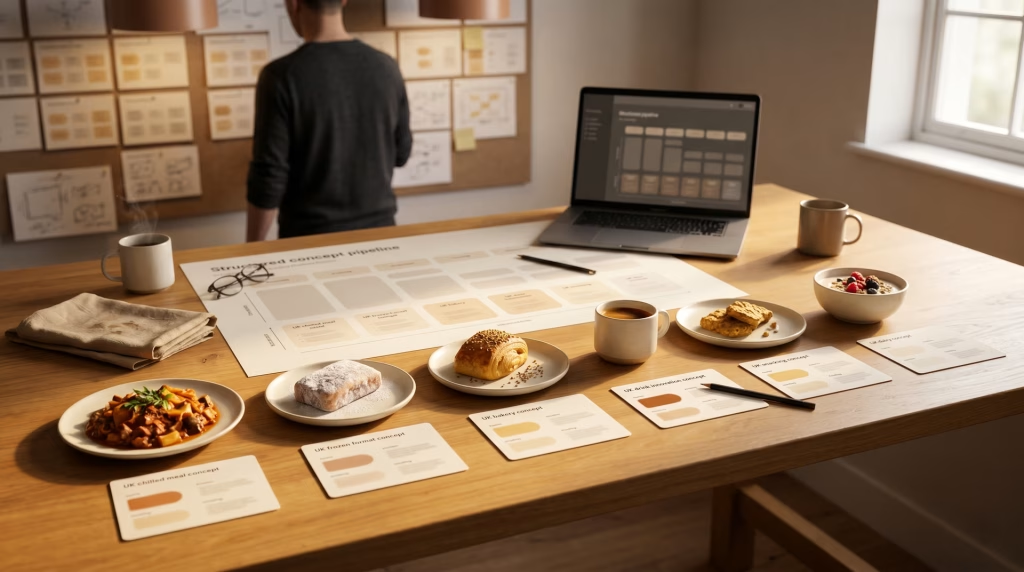
Hothouse is the intensive ideation immersion methodology for those briefs. Multi-day, cohort-based, run by senior food and drink facilitators throughout, designed to produce concept pipelines rather than individual concepts. The methodology depth is what separates Hothouse from Creative Workshops or multi-workshop alternatives: more techniques, more stimulus, more development time, more cross-cohort synthesis. The output is a structured concept pipeline scoped against the strategic platform the work sits on top of, ready for concept screening, development, NPD briefing or commercial action.
It is not the right tool for every brief. If the brief is flexible-scope structured ideation, Creative Workshops are more efficient and proportionate. If the brief involves external stakeholders (consumers, customers, partners) as core participants, Co-creation is structurally different. If the brief is about category or sector expert input, Expert Panels delivers that depth. Hothouse sits specifically when the brief is commercially significant enough to commit multi-day intensive immersion, and when the deliverable is a concept pipeline rather than individual concepts.
What we do differently
-
Intensive depth that workshops cannot sustain, by design
The structural difference between Hothouse and Creative Workshops. The multi-day format is not just longer; it is structurally different. The methodology depth (more techniques, more stimulus, more development time) compounds across days in a way that single-session workshops cannot replicate. The cumulative depth is what produces a concept pipeline rather than a set of individual concepts, and the multi-day immersion is what makes the depth commercially viable rather than diluted across separate sessions.
-
Cohort-based methodology, not single-team facilitation
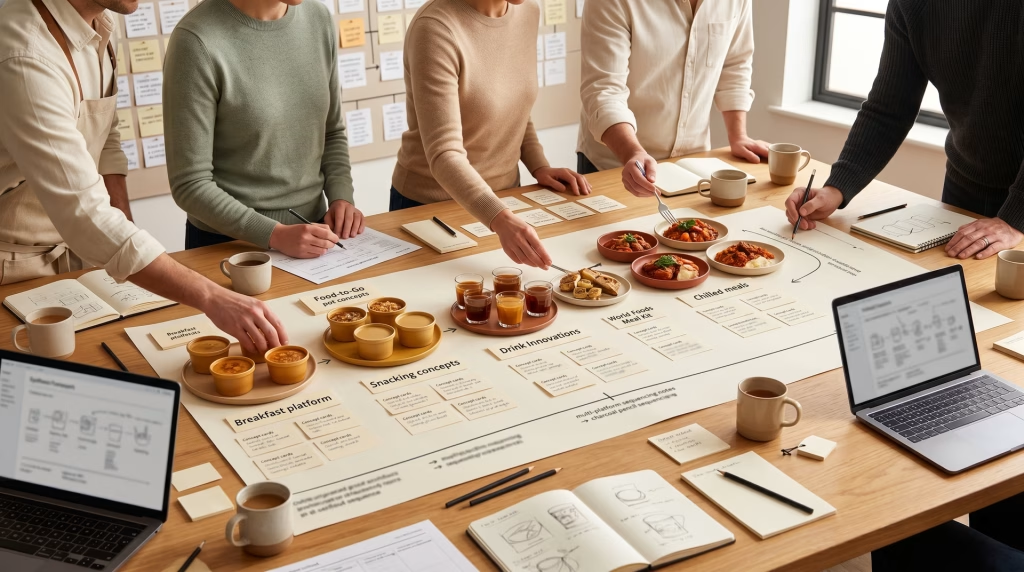
Most ideation runs with one team in the room. Hothouse runs with multiple cohorts: different attendee groups, different sessions across the days, sometimes parallel cohorts working on different streams. The cohort structure produces breadth that single-team workshops cannot reach (different perspectives, different functional inputs, different audience proxies). The cross-cohort synthesis layer is what turns the breadth into a coherent pipeline rather than a fragmented concept set.
-
Senior food and drink facilitation throughout, not delegated to junior team members
The intensive depth depends entirely on the seniority of the people running it. Senior food and drink specialists facilitate every session, run the interpretive layer live, and lead the cross-cohort synthesis throughout. We do not delegate Hothouse facilitation to junior team members because the value of the multi-day investment depends on senior interpretation at every point in the work. The senior commitment is the central commercial reason buyers commission Hothouse rather than running multi-day ideation internally.
-
Built to produce concept pipelines, not individual concepts
The output of a Hothouse is structurally different from a workshop output. Where a workshop produces a set of briefable concepts, Hothouse produces a structured concept pipeline: concepts grouped into platforms or territories, sequenced for development, prioritised against commercial criteria, scoped at the right level of specificity for the next phase (concept screening, development, NPD briefing). The pipeline is the deliverable, not the individual concepts.
What we use Hothouse for
Concept pipeline development from a defined innovation platform
You have a defined innovation platform (typically from Platform and Territory Building or other Challenge 02 strategic work) and you need a credible concept pipeline against it rather than a handful of isolated concepts. Hothouse delivers the pipeline depth: multiple concepts sequenced into a launch and follow-on roadmap, scoped against the platform specification and ready to feed into concept screening or development.
Major brand launch ideation
You are scoping a major brand launch, a brand reset or a portfolio launch programme and need intensive concept generation across the multiple streams the launch requires (lead products, range, supporting propositions, NPD pipeline). The intensive multi-day format delivers the depth and breadth a major launch needs, with the cohort structure ensuring different functional perspectives are integrated rather than handled separately afterwards.
Category entry concept generation
You are entering a new category and need a credible concept pipeline scoped against the entry strategy rather than a single hero launch concept. Hothouse builds the pipeline of concepts that gives the category entry credibility over multiple years and multiple touchpoints, not just a one-shot launch that lands or fails.
Innovation pipeline rebuild from a stalled position
Your innovation pipeline has stalled and the team needs intensive concept regeneration. Hothouse provides the depth and volume the rebuild requires: multiple concepts across multiple platforms or territories, scoped against where the existing pipeline has fallen short. The intensive format compresses the rebuild work that would otherwise take six to twelve months of incremental workshop output.
Cross-portfolio range development
You are developing or refreshing a product range across a portfolio brand and need cross-functional ideation across the range. The cohort-based methodology handles the cross-portfolio thinking better than single-team workshops: range coherence, gap identification, sequencing across the portfolio, audience and occasion specificity across the range.
M&A or post-acquisition innovation pipeline scoping
You have acquired a food and drink business and need an intensive concept pipeline scoping work to integrate the acquired innovation thinking with your existing pipeline. The multi-day cohort format handles the integration work that single-team workshops cannot do credibly, producing the integrated pipeline view the post-acquisition strategy needs.
-
From brief to concept pipeline ready to ship
From developed product to launch-ready evidence
-
Scoping call
Twenty minutes on a call. You tell us the brief, the strategic context (platform, opportunity, pipeline gap), the output target for the concept pipeline, the cohort structure that makes sense (which attendee groups across which days), and the timeline. We tell you whether Hothouse is the right tool, what format makes sense (three-day, four-day, five-day), what pre-Hothouse preparation is needed, and roughly what it will cost. Where the brief is at risk of being smaller than a Hothouse warrants, we will recommend Creative Workshops or a different format honestly.
-
Pre-Hothouse preparation
Briefing materials for attendees, stimulus material curated for the brief, cohort structure design and pre-Hothouse activities (pre-reads, individual ideation, audience proxies, expert inputs) that increase the depth and productivity of the multi-day work itself. Hothouse preparation is significantly more involved than workshop preparation: the depth depends on the team arriving with the right context, the stimulus being properly scoped, and the cohort structure being designed for the brief rather than assembled generically.
-
The Hothouse itself
Multi-day intensive immersion, run by senior food and drink facilitators throughout. The methodology compounds across days: discovery and divergence early, structured development through the middle, convergence and prioritisation by the end. Multiple cohorts work in parallel or sequence depending on the brief, with cross-cohort synthesis sessions integrating the work into a coherent pipeline rather than separate concept streams. Senior interpretation happens live throughout the work, with concept development and pipeline shaping built into the days rather than left for post-event synthesis.
-
Cross-cohort synthesis and pipeline development
Senior team synthesis across the cohort work into the structured concept pipeline deliverable: concepts grouped into platforms or territories, sequenced for development, prioritised against commercial criteria, scoped at the right level of specificity. The synthesis layer is the most senior interpretive work in the project, and the layer that makes the multi-day investment pay back: the difference between a Hothouse that delivers a coherent pipeline and one that delivers a long list of separate concepts.
-
Pipeline activation deliverable and readout
A working readout session walking the team through the concept pipeline, followed by the full activation deliverable: concept pipeline document, individual concept briefs at the right level of specificity for the next step, prioritisation rationale, recommended sequencing and decision gates, supporting materials from the work. The deliverable is scoped specifically for the next phase (concept screening, development, NPD briefing, commercial casing) and lands within two weeks of the Hothouse ending.
Three formats. Scoped against the brief, the pipeline target and the cohort structure.
Hothouses flex against the brief scope and the pipeline output required. The three formats below are the typical Hothouse shapes we run, with the format selected at scoping rather than assumed. Most major innovation programmes land on the four-day format; the three-day and five-day options cover the briefs at either end of the commitment scale.
Three-day focused Hothouse
Three consecutive days of intensive ideation, typically with one or two attendee cohorts. Suited to focused briefs where the platform is well-defined and the work is building a concept pipeline against a specific strategic foundation rather than across multiple streams. Typically delivers a concept pipeline of thirty to fifty briefable concepts grouped into platforms or sub-territories, sequenced for development.
Four-day cross-portfolio Hothouse
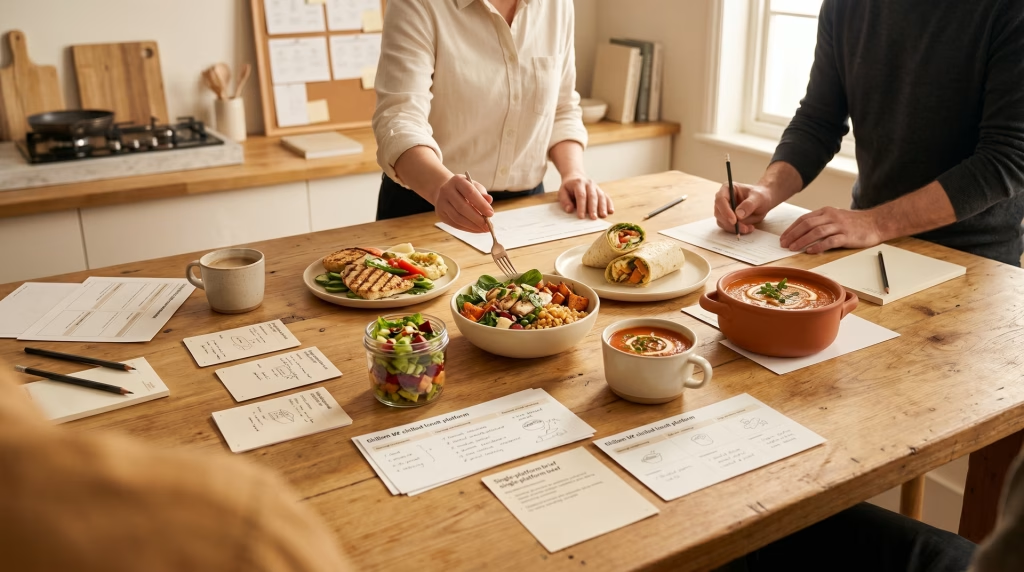
Four consecutive days of intensive ideation, the most common Hothouse format. Suited to briefs covering multiple platforms or sub-brands, major launch programmes or innovation pipeline rebuilds. The cohort structure typically involves multiple attendee groups across different functional areas or platform streams. Typically delivers a concept pipeline of fifty to eighty briefable concepts grouped into multiple platforms or territories with cross-portfolio coherence built in.

Five-day intensive immersion
Five consecutive days of the most intensive ideation work, typically reserved for the most commercially significant briefs: major launch programmes, category entries, transformation work, M&A pipeline scoping. Multiple cohorts run in parallel and sequence with extensive cross-cohort synthesis. Typically delivers a concept pipeline of eighty to one hundred and twenty briefable concepts with multi-platform pipeline architecture and sequenced rollout recommendations.
Food and drink is all we do
We are not a generalist innovation consultancy that takes the occasional food brief. Food and drink is the only sector we work in. Our senior facilitators know the categories, the consumers, the channels, the operational realities and the commercial environment of food and drink specifically. The intensive depth of a Hothouse depends entirely on the seniority and the sector experience of the people in the room. Generic innovation facilitators can run good ideation; sector specialists are what make the concept pipeline translate into commercially credible briefs that NPD, brand and commercial teams can actually build against.
That focus is why we work with 11 of the UK’s top 40 food and drink brands.
Other ways to create and refine ideas
Hothouse is one tool in the broader Create and Refine Ideas toolkit. Depending on the brief, one of these might be a better fit, or a stronger partner alongside the Hothouse work.
-

Creative Workshops
Senior-facilitated workshop ideation for food and drink innovation, brand and commercial briefs.
-

Co-creation (consumers)
A participatory consumer insight methodology where consumers actively shape the work rather than answering questions about it.
-

Concept Screening
Structured quantitative concept testing for food and drink innovation, designed to prioritise which concepts go forward into NPD investment, brand development or commercial commitment.
-

Platform & Territory Building
Deep platform development that picks up where opportunity mapping ends and where execution begins.

Hothouses that built shippable pipelines
Three real Hothouse projects across different categories and different briefs.



FAQs
How is this different from Creative Workshops?
Scale, depth and intent. Creative Workshops are flexible, run as half-day, full-day or two-day sessions, scoped against specific briefs with a workshop-scale output (six to twenty-five briefable concepts depending on format). Hothouse is intensive: three to five consecutive days, multiple attendee cohorts, deeper methodology, with a pipeline-scale output (thirty to one hundred and twenty briefable concepts grouped into a coherent pipeline). Both produce briefable output for the next step, but Hothouse is the right tool when the brief is commercially significant enough to justify multi-day immersion and when the deliverable target is a concept pipeline rather than individual concepts.
Is this worth the bigger commitment versus running multiple smaller workshops?
Depends on the brief. Multiple workshops work well for briefs that genuinely fragment into separate streams: different sub-briefs, different attendee groups, different timelines. Hothouse outperforms multiple workshops when the brief needs cumulative depth: when the concepts in day three or day four depend on the development work in days one and two, when cross-functional perspectives need to integrate live rather than across separate sessions, when the deliverable target is a coherent pipeline rather than a set of separate concept lists. We will tell you straight at scoping which approach the brief actually needs.
Will we end up with too many concepts to prioritise?
That is the most common procurement objection to Hothouse and it is a fair one. The concept pipeline output is structured specifically to address this: concepts are grouped into platforms or territories rather than presented as a flat list, prioritised against commercial criteria rather than presented neutrally, sequenced for development with the decision gates explicit. The pipeline is built to be acted on, not to be analysed further. Where the brief justifies it, the Hothouse output also feeds directly into Concept Screening (the natural next step) which converts the pipeline into a prioritised set ready for NPD investment.
How is this different from running our own innovation away-day or off-site?
Two structural differences. First, senior food and drink facilitation throughout. Internal away-days are facilitated by internal teams (with or without external workshop providers); Hothouse is run by senior sector specialists who can read which concepts have commercial legs live in the room, lead the cross-cohort synthesis, and produce the structured pipeline deliverable. Second, the methodology depth that compounds across multi-day immersion. Internal off-sites typically run flexible methodologies tuned to time and team; Hothouse runs a deliberate methodology engineered for multi-day depth and pipeline output. Both can produce energy; the structured pipeline depends on the methodology and the senior facilitation.
How long does a Hothouse take?
The Hothouse itself is three, four or five consecutive days depending on the format. The full programme (scoping, pre-Hothouse preparation, the Hothouse itself, cross-cohort synthesis, pipeline deliverable) typically runs eight to twelve weeks from scoping call to final pipeline deliverable. Compressed timelines are possible where the strategic platform is already specified and the team can move quickly on attendee structure. More complex briefs (multi-market Hothouse, post-acquisition integration, cross-portfolio range work) typically run twelve to sixteen weeks end-to-end.
Who attends a Hothouse?
Typically multiple cohorts across the brief: senior innovation and NPD, brand and marketing, commercial, operations, sometimes external proxies (consumer cohorts, expert inputs, partner perspectives) depending on the brief. Attendee numbers vary by format (twelve to twenty-five for three-day, fifteen to thirty-five for four-day, twenty to fifty for five-day) and by cohort structure. We design the attendee structure at scoping against the brief and help the client team think through who needs to be in the room at which point.
What is the actual deliverable?
A structured concept pipeline scoped for the next phase of work. Specifically: the concept pipeline document (concepts grouped into platforms or territories, with prioritisation rationale and sequencing), individual concept briefs at the right level of specificity for the next step (typically Concept Screening, NPD briefing or commercial casing), supporting materials from the Hothouse work, and recommendations on activation across the next twelve to twenty-four months. The pipeline is the deliverable, not the individual concepts.
Can we run this alongside Platform and Territory Building or other strategic work?
Yes, and this is the most common commissioning structure. The natural sequence is Platform and Territory Building first (to specify the platform), Hothouse second (to build the concept pipeline against the platform), and Concept Screening or development third (to prioritise the pipeline for investment). Some programmes commission Platform and Territory Building plus Hothouse as one integrated engagement; others sequence them. We will scope the right combination at the scoping call.
Can we run a Hothouse internationally?
Yes. We run Hothouses across the UK, mainland Europe, the US and the UAE, with the methodology adapted for the local market and cohort structure adjusted for the cultural and operational context. International Hothouses are usually run in-market rather than at a central location, because the value of the cohort structure depends on attendees being present rather than connected remotely. We will scope the location and structure at the scoping call.
How much does a Hothouse cost?
Project-based, scoped against the format (three-day, four-day, five-day), the cohort structure and attendee numbers, the pre-Hothouse preparation depth, the senior facilitator commitment, and the post-Hothouse synthesis and pipeline development work. Single-market three-day UK Hothouses are the lowest entry point; multi-market five-day cross-portfolio work is the highest. We give a clear, all-in quote at proposal stage with no hidden extras, and we will tell you straight if your brief is below the scale that justifies a Hothouse and recommend Creative Workshops instead.
Got a brief commercially significant enough to need real intensive depth?
Tell us the brief, the strategic context, the output target for the concept pipeline, and the timeline. We will tell you whether Hothouse is the right tool, what format makes sense, what pre-Hothouse preparation is needed and what it will cost. Where the brief is smaller than a Hothouse warrants, we will recommend Creative Workshops or a different format honestly.