
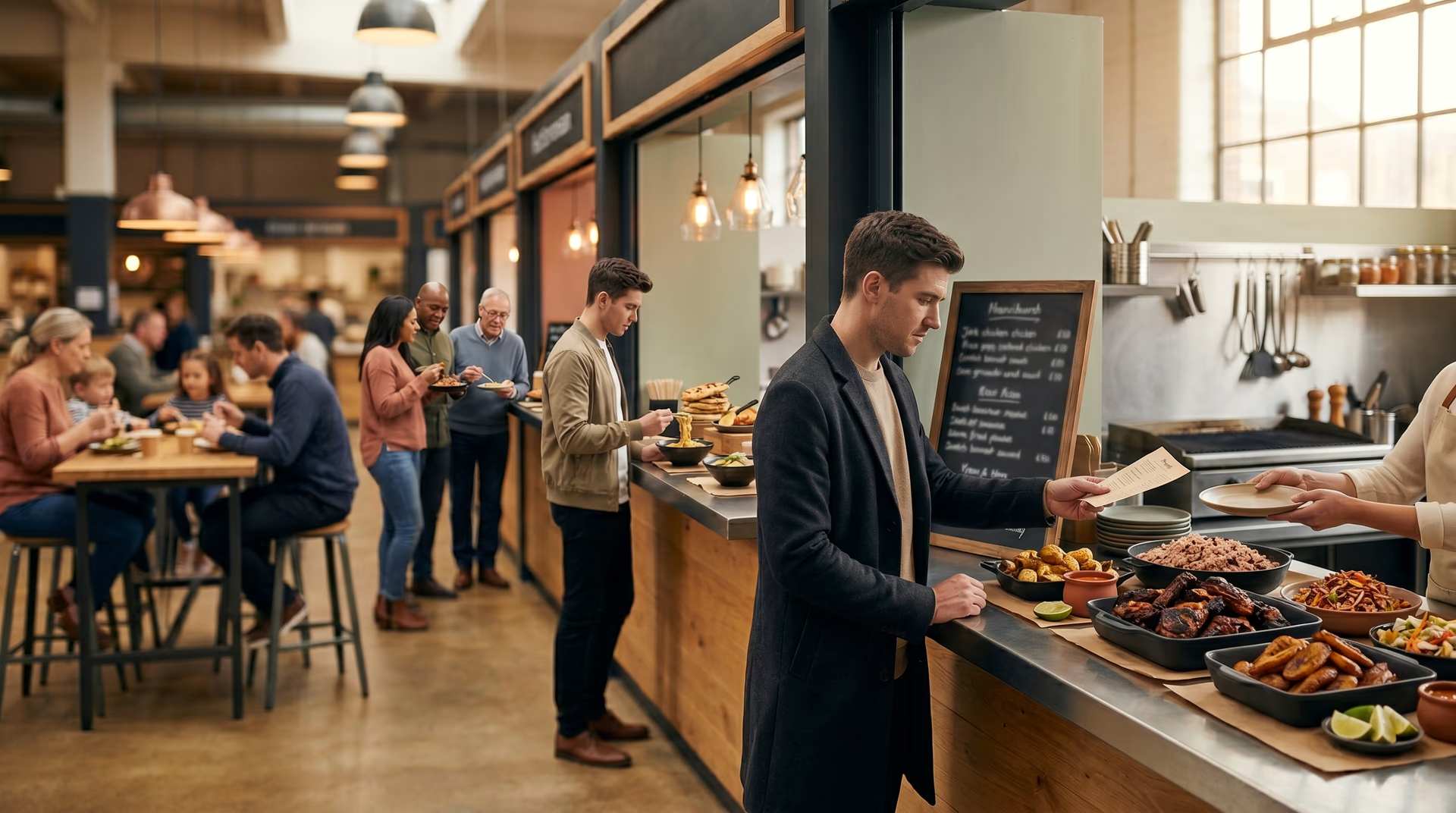
When the audience decision needs structure, not just description
Most segmentations fail at the same point. The methodology is sound. The statistical clustering is robust. The segments are differentiated cleanly. And then the segments end up unused, because the team that has to act on them cannot actually do anything with them. The segments describe consumers (here are the heavy buyers, the lapsed users, the price-sensitive) but the descriptions do not translate into decisions (which brand work, which NPD, which targeting, which channel).
The structural problem is that most segmentations are built methodologically rather than commercially. The clustering is solved; the actionability is not. The recommendation set comes back as a chart of segment characteristics rather than as a strategic direction for the audiences that actually matter most for the business.
Our work is structured around the opposite problem. The segmentation is built to be used. The methodology is rigorous (statistical robustness, defensible sample, sound clustering approach) but the design starts from the commercial decision the segmentation has to support: brand strategy, NPD prioritisation, channel planning, audience investment. The segments are scoped to be actionable, not just statistically distinct. The interpretive layer surfaces what the segments mean for the decisions the team is actually making.
It is not the right tool for every brief. If you need a foundational quantitative baseline before segmentation work, U&A is the right starting point. If the question is about deep behavioural understanding of a single audience rather than mapping across audiences, ethnography goes deeper. If the brief is exploratory rather than structured, consumer closeness may surface what segmentation would over-simplify. We will tell you straight on the scoping call.

What we do differently
-
Built around food and drink occasions and behaviours, not generic demographics
The unit of analysis matters. In food and drink, the occasion is often a more useful segmentation dimension than the demographic. The same consumer can be heavy on breakfast, light on dinner, occasional on snacking, social on drinks. A demographic-only segmentation treats them as one consumer; an occasion-led or behaviour-led segmentation gives the team different actionable groupings depending on the brief. Our methodology is built around this reality of food and drink behaviour, not against a generic FMCG template.
-
Designed to be actionable, not just statistically distinct
The most common segmentation failure is segments that are statistically clean but commercially useless. Our work is designed backwards from the decisions the segmentation has to support. Brand work, NPD prioritisation, channel planning, audience investment, retailer pitching. The segments are scoped to be actionable for those decisions, not just to be descriptive groupings. We will tell you at the scoping stage if the brief is going to produce a segmentation that struggles to be used commercially, and we will recommend a different shape of work if so.
-
Senior interpretation built throughout
The statistical clustering surfaces patterns. The interpretive layer turns the patterns into commercial direction. Senior food and drink specialists run the interpretation directly, which means the segments come back with a clear point of view on what each segment means for your specific business decisions rather than as a neutral chart pack. The interpretive layer is where segmentations either earn their keep or fail to.
-
Integrated with the rest of the toolkit, not stand-alone
A segmentation in isolation is harder to act on than a segmentation integrated with the broader insight picture. We routinely integrate segmentation work with U&A (the foundational quantitative baseline that often precedes segmentation), Data Mining (cross-source validation of the segments against syndicated and internal data), Consumer Closeness or Ethnography (qualitative depth on the segments that statistical clustering cannot deliver), and Social Scraping (cultural signal layer per segment over time). The integrated picture is far more useful than the segmentation alone.
Six commercial use cases, written as scenarios a buyer will recognise from their own brief. The aim is for the reader to see their question on this list and self-select.
Audience strategy for brand work
You are setting brand positioning, audience priorities or marketing strategy and need a defensible segmentation that identifies which audiences to focus on and why. Built specifically to support audience decisions rather than as a general descriptive exercise.
NPD targeting and prioritisation
Your NPD pipeline needs to be scoped against specific audience segments rather than against the category broadly. Segmentation identifies the segments worth designing for, the segments that do not justify dedicated NPD, and where the audience-occasion fit creates real commercial headroom.
Channel and media planning
Your channel strategy and media buying need to be scoped against audience segments rather than against generic demographics. Segmentation surfaces the audience-channel-occasion fit that informs commercial allocation across channels, formats and partners.
Refreshing dated segmentation
You have inherited a segmentation from a previous supplier or an old internal project. The segments are no longer credible to act on (audiences shifted, behaviour changed, segments feel descriptive rather than actionable), and the work needs to be rebuilt to current methodology and current behaviour. We will tell you straight what can be picked up from the existing work and what needs to be rebuilt from scratch.
Pre-investment audience sizing
You are building a commercial case for a major investment (NPD launch, market entry, brand stretch, acquisition target) and need defensible audience sizing across actionable segments rather than against generic demographic estimates. Built specifically for board, finance and investment committee scrutiny.
Cross-functional audience alignment
Major audience decisions are being made across marketing, NPD, commercial and operations, and the team needs a shared segmentation language rather than four different versions of who the audience is. The segmentation becomes the shared audience reference point the cross-functional team can return to across the year.
-
How a segmentation project runs
From commercial decision to actionable segments
-
Scoping call
Twenty minutes on a call. You tell us the commercial decision the segmentation has to support, the audiences in scope, the segmentation dimensions you are considering, and the timeline. We tell you whether segmentation is the right tool, what dimensions and approach make sense, what foundational work needs to sit underneath it (U&A or otherwise), and roughly what it will cost.
-
Methodology design
Sample plan, questionnaire design, segmentation dimensions, clustering approach, validation method, classification tool requirements. The senior team designs the methodology specifically around the commercial decision rather than against a standard segmentation template. The key methodology choices are made transparent and signed off by you before fieldwork starts.
-
Fieldwork
Primary research to feed the segmentation, run through specialist food and drink panels and trusted recruit partners. Sample sizes scoped to deliver statistical robustness across the segments the brief needs (typically 2,000 to 5,000 consumers depending on the segment count and geographic scope). Full quality checks throughout.
-
Clustering and interpretation
The senior team runs the statistical clustering, validates the segments for both statistical distinctness and commercial actionability, and develops the interpretive layer that turns the clusters into commercial direction. We do not deliver segments that are statistically clean but commercially useless; if the clustering produces such segments, we will rerun the work rather than ship a segmentation we cannot defend commercially.
-
Activation
A working readout session walking the team through the segments and the recommendations, followed by the full deliverable set: segment profiles, sizing, classification tool, and the activation toolkit for putting the segments into use across brand, NPD, channel and commercial work. The lasting deliverable is the segmentation actually being used in the next set of decisions, not the readout itself.
Five ways we can cluster audiences. Chosen against the commercial decision.
The segmentation dimension is the most important methodology choice in the project, because it determines what the segments will actually be useful for. The five dimensions below are the most common approaches we use. Some briefs need a single dimension; most need a hybrid that combines two or three. We will recommend the right approach at the scoping call rather than push a default.
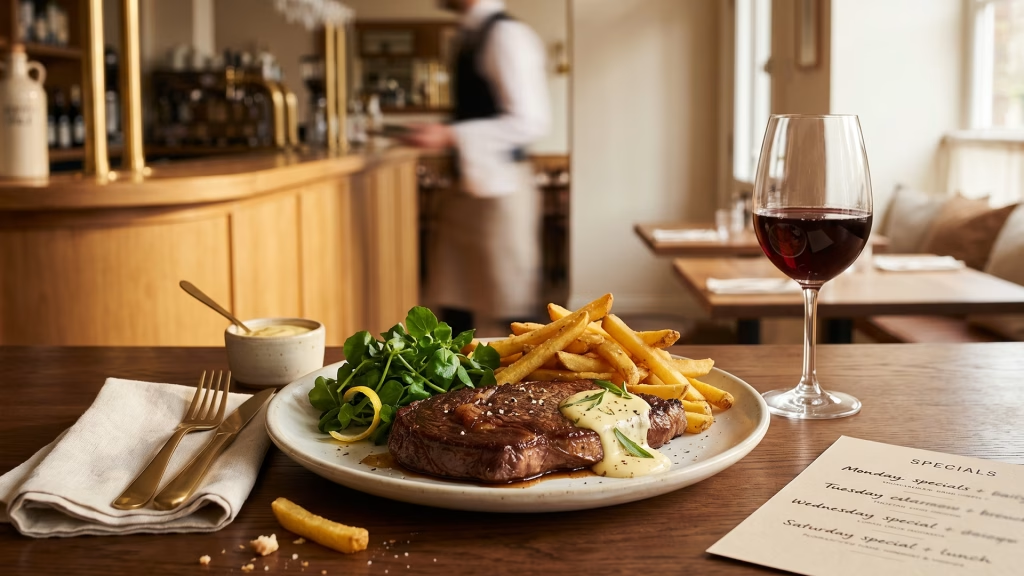
Behavioural segmentation and Attitudinal segmentation
Behavioural segmentation
Segments built around what consumers do: usage patterns, frequency, occasion behaviour, purchase patterns, brand repertoire. The most actionable dimension for category and commercial decisions, because behaviour is what the commercial reality actually depends on. Often the strongest single dimension for food and drink work.
Attitudinal segmentation
Segments built around what consumers believe: values, motivations, attitudes toward the category and the brands within it, lifestyle and identity drivers. Useful for brand positioning and communication work where the brand story has to land against the right consumer mindset, less useful for purely behavioural commercial decisions.
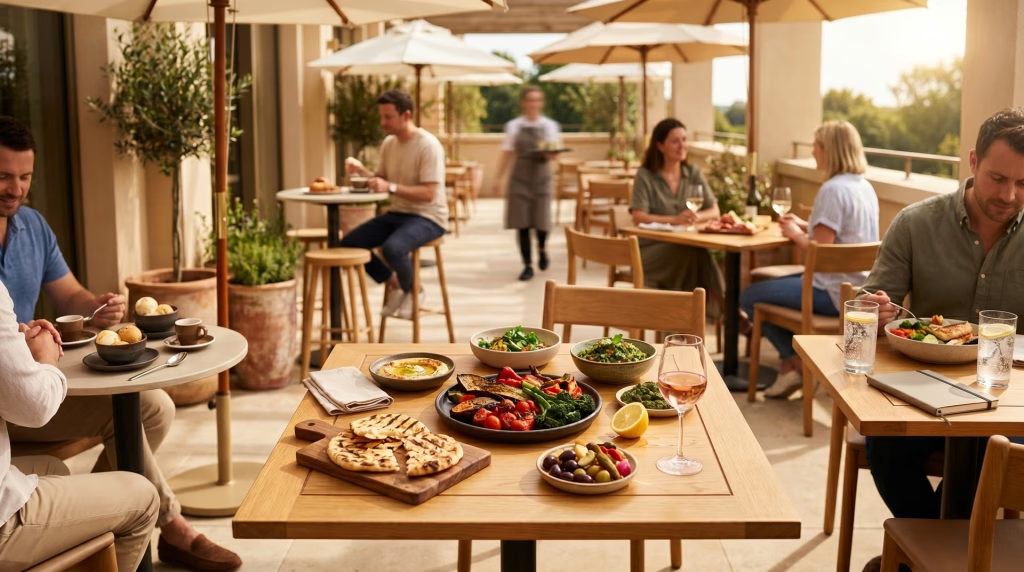
Needs-based segmentation and Occasion-based segmentation
Needs-based segmentation
Segments built around what consumers are trying to achieve: functional needs, emotional needs, social needs, occasion-specific needs. Particularly useful for NPD and innovation work because the needs are the design brief consumers cannot articulate explicitly. The right starting point when the brief is about white space identification.
Occasion-based segmentation
Segments built around eating and drinking moments: breakfast, lunch, dinner, snacking, on-the-go, social occasions, indulgence moments. Food and drink-specific by design, and often the most natural unit of analysis in this sector because the same consumer behaves differently across different occasions.
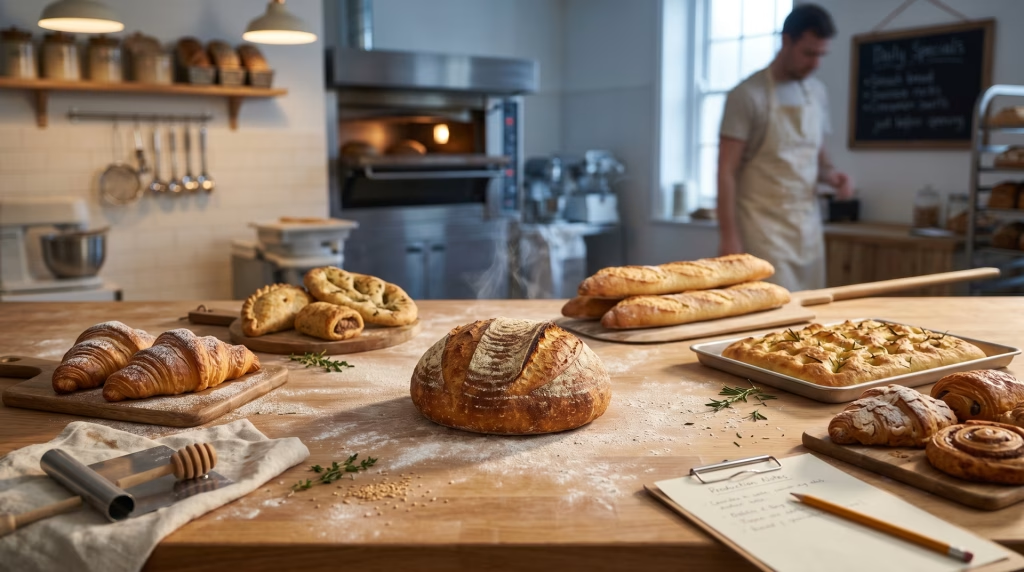
Hybrid segmentation
Multi-dimensional clustering that combines behaviour, attitudes, needs and occasions into a single segmentation framework. The most complex approach but often the most useful, because real commercial decisions rarely live entirely within one dimension. Most major segmentation projects end up hybrid by design rather than by accident.
Food and drink is all we do
We are not a generalist segmentation consultancy that takes the occasional food brief. Food and drink is the only sector we work in. Our senior researchers know the categories, the consumers, the occasions and the commercial realities. The work lands with people who get it on the first read, and the segmentation is built specifically for the commercial decisions of this sector rather than against an FMCG template that treats food and drink as one category among many.
That focus is why we work with 11 of the UK’s top 40 food and drink brands.
Other ways to decode the audience and category
Segmentation is one tool in the broader Decode toolkit. Depending on the brief, one of these might be a better fit, or a stronger partner alongside the segmentation work.
-
Usage and Attitude
Foundational quantitative consumer research that maps category usage, brand awareness, consumer attitudes and the drivers of choice across the audiences that matter.
-
Consumer Closeness
Project-based consumer immersion that gets your team genuinely close to the consumers in your category over a defined window.
-

Consumer and Category Data Immersion
Structured deep-dives that bring marketing, NPD, innovation or category teams up to a senior working understanding of the category, the consumer and the competitive landscape.
-

Opportunity Mapping
Strategic mapping of where to play in food and drink.

Segmentation that earned its commercial place
Three real segmentation projects across different categories and different briefs.


FAQs
Will the segments actually be usable, or just descriptive?
The single most important question on this page, because the most common segmentation failure is segments that are statistically clean but commercially useless. Our work is designed backwards from the decisions the segmentation has to support, and the segments are validated against commercial actionability as part of the clustering step itself. If the clustering produces segments we cannot defend commercially, we rerun the work rather than ship a segmentation that will end up unused. We will tell you straight at scoping if your brief is at risk of producing segments that struggle to be used.
We already have a segmentation. Can you refresh it rather than rebuild?
Sometimes, but not always. Refresh work makes sense when the underlying methodology is still sound, the segments are still recognisable in current behaviour, and the changes are about updating the audience sizing, the segment language and the activation layer. Rebuild work is the right answer when the original segments no longer reflect how consumers actually behave (which is more common than not after three to five years in food and drink). We will tell you honestly at scoping which is the right call for your situation, including the case for not doing the work at all if your existing segmentation is still genuinely fit for purpose.
How many segments will we end up with?
Typically four to seven segments for most food and drink work. The right number is determined by the commercial decision the segmentation has to support, not by methodology preference. Fewer than four segments usually means the team will struggle to differentiate brand or NPD work meaningfully; more than seven usually means the team cannot remember or activate the segments in practice. We will tell you at the scoping call what range makes sense for your specific brief.
What is the difference between behavioural, attitudinal and needs-based segmentation?
They cluster audiences on different dimensions and are useful for different decisions. Behavioural segmentation clusters on what consumers do (occasion behaviour, frequency, purchase patterns) and is most useful for commercial decisions. Attitudinal segmentation clusters on what consumers believe (values, motivations, lifestyle drivers) and is most useful for brand positioning. Needs-based segmentation clusters on what consumers are trying to achieve and is most useful for NPD and innovation work. Most major segmentation projects end up hybrid because real commercial decisions cross dimensions.
How long does a segmentation take?
Twelve to sixteen weeks from scoping call to activation is the typical window for a standard UK segmentation. Compressed timelines are possible where the methodology is straightforward and the audience cuts are simple. Larger international segmentations or work with significant audience boost requirements can extend to sixteen to twenty weeks. We give realistic timelines at proposal stage.
Can we integrate the segmentation with our CRM or sales data?
Yes. We routinely build segmentation deliverables that include a classification algorithm or typing tool, which can be applied to your CRM, loyalty, sales or customer database to assign existing customers to segments. The integration work is scoped at the start of the project, because the methodology choices and the questionnaire design affect what can be carried through into your internal data layer.
Will it be statistically robust enough for board or investment decisions?
Yes, where the sample design and methodology are properly scoped for the audience question and the segment count. We will tell you straight at scoping what sample size the segmentation will need, what level of statistical confidence the segments will support, and what depth of sub-cut is statistically credible at that sample size. We do not over-claim on statistical robustness, and we will recommend a larger sample if the decision genuinely requires it.
Can we run this internationally?
Yes. We run segmentation projects across the UK, mainland Europe, the US and the UAE, with sample structure and methodology adapted for each market. International segmentation has higher operational complexity than single-market work because the methodology has to either run identical across markets (for direct comparability) or adapted per market (for local cultural fit). We will recommend the right approach at scoping based on whether the brief needs cross-market comparison or market-specific actionability.
Can the segmentation be commissioned alongside U&A as a combined programme?
Yes, and this is how most major segmentation work is commissioned. The U&A builds the foundational quantitative baseline (category usage, brand performance, attitudes, drivers of choice) and the segmentation sits on top of it to turn the audience layer into actionable groupings. Running the two as a combined programme is more efficient than commissioning them separately, and the methodology is designed for the integration from the start.
How much does segmentation cost?
Project-based, scoped against sample size, geographic scope, segmentation dimensions, methodology complexity and the depth of activation work. Single-market UK segmentation on a single dimension is the lowest entry point; complex multi-market hybrid segmentation with full activation toolkit is the highest. We give a clear, all-in quote at proposal stage with no hidden extras.
Got an audience decision that needs a segmentation built to be used?
Tell us the commercial decision the segmentation has to support, the audiences in scope, the dimensions you are considering, and the timeline. We will tell you whether segmentation is the right tool, what dimensions and approach make sense, what foundational work needs to sit underneath it, and what it will cost. Twenty minutes on a call. No qualifying call before the qualifying call.
Senior food and drink specialists. Built to be used, not just statistically distinct. Action-oriented output. Specialists in food and drink, only.