
When you need to see the category, not just read about it
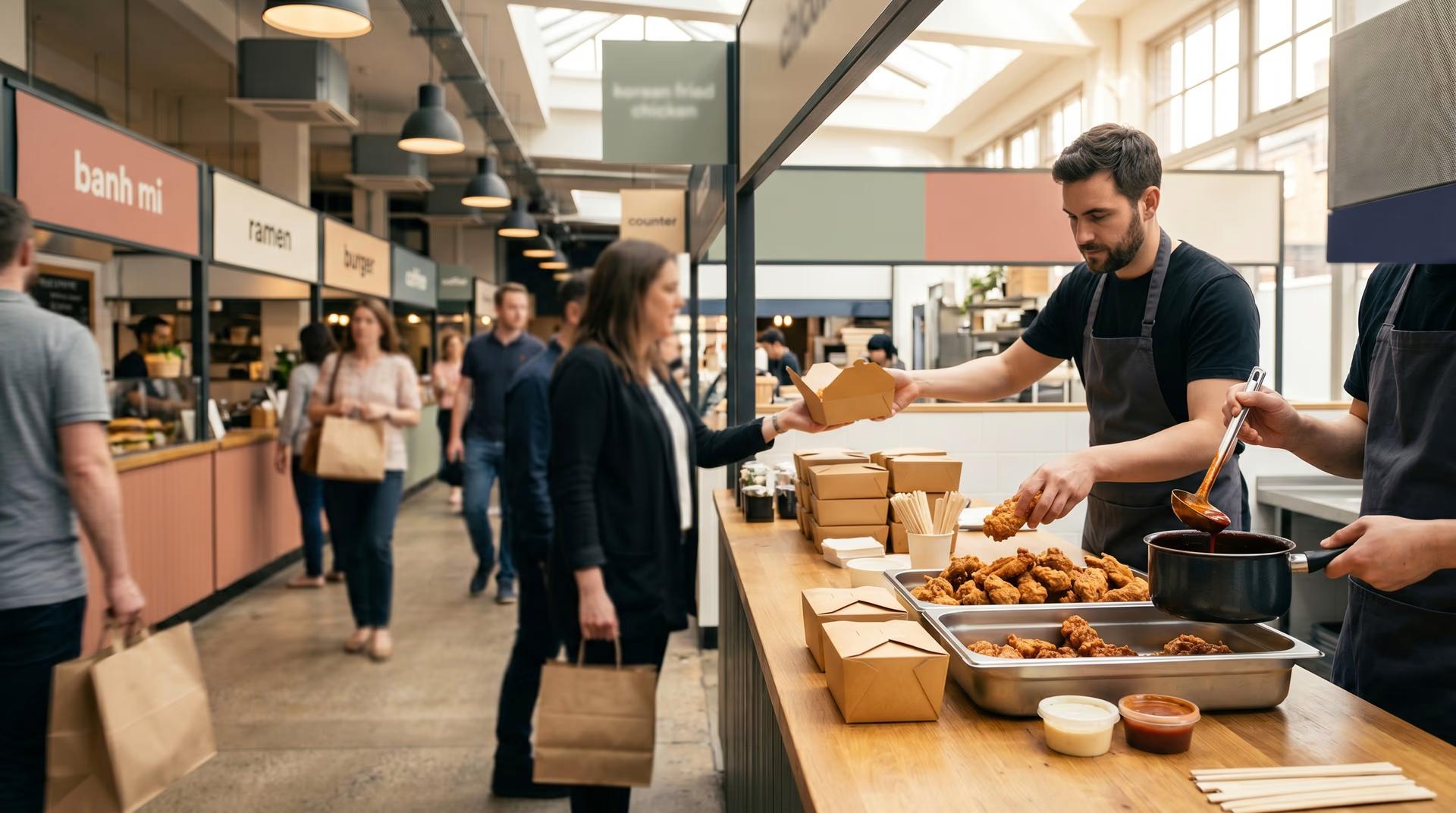
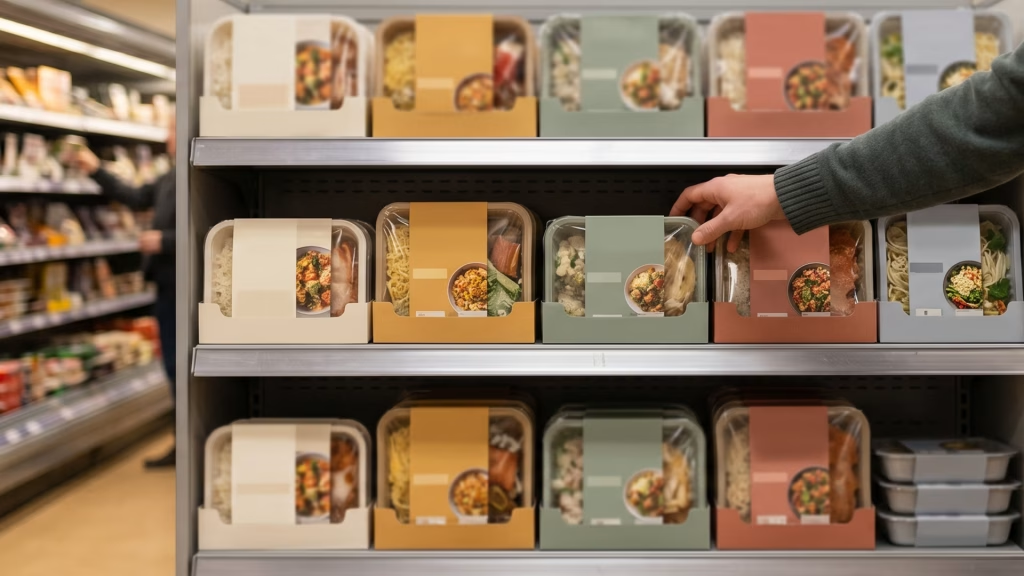
Some questions in food and drink cannot be answered from behind a desk. How is the category actually evolving on the high street, in the supermarket aisle, in the QSR queue, in the hospitality kitchen? What is the leading operator really doing differently? What does the trend look like in market that is already three years ahead of yours? These are questions that demand seeing the food, smelling the kitchen, watching the queue, talking to the operator and tasting the product in the context it actually lives in.
Food safaris and competitor review work is the curated, documented version of that. We design the itinerary around the specific commercial question the work has to answer. We put senior food and drink specialists on the ground who can read what they are looking at. We document everything. And we debrief afterwards into a usable point of view on what was seen and what it means for your business.
It is not the right tool for every brief. If the question is about consumer behaviour at scale, you want quantitative work. If the question is about real-time signal monitoring, social scraping is the better fit. If you genuinely just want an inspirational tour with no commercial output, there are travel companies that will sell you one cheaper than we will. We will tell you straight if a food safari is not actually the right call.
What we do differently
-
Curated around a commercial question, not a "what is interesting" list
Every safari is designed around a specific commercial question the work has to answer. The itinerary is built backwards from that, not forwards from a list of interesting places. We will tell you why each stop is on the route and what we expect it to surface. If a stop does not earn its place, it does not make the itinerary.
-
Senior specialists on the ground, reading what they see
The person walking the markets with you has worked client-side as a buyer, a category manager or an operations lead. The interpretation happens in real time, not in a debrief deck later. You will know why a product is on the shelf where it is, why a menu is structured the way it is, and what the queue at the QSR you just walked past tells you about the operator behind it.
-
Documented properly, not just experienced
Photography, video and structured note-capture run throughout the safari, so the work survives the moment. The output is not "remember when we saw that thing" three weeks later. It is a documented, structured set of observations, ready to be reviewed back at the office, referenced in subsequent meetings and used to support the commercial decision the safari was scoped around.
-
Debriefed into something useable, not left as inspiration
Every safari closes with a senior debrief that turns the observations into a structured point of view. What we saw, what was commercially significant, what it means for the question you came in with, and what you should do next. Built for the team that has to make the decision, not for the wall of the office.
Six commercial use cases, written as scenarios a buyer will recognise from their own brief. The aim is for the reader to see their question on this list and self-select.
Pre-launch competitive context
You are launching into a new category, channel or proposition territory. The safari builds the live competitive picture: who is doing what, who is doing it well, where the gaps and the saturated spaces actually sit, and what your launch needs to look like to land.
Leadership team alignment
A senior leadership team is making a major commercial decision and needs to be in the same place, literally, before deciding. A curated safari built around the specific decision gives the team a shared experience to base the conversation on, not a deck.
International expansion thinking
You are considering entering a new geography, market or channel. The international safari runs in the target territory, with local senior specialists alongside, so the expansion decision is made on the ground rather than on assumption.
Competitor-specific deep dive
A specific competitor is moving in your category and you need a structured live read on what they are doing: their estate, their menu architecture, their retail presence, their operational reality. Competitor-focused safaris are run on the operator’s actual sites, not on their marketing.
Annual category grounding
Senior teams that have been promoted out of day-to-day category contact need a structured way to stay connected. An annual safari keeps the senior team grounded in what is actually happening on the high street, in the supermarket and in the kitchens that matter.
Pre-pipeline innovation inspiration
Before a major innovation cycle, a safari grounds the team in where the category is actually heading. Distinct from inspiration-for-inspiration’s-sake: the safari is structured to feed directly into the brief that will be written immediately afterwards.
-
How a food safari runs
From brief to documented point of view
-
Scoping call
Twenty minutes on a call. You tell us the commercial question, the team coming, the territory you are interested in, and the timeline. We tell you whether a safari is the right tool, what shape it should take, and roughly what it will cost.
-
Itinerary design
We build the curated itinerary around your specific commercial question. Each stop is chosen because it earns its place, and we share the logic with you before the safari runs. If your team has additional stops they want to add, we will tell you straight whether they are worth the time.
-
The safari
We run the safari with senior food and drink specialists on the ground alongside your team. The interpretation happens in real time. Photography, video and structured note-capture run throughout, so the observations survive the day.
-
Capture and curation
Within forty-eight hours of the safari, we pull together the documented record: photography, video, structured notes and the senior team's interpretive layer on what was seen. You receive the curated documentation while the work is still fresh.
-
Debrief and recommendation
A structured debrief session, in person or by video, where the senior team walks you through what was seen, what was commercially significant, and what we recommend you do next. Followed by a clean, shareable deck for the wider team. The safari closes with a recommendation, not a memory.
Half-day, multi-day, or international expedition
The work flexes around the brief, the team and the territory. The three formats below are how clients most commonly commission food safaris. The decision shapes what the safari looks like, how long it runs and what it costs.
Curated half-day or full-day safari
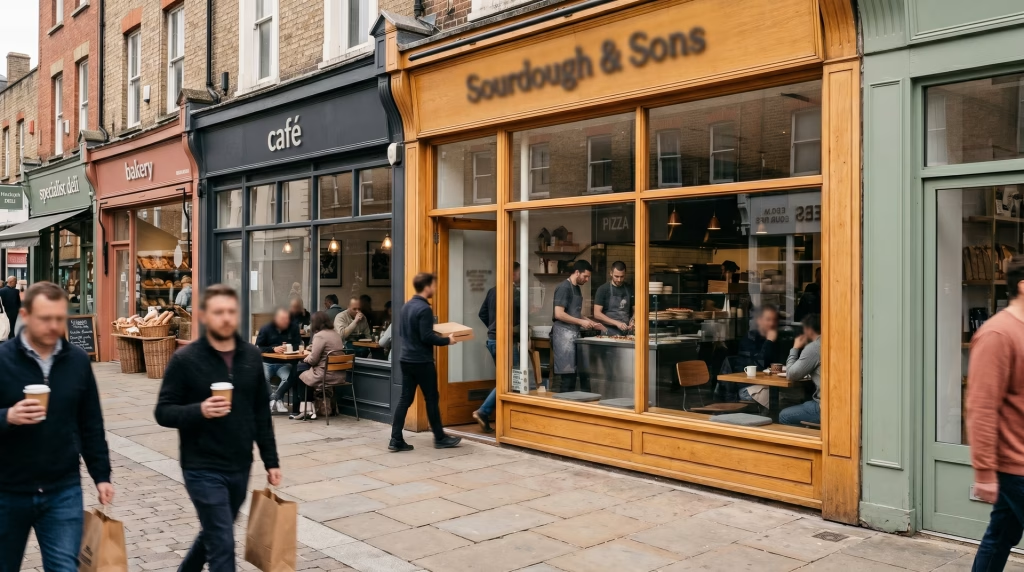
A focused safari in a single market (London, Birmingham, Manchester or a specific UK city), built around a clear commercial question. Used most often for competitive deep-dives, pre-launch context-setting in the UK, or annual category grounding. Typical team: two to six people. Typical commitment: one day plus a debrief session.
Multi-day food safari
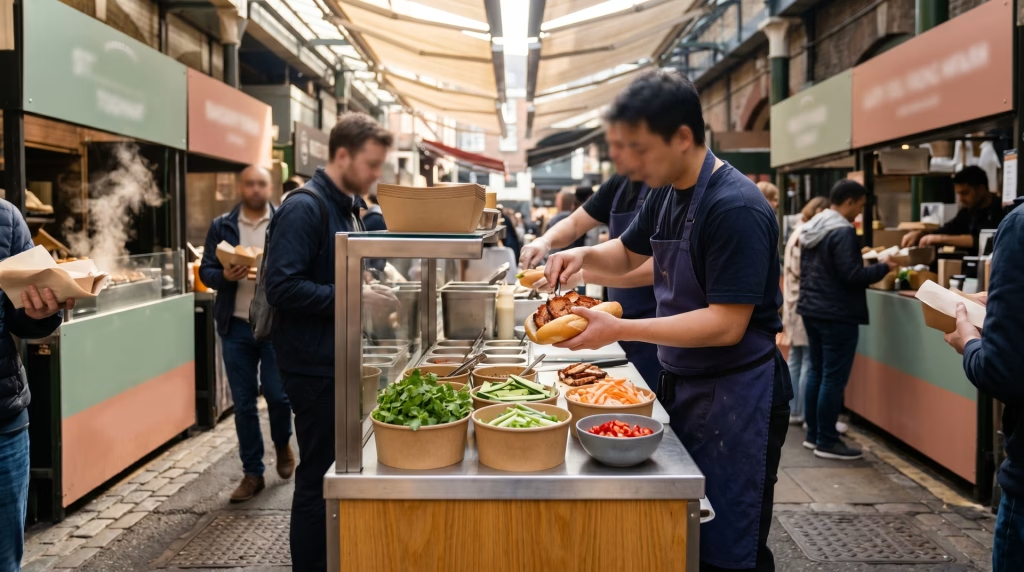
Two to four days of curated immersion across multiple markets, territories or formats. Used for broader category benchmarking, leadership team alignment around a major decision, or pre-pipeline innovation grounding. Typical team: four to twelve people. Typical commitment: a long week including travel, on-the-ground time, capture and debrief.
International expedition
Curated immersion in an overseas market (mainland Europe, the US, the UAE or further afield), with local senior specialists alongside. Used for international expansion thinking, market entry decisions, or grounding leadership teams in markets that are ahead of yours. Typical team: four to ten people. Typical commitment: scoped against the territory and the brief, usually five to ten working days end-to-end.
Food and drink is all we do
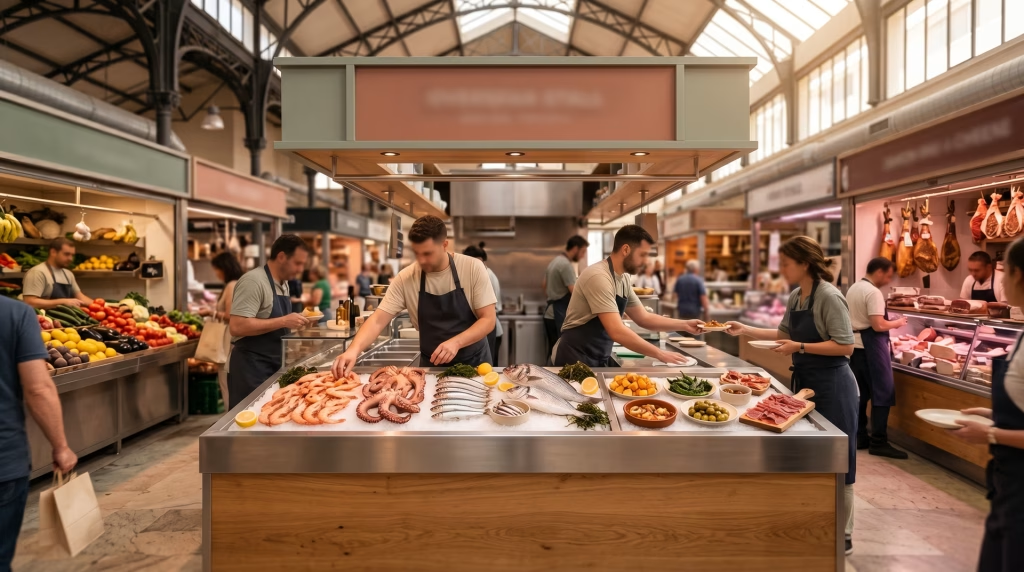
We are not a generalist consultancy that runs the occasional food trip. Food and drink is the only sector we work in. Our senior team knows the categories, the operators, the retailers and the markets we take you to. The safari is curated by people who get it on the first read, and the recommendations come back framed for the people who actually have to make the decision.
That focus is why we work with 11 of the UK’s top 40 food and drink brands.
Other ways to decode the category
Food safaris are one tool in the broader Decode toolkit. Depending on the brief, one of these might be a better fit, or a stronger partner alongside the safari work.
-
Consumer and Category Data Immersion
Structured deep-dives that bring marketing, NPD, innovation or category teams up to a senior working understanding of the category, the consumer and the competitive landscape.
-
QSR Operation Review
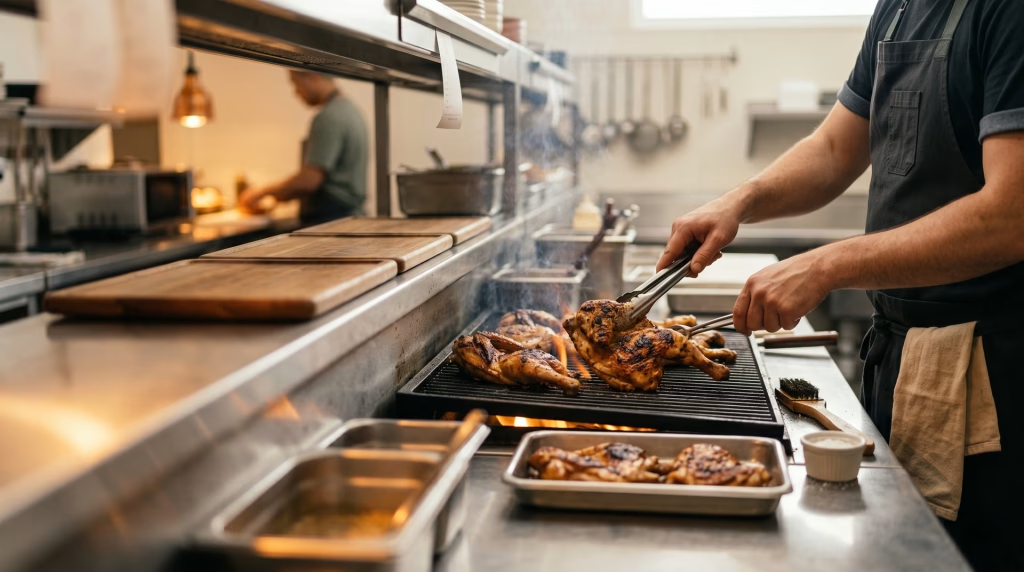
Specialist operational deep dives on QSR brands you are competing with, considering entry against, or evaluating as an investment.
-
Ethnography
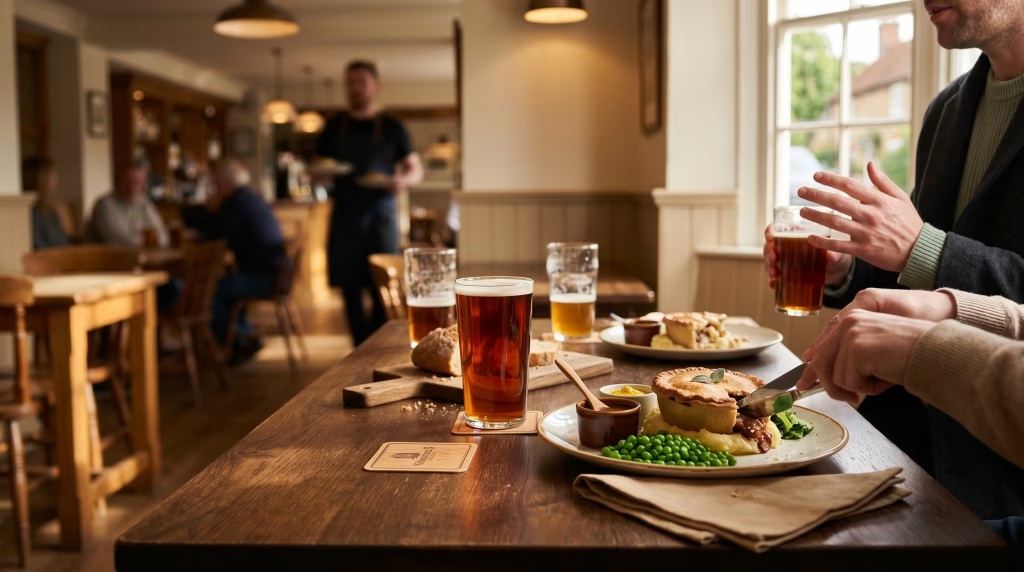
Deep behavioural observation of how food and drink lives in real homes, real kitchens, real eating moments and real social contexts.
-
Opportunity Mapping
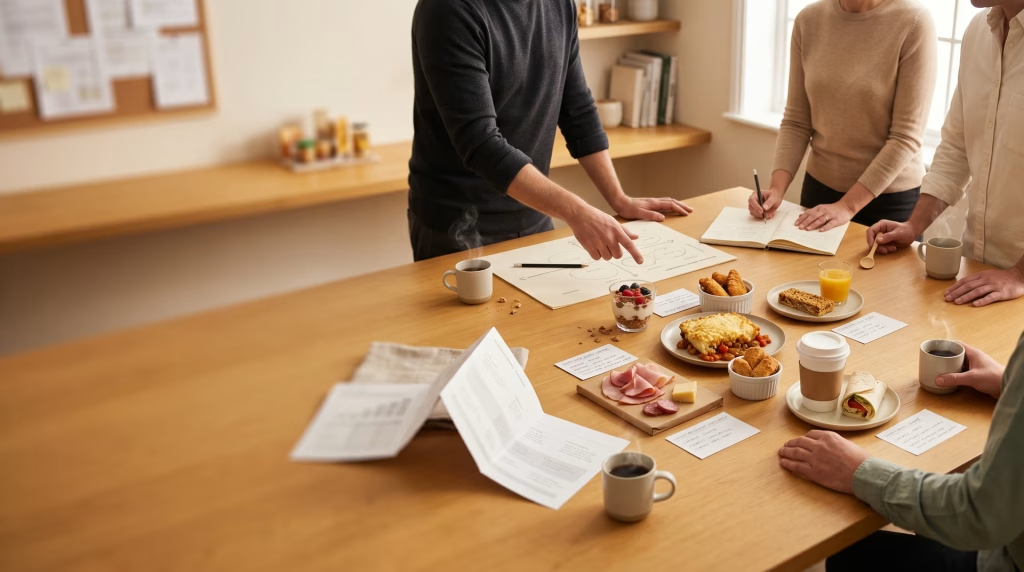
Strategic mapping of where to play in food and drink.

Safaris that earned their commercial place
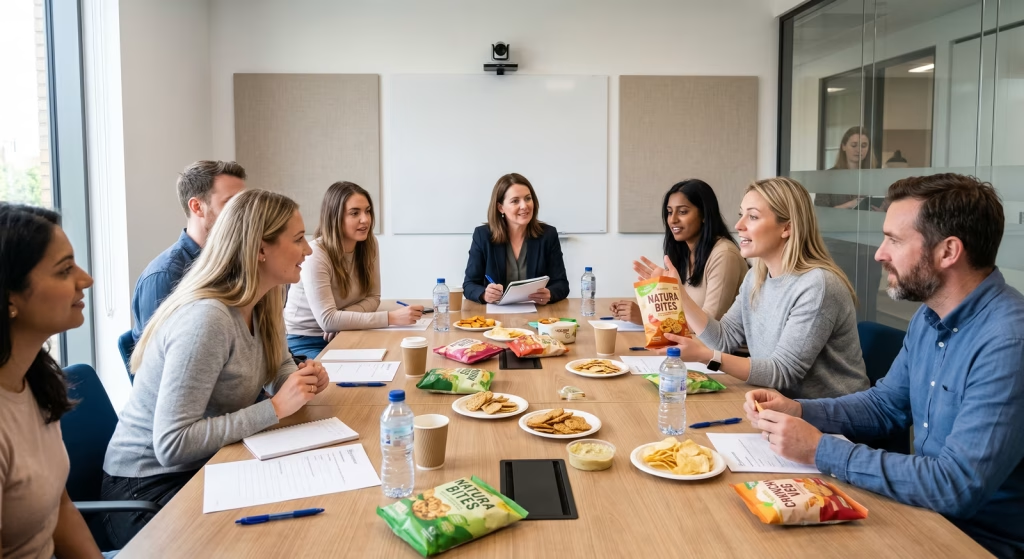
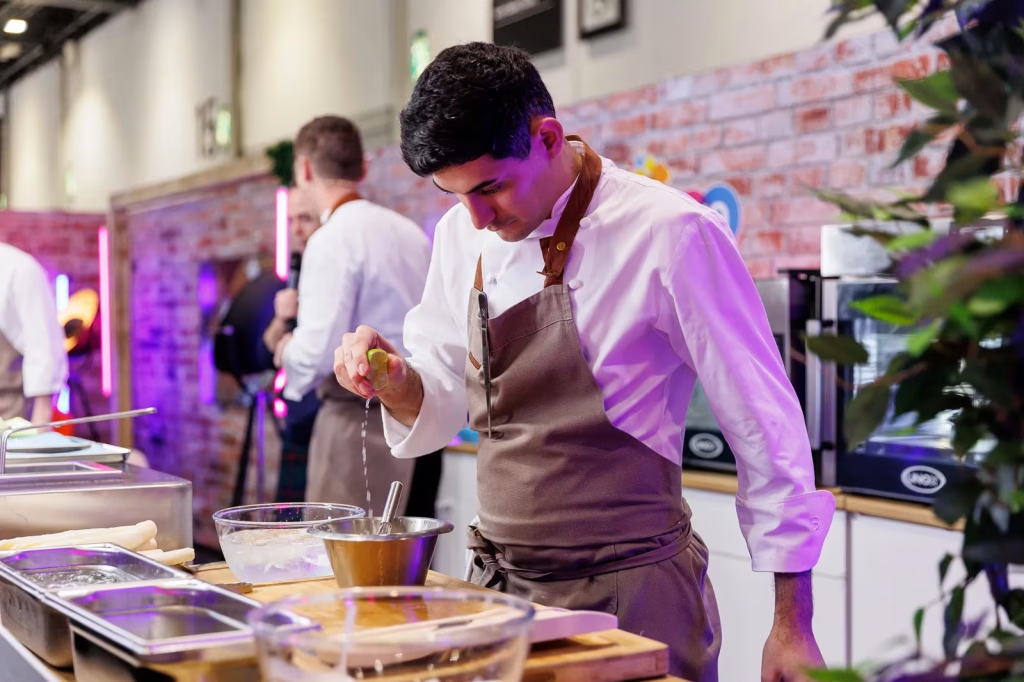
Three real food safari projects across different territories and different briefs.
FAQs
How is this different from a paid-for inspirational tour?
Three differences. The itinerary is built backwards from a specific commercial question, not forwards from a list of interesting places. The interpretation is run by senior specialists who can read what they are looking at, not by tour hosts. And the safari closes with a documented, debriefed recommendation, not with a memory and a stack of receipts. If you genuinely want an inspirational tour with no commercial output, a travel company will sell you one cheaper than we will.
How long does a typical food safari last?
A focused single-day safari runs a full working day plus a separate debrief session, typically two to three days end-to-end. A multi-day safari runs across two to four days of on-the-ground time plus debrief, typically a long working week. International expeditions are scoped against the territory and the brief, usually five to ten working days end-to-end including travel.
Who comes on the safari with us?
Senior food and drink specialists from our team, scoped to the brief. Typically one or two of our senior leads alongside your team. The senior person you meet on the scoping call is the senior person on the ground with you on the safari. No junior handovers between scoping, delivery and debrief.
Can we bring our own team along?
Yes. Most safaris are run with the client team alongside our senior specialists. The optimal team size depends on the format: typically two to six people for a half-day, four to twelve for a multi-day, four to ten for an international expedition. Larger groups are possible but reduce the interpretive depth available, and we will tell you straight if your team size is going to dilute the work.
Do you run international safaris?
Yes. We run international safaris across mainland Europe, the US, the UAE and further afield as the brief requires. International work is run with senior FIS Group leads alongside trusted local specialists, so the on-the-ground interpretation has both the FIS Group quality bar and the local market knowledge.
How do you choose what to include?
The itinerary is built backwards from your commercial question. We start by understanding what the work has to inform, then we choose the markets, operators, retailers and experiences that will surface the answer. We share the logic with you before the safari runs, so you can see why each stop is on the route. If your team wants additional stops, we will tell you whether they are worth the time.
What do we actually take home from a safari?
A documented record of what was seen (photography, video, structured notes), a senior interpretive debrief on what it means for your business, and a clean shareable deck for the wider team. Plus the harder-to-quantify but commercially significant value of a senior team that has been in the same place at the same time and now has a shared point of view to work from.
How much does it cost?
Project-based, scoped around the format, the territory, the team size and the depth of interpretation required. UK half-day work is the lowest entry point; multi-day and international expeditions scale with travel, local specialist time and capture costs. We will give you a clear, all-in quote at proposal stage with no hidden extras.
Can we run a competitor-specific safari?
Yes. Competitor-focused safaris are a common variant, particularly for clients evaluating a specific competitor’s estate, range or operational model. We can build the safari entirely around the competitor in question, including UK and international site visits where the competitor operates in multiple markets.
How is this different from a food magazine recommending restaurants?
A food magazine tells you where the interesting places are. A food safari tells you what those places mean for your specific commercial decisions, with senior specialists on the ground interpreting what you are looking at and a documented debrief at the end. The recommendation is what to do next in your business, not where to eat next week.
Got a question you need to see in market, not read in a deck?
Tell us the commercial question, the team coming, the territory you are interested in, and the timeline. We will tell you whether a food safari is the right answer, what format makes sense, what the itinerary should look like and what it will cost. Twenty minutes on a call. No qualifying call before the qualifying call.
Senior specialists on the ground. Curated around your commercial question. Documented and debriefed. Specialists in food and drink, only.