The bridge between strategy and product
Idea creation and refinement is the work that turns an identified opportunity into a defendable concept set. The opportunity work tells you where to play. The build and test work proves the product works. This is the work in the middle: generating ideas widely, then narrowing them with discipline, so the concepts that make it to development have already been pressure-tested against the people who will buy them, sell them or operate them.
Most ideation briefs land when one of three pressures is on the team. A platform has been defined and the pipeline needs filling, fast. Internal teams are too close to the category to generate widely and need an outside catalyst. Or a concept exists but needs refining before it earns the commitment of a development budget. In every case, the question is the same: which ideas have the conviction behind them to ship, and how do we know before we spend on them?
What lands at the end of the work is a shortlist of concepts with the evidence behind them. Not a long-list of post-its. Not a creative deck that wins the room and dies in handover. A defended set of ideas, with the consumer, buyer and expert reactions that justify the next phase of investment.
Two toolkits. One job. Get the right ideas to the surface, fast.
Innovation tools sit inside our Innovation and Optimisation capability and are the generative side of the work: workshops, Hothouse sessions, co-creation with stakeholders and expert panels that bring outside thinking into the room. Insight tools sit inside our Strategic Insight capability and are the refinement and validation side: concept labs, screening, idea testing and consumer co-creation that pressure-test what the room has produced. The strongest programmes use both, in sequence, so generation and validation are part of the same continuous loop rather than separate phases.
Innovation tools
The generative side. Used when the brief needs to bring outside thinking, expert input or stakeholder voice into the room to create concepts the internal team would not have produced alone.
-
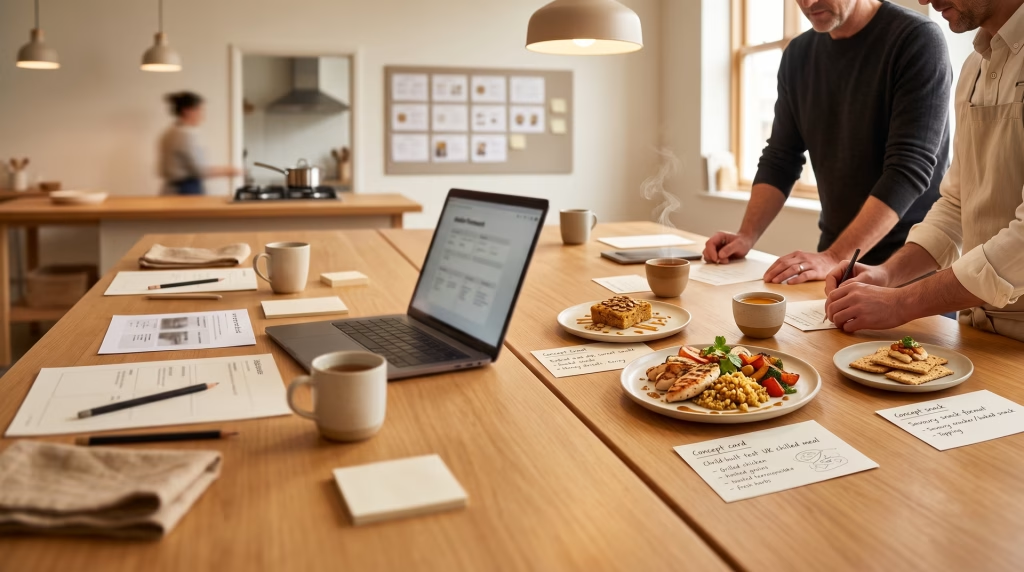
Creative Workshops
Senior-facilitated workshop ideation for food and drink innovation, brand and commercial briefs.
-
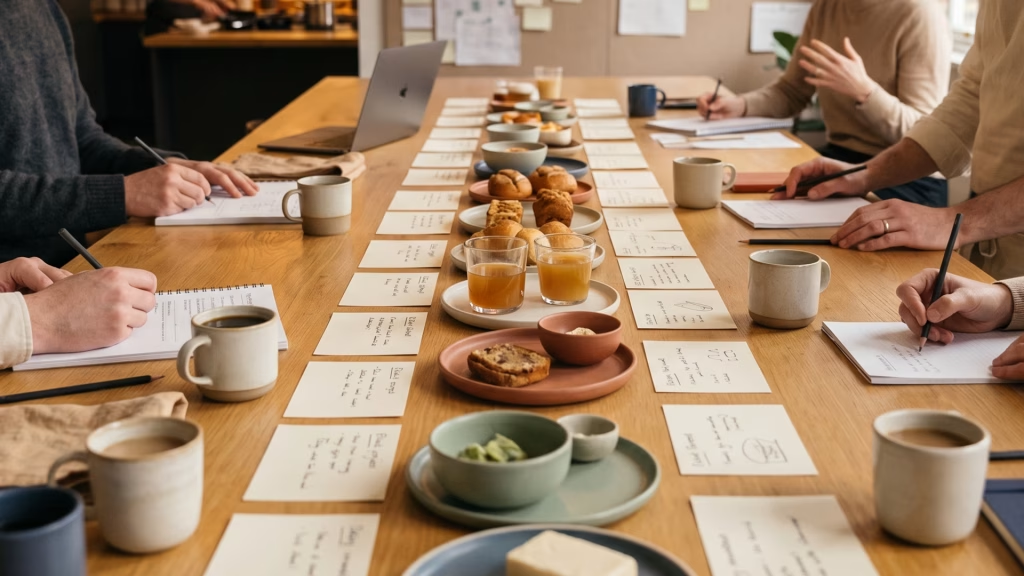
Hothouse
Multi-day intensive ideation immersion for food and drink innovation, brand and commercial briefs at the highest commercial scale.
-
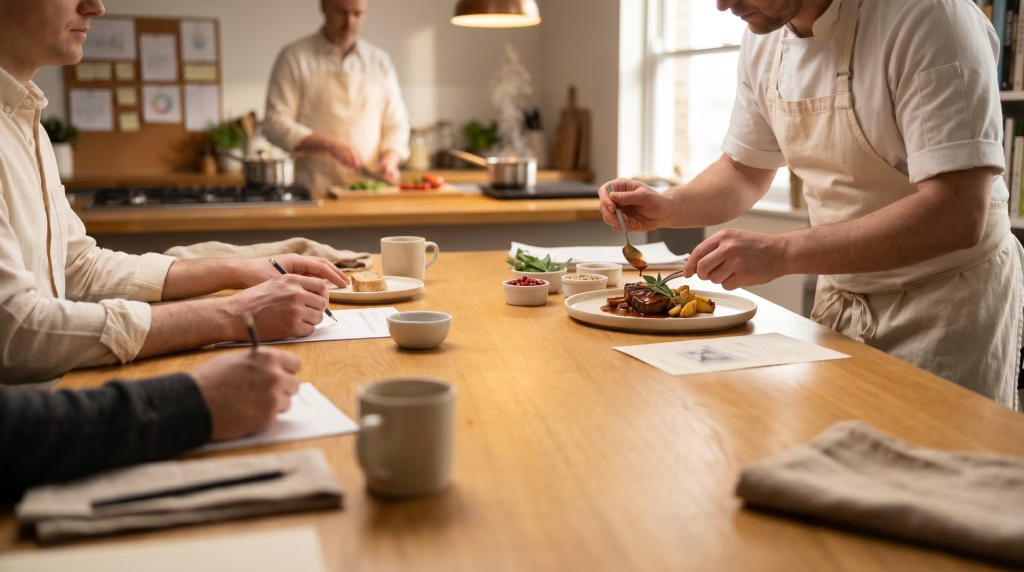
Co-creation (buyers, consumers & industry experts)
Structured collaborative ideation that brings external stakeholders into the work alongside the internal team.
-
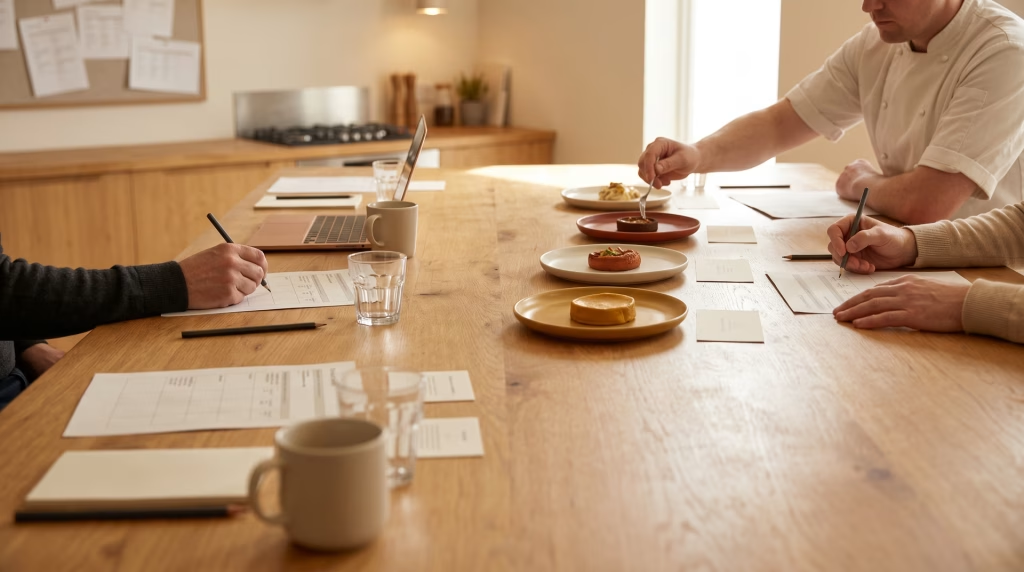
Expert Panels (buyers, chefs & industry experts)
Structured advisory input from the people who know the sector best.
Insight tools
The refinement and validation side. Used when ideas need to be pressure-tested with consumers, narrowed down with discipline, or evolved through structured iteration.
-
Concept Labs
Iterative concept development with consumers, structured to refine, sharpen and evolve concepts before they reach formal testing.
-
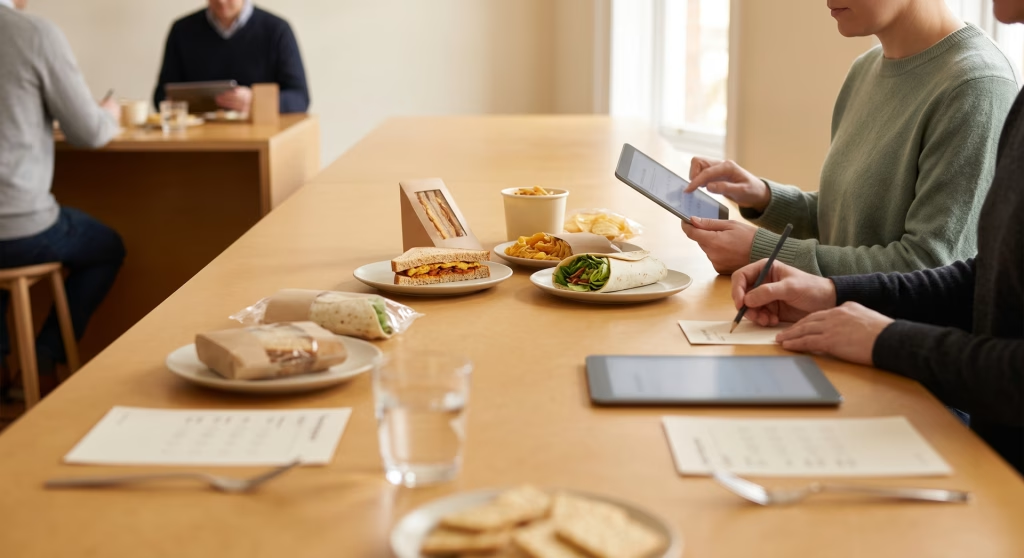
Concept Screening
Structured quantitative concept testing for food and drink innovation, designed to prioritise which concepts go forward into NPD investment, brand development or commercial commitment.
-
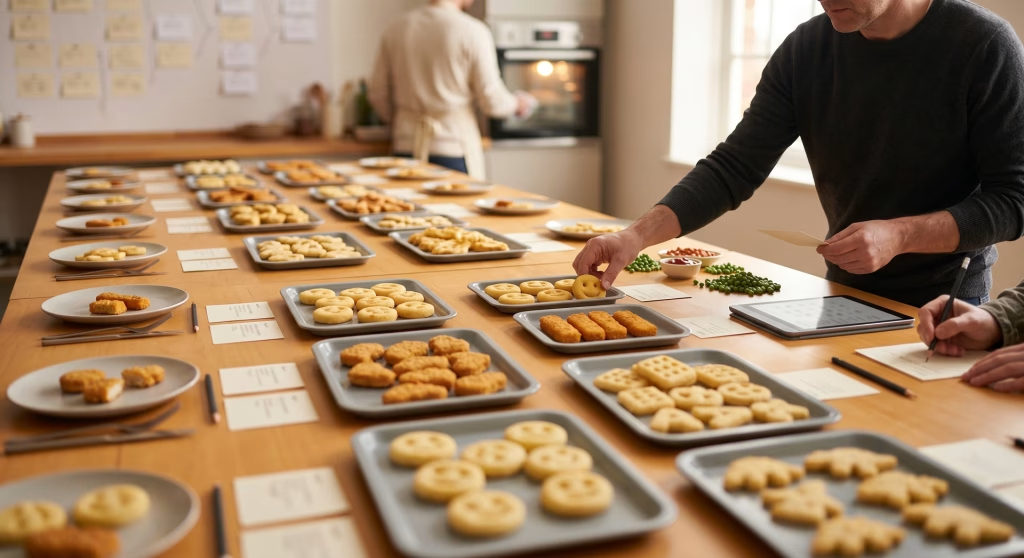
Idea Testing (Idea Arena)
A structured tournament-style testing methodology for food and drink ideas at scale.
-
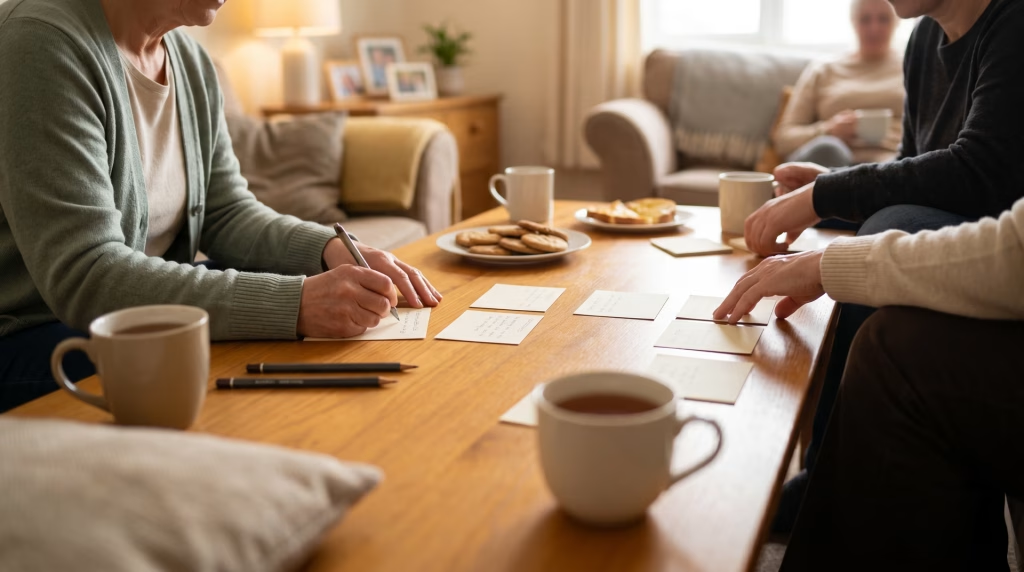
Co-creation (consumers)
A participatory consumer insight methodology where consumers actively shape the work rather than answering questions about it.
How we run create and refine work
-
We scope around the conviction needed
Twenty minutes on a scoping call. You tell us what you are trying to land, who needs to be convinced and what the next gate review needs to look like. We tell you which combination of generative and validation tools will get you to a defendable shortlist, and whether the brief calls for breadth (generate widely first) or depth (refine what you already have).
-
Generate widely, then narrow with discipline
Most ideation programmes start wide, with the right mix of internal team, external provocateurs and stakeholder voices. The wider the front end, the stronger the narrowing tools have to be. We pair generation with concept screening or Idea Arena so the long-list is forced to defend its place before it ever reaches a development plan.
-
Pressure-test early and often
Consumers, buyers and experts come into the room early, not at the end. The lab and panel formats run in parallel with generation rather than after it, which means concepts get sharper through every session and the weakest ones drop out before they soak up budget. Senior specialists in the room throughout, so the interpretation lands as the work runs.
-
A shortlist with conviction, not a long-list with no follow-through
We close with a defended set of concepts, each carrying the evidence behind it. What we generated. What survived screening. How consumers, buyers and experts reacted. What the recommendation is for the next phase of work. The shortlist is built for the development team that picks it up, not for the meeting that signs it off.
If your brief sounds like one of these, you are in the right place
- We have an opportunity defined and we need to fill the pipeline with concepts that will land.
- Our internal team is too close to the category to think freshly and we need an outside catalyst.
- We have a concept but it needs refining before we commit development budget.
- We need to pressure-test a shortlist with consumers, buyers or experts before the next gate review.
- We have a pipeline of ideas but we cannot tell which to take forward.
- We need ideation done fast, with finished concepts, on a customer-facing deadline.
If your brief is closer to “we need to know where to play before we generate,” you are probably looking at Challenge 02 (Unlock Growth Opportunities) first. If it is closer to “we have a concept set and we need to test the product itself in market conditions,” Challenge 04 (Build, Test and Refine What Wins) is the better fit.
Ideas that earn their place, not just their applause.
Most ideation work loses its way at the same point: between the workshop that produced the long-list and the brief that goes to development. The concepts felt strong in the room. The deck looked confident. But six months later, half the ideas have quietly slipped off the pipeline and no one can remember the logic that put them there in the first place.
Two things keep our ideation work alive longer than that. The first is specialism. Food and drink is the only sector we serve, which means our provocateurs already know the category, the buyers and the operational reality of the products we are generating. The second is the pressure-test built into the format. Consumers, buyers and experts are in the room from session one, not added at the end as a validation step. The concepts that make it through to the shortlist have already survived three rounds of pushback by the time they reach a gate review.
We are not a creative agency that runs an ideation session as part of a campaign brief. We are not a research agency that screens concepts after someone else has generated them. We are the team that runs both phases as one continuous loop, with senior food and drink specialists who can read a session in the moment and a buyer in the readout.
Got the shortlist. What comes next?
Idea creation and refinement closes with a defended shortlist of concepts. Most clients move into one of three places from here, depending on the maturity of the concepts and the route to market the brief is built around.
-
Build, Test and Refine What Wins
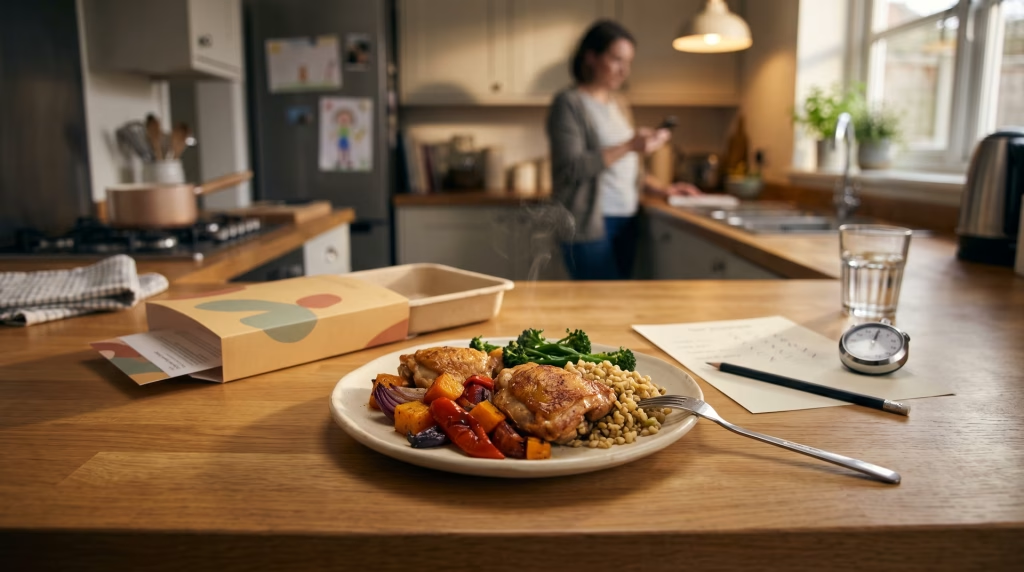
You have a shortlist of concepts with conviction behind them. The next move is taking those concepts into product testing, menu testing and sensory work to confirm they perform in the conditions they will be sold in. Product testing in-home and in-restaurant, central location testing, qualitative product testing, menu development and application showcases. This is where the concept becomes a product.
-

Unlock Growth Opportunities
Ideation is sharpest when it sits on a defined opportunity, a sized platform or a sequenced pipeline. If the diagnostic stage shows that the strategic foundation is missing, the strongest move is to step back into opportunity work first. We will tell you on the scoping call if the brief needs that step before the ideation work earns its place.
-
Decode People, Categories and Emerging Trends
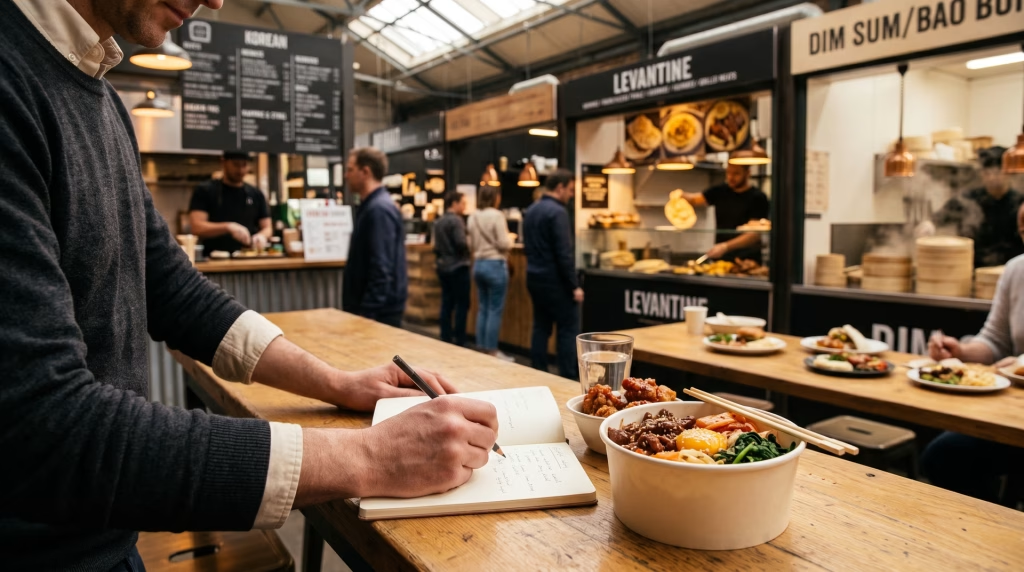
Sometimes the gap is foundational rather than strategic. The ideas are landing flat because the team is generating against an outdated read of the category, the consumer or the trends shaping both. When that is the case, a focused piece of decoding work (ethnography, U&A, food safaris or trend scanning) lifts the ceiling on what the next ideation phase can produce.

Built for every channel in food and drink
-
FMCG and branded manufacturers -

Grocery, retail and own label -
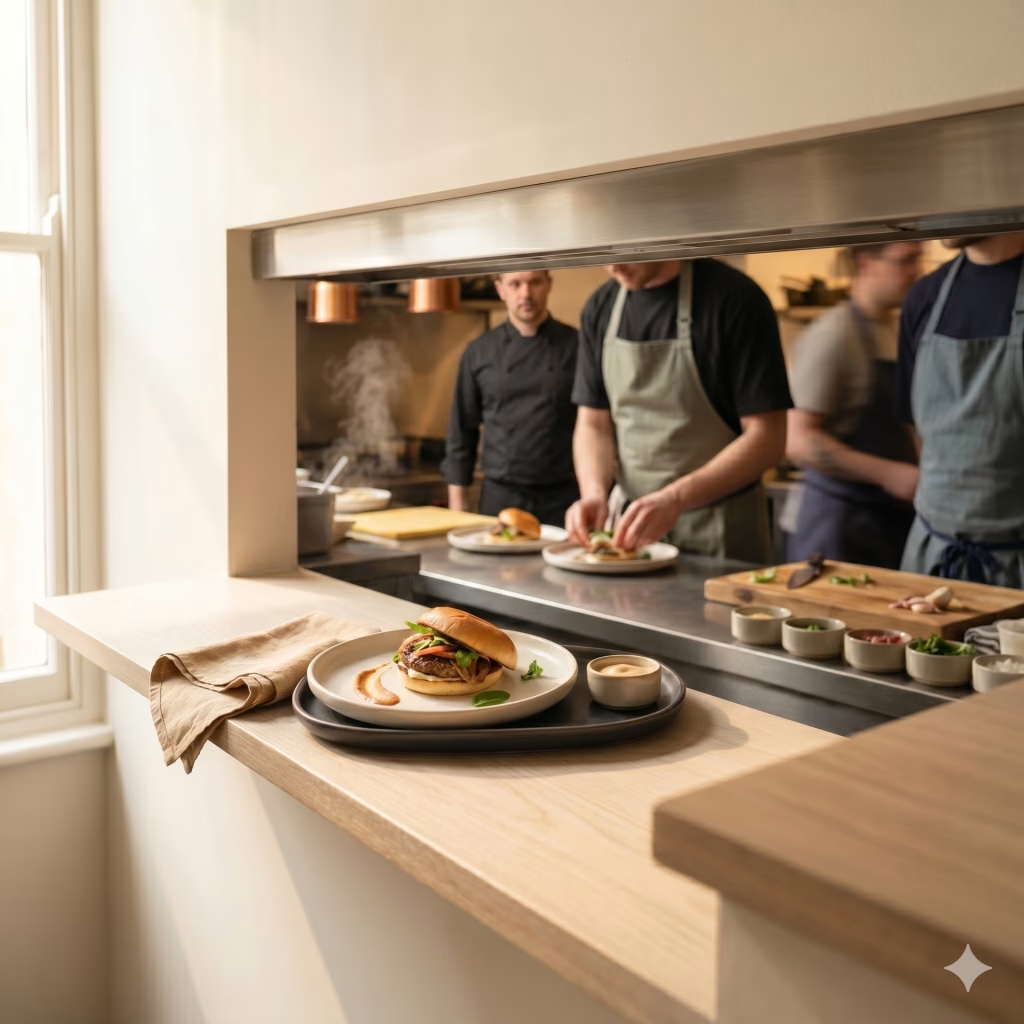
Food service -
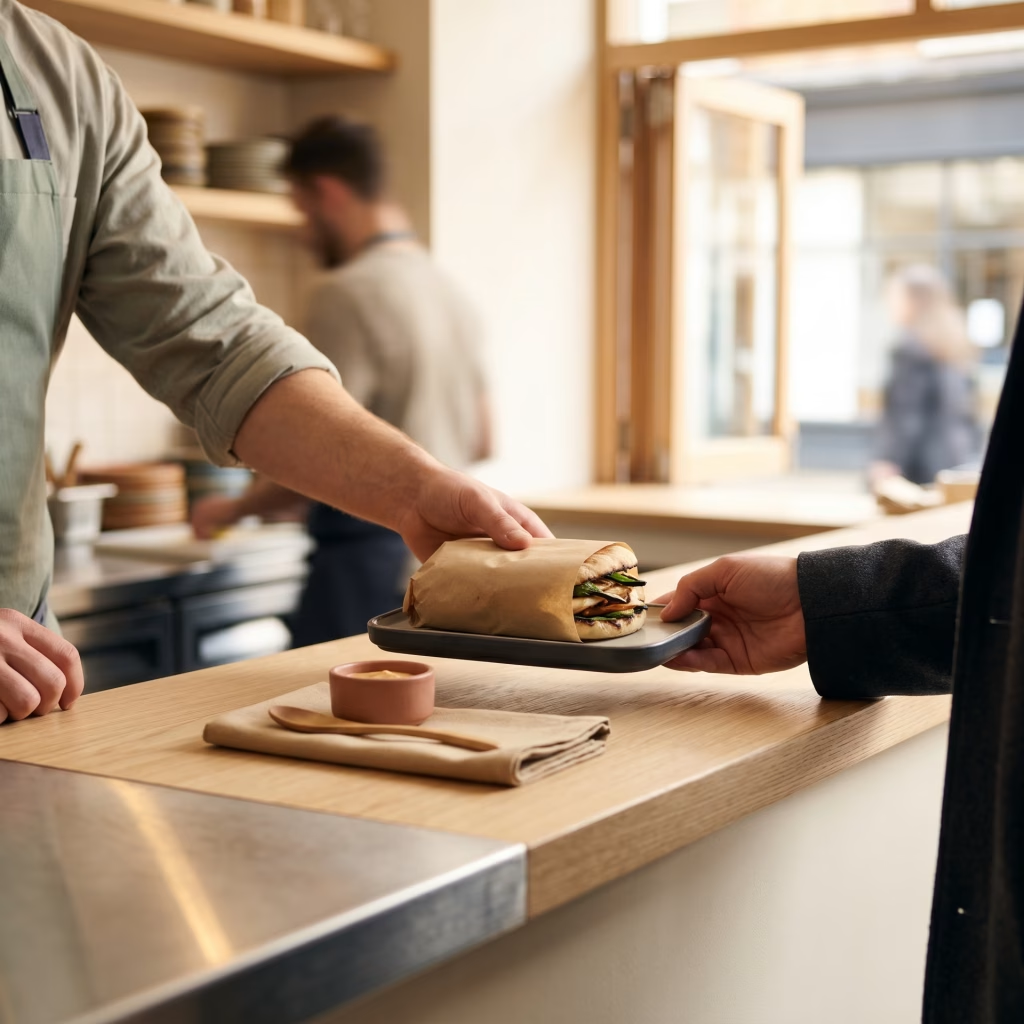
QSR and high street -
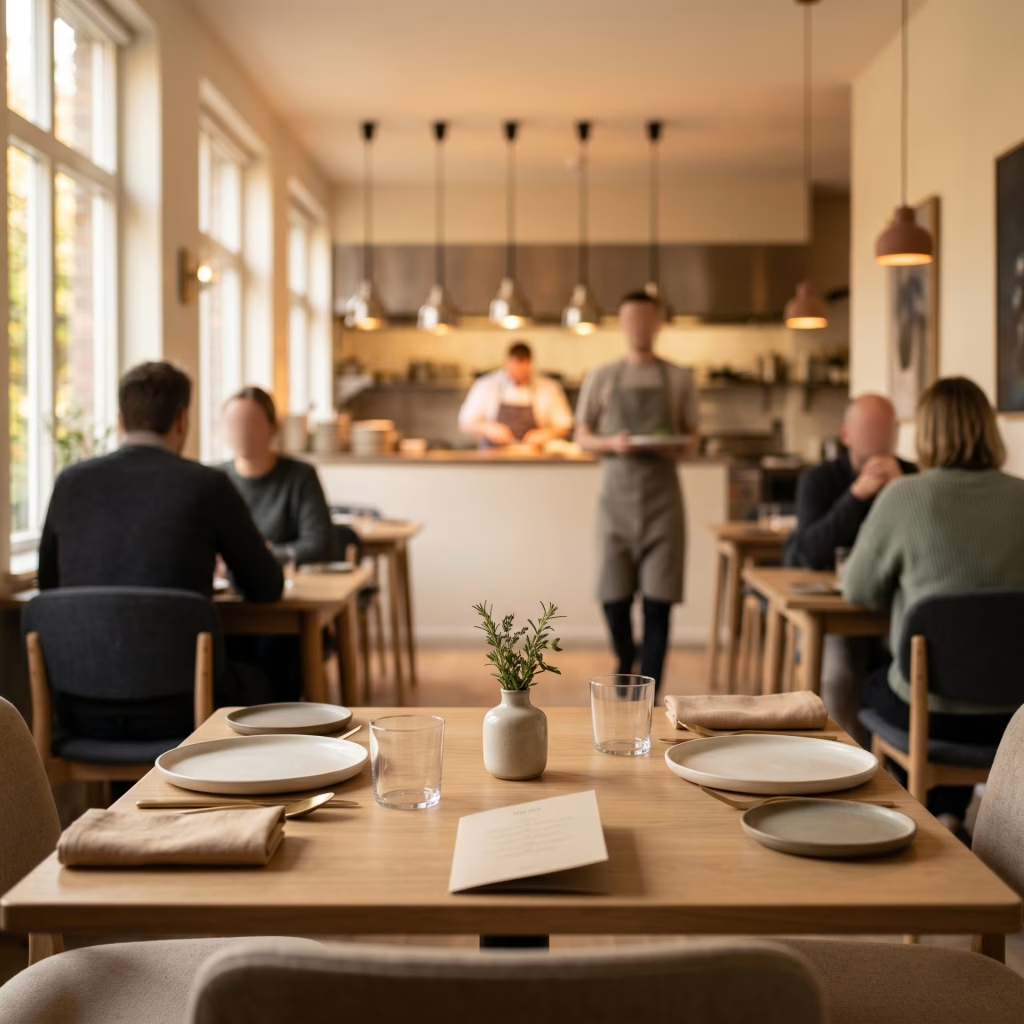
Hospitality
Ideation that earned its place
Three projects across different channels and different tools.


FAQs
What is the difference between a Creative Workshop and a Hothouse?
Creative Workshops are run with your internal team in the room as a collaborator. Hothouse sessions are run by us, off your team’s plate. Workshops are the right format when the brief needs internal buy-in and cross-functional alignment. Hothouse is the right format when timelines are tight, internal teams are too busy or too close to the brief, and what you need is a usable set of concepts in days rather than weeks. Many programmes use both: a Hothouse to generate, a workshop to align the internal team around what survived.
What is the difference between innovation co-creation and insight co-creation?
Innovation co-creation brings a mix of stakeholders into the room (buyers, consumers and industry experts) and is used to develop concepts with the people who will judge them later. Insight co-creation is consumer-only and is used to refine concepts with the audience whose reactions matter most. Most programmes use innovation co-creation in the generation phase and insight co-creation in the refinement phase.
When do you use Concept Labs versus Concept Screening?
Concept Labs are for fast iteration: concepts and consumers in the room together, with the client team refining the work between rounds. Concept Screening is for narrowing a long-list with statistical confidence. Labs are deeper but smaller; screening is broader but lighter. The two are often paired: screen the long-list to surface the top eight, then take those eight into a lab for iteration.
How many concepts come out at the end?
Depends on the brief. A full create-and-refine programme typically generates between thirty and fifty concepts in the generation phase, narrows to a working set of eight to twelve after screening, and lands with three to five defendable concepts ready for development. We scope the numbers against the pipeline gap you are trying to fill rather than against a template.
Do I need to have done opportunity work first?
Not necessarily, but the work is stronger when the strategic platform is defined. If you have done that work recently (whether with us or in-house), we will use it as the brief. If you have not, we can either run a tight strategic framing piece up front (a needs landscape or opportunity map) or scope the ideation around the brief as it stands and flag where the strategic gap will need filling later. We will tell you on the scoping call which is the right call.
Can you run ideation without internal team participation?
Yes. Hothouse is specifically designed for the briefs where internal teams cannot dedicate workshop time. We take the brief, build the stim, run the session, and deliver finished concepts. Most clients still want at least one alignment session with our team afterwards, but the heavy lifting of generation does not have to fall on the internal team.
What does an expert panel session actually look like?
Three formats depending on the panel. Buyer panels run as structured group sessions with three to six ex-buyers, focused on commercial story, gap analysis and problem definition. Chef panels run as tasting and application sessions with professional chefs, focused on menu fit, culinary credibility and operational practicality. Provocateur panels (FIC) run as challenger sessions designed to stress-test the concept beyond its current ambition. Most programmes use the panel that matches the gate review the concept is heading into.
How long does a create-and-refine programme take?
A standalone Hothouse can deliver finished concepts in two to three weeks. A workshop programme with stim development typically runs four to six weeks. A full create-and-refine programme that includes generation, screening, lab iteration and panel pressure-testing typically runs eight to twelve weeks. The biggest variables are the number of consumer-facing sessions, the panels involved and how many concepts need to land at the end.
Need a shortlist with the conviction to ship?
Tell us what you are trying to land, who needs to be convinced and what the next gate review needs to look like. We will tell you which combination of generative and validation tools will get you there, what the timeline looks like, what it will cost, and who will run it. Twenty minutes on a scoping call with a senior ideation specialist.